By Chris Chavez
November 11, 2026
The seven World Marathon Majors are in the bag and the best marathoners in the country have more or less wrapped up their seasons. So where do things stand now?
We put out our first 2028 U.S. Olympic Marathon Trials power rankings right after Boston, about a week before Vinny Mauri ran 2:05:55 in his marathon debut at Glass City. Whoops! This time, we waited until after New York. Valencia is still on the calendar, so check back in a month and we might already have some explaining to do.
For this edition, we consulted with the CITIUS MAG team—and our friends, with a crossover episode with Rory Linkletter of the Out & Back Podcast. We spend our weekends watching these races and probably too much time scrolling through athletes’ Stravas. Rory has trained with some of the contenders, raced others, and spent his college years at BYU alongside Clayton Young and Conner Mantz. None of us can remember either field being this deep. So we’re going 15 deep on each side again and working under the assumption that there will be three Olympic spots up for grabs in each race.
We had a hard enough time agreeing on 15. Good luck picking three.
You can hear more in-depth rationale behind our rankings and decisions on The CITIUS MAG Podcast. Available to stream/download/listen on Apple Podcasts + Spotify. We will also have the YouTube version available to watch on the CITIUS MAG YouTube channel.
U.S. Men’s Power Rankings:
15. Hillary Bor ( Down 4 spots)
Bor withdrew from the New York City Marathon due to injury in the weeks before race day. His lone result this fall was a 1:01:12 for 24th at the World Road Running Championships half marathon. His credentials over 13.1 miles are well established, but he’s still finding his footing over 26.2.
14. Casey Clinger ( Down 5 spots)
Clinger was also slated to race New York, and appearances in Clayton Young’s docuseries offered glimpses of his training throughout the fall before he ultimately withdrew. A 1:01:36 at the Great North Run provided an encouraging fitness check, but without a marathon result, it’s hard to know where that buildup might have taken him.
13. Wesley Kiptoo ( Down 1 spot)
After running 2:07:55 in Boston, Kiptoo and coach Jack Mullaney chose the Toronto Waterfront Marathon as an opportunity to race on a smaller stage and return to his NCAA instincts: get to the front and make things happen. He committed to that approach and came away with a solid 2:08:08 for sixth. But with six marathons under his belt, he’s getting less leeway on the rookie grading curve.
12. Joe Klecker ( Down 6 spots)
Klecker takes the biggest tumble in this edition, largely because of newcomers to the rankings and stronger fall performances from others. His 2:09:28 in New York still marked progress from his 2:10:37 debut there last year. With a 2:05:56 at Boston as well, he made clear that he can contend with the best Americans. But in NYC, he was sixth among them. There’s still room to grow and he has a strong group around him to help him get there.
11. Aidan Troutner ( Enters the rankings)
Troutner has quietly put together a strong 2026. If you missed the USATF 10K Championships on Oct. 3, he won his first national title in 27:40, beating Ryan Ford, Joel Reichow and Kiptoo. He followed that with a 2:08:54 as the fifth American in New York, earning him a spot ahead of Klecker in just his second marathon. Barring any training group shakeups (the rumor mill is going on this one), could he emerge as Ed Eyestone’s No. 3—and give the group a shot at sweeping the Olympic team in St. Louis?
10. Ethan Shuley ( Stayed the same)
Shuley holds at No. 10 as we await his December run in Valencia. His 2:08:34 for 14th in Sydney stacks up well against his 2:07:14 personal best from Osaka, given the tougher course and an injury hiccup that left him questioning whether he’d race at all in the final weeks of training. In Valencia, we’ll also get to see how his move back to the States has benefitted his training.
9. Ahmed Muhumed ( Enters the rankings)
New York has been good to Muhumed over the years at the Dash to the Finish Line 5K and his marathon debut was no exception. He stayed with the leaders longer than the American record holder (we’ll get to him soon) and finished eighth overall as the second American in 2:07:09. What makes him dangerous is his knack for championship racing and making teams. This was a seriously great debut at the distance, and there’s certainly a case to be made that he deserves a higher ranking here—but we want to see another race from him to get a better sense of what he’s capable of.
8. CJ Albertson ( Enters the rankings)
Apologies to Albertson for reading too much into his 2:09:59 for 27th in Boston as a sign of decline. He responded with a personal-best 2:07:19 in Chicago, then ran 2:08:28 to win the Two Cities Marathon in Fresno while the rest of us were watching New York. The fifth-place finisher at the 2024 Olympic Trials is trending upward, and while he may not have as high a ceiling as the guys around him, we know that he’s a consistent racer who still compares favorably to most of this list on a bad day.
7. Galen Rupp ( Enters the rankings)
Cue Michael Corleone: “Just when I thought I was out, they pull me back in!” Before Chicago, Rupp told us he was more excited to race than he’d been in a while. After the past few years, it was hard to know how much to read into that… or his hopes of running through 2028. Then he ran 2:06:55 and gave every Millennial track fan permission to believe he might have one more Olympic team in him. He’ll be 41 on the starting line in St. Louis. There’s a chance.
6. Vincent Mauri ( Enters the rankings)
Our last rankings came out just days before Mauri ran the fastest U.S. marathon debut in history with his entirely solo 2:05:55 at Glass City. His experimental fall buildup made him Chicago’s biggest wildcard: What would all those 26-plus-mile long runs—including a 45-mile treadmill day—translate to? The answer was 2:06:45 for 10th, though even that came with an aggressive surge that ultimately cost him. There’s still plenty to sort out in both his preparation and race execution, but that’s part of the intrigue. Wherever he lines up next (and eventually at the Trials) he’ll command attention as perhaps the biggest potential disruptor on this list.
5. Ryan Ford ( Stayed the same)
Ford holds steady after a strong race in New York, where he finished 10th overall and third American in 2:07:17. He stayed near the front and covered moves until roughly 6K to go. After finishing fourth American in Boston, he’s consistently putting himself in the mix.
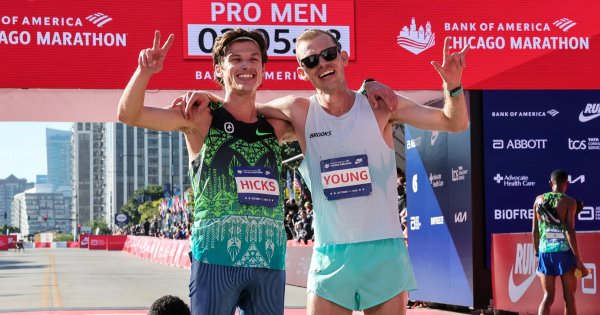
4. Charles Hicks ( Down 1 spot)
It feels strange to drop Hicks given how consistently good he’s been. He had high hopes of threatening Conner Mantz’s American record in Chicago. But bridging the gap to Vinny Mauri’s breakaway cost him a little more than he’d hoped. He still ran 2:05:35 for eighth overall and second American, a performance comparable to his Boston run. Finishing second American in all three of his marathons might make the bridesmaid label sting, but that kind of consistency bodes well for the Trials.
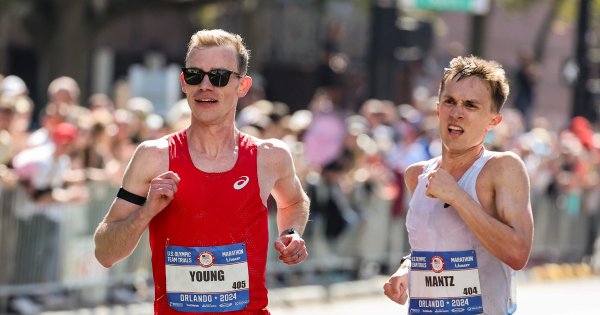
3. Conner Mantz ( Down 2 spots)
Don’t be tempted to overreact to Mantz’s 2:07:27, 11th-place showing in New York. Two stress fractures cost him a combined 22 weeks of running after he broke the American record last October. It took a serious injury to keep one of America’s toughest runners out of Boston, where he could only watch his compatriots run fast. He also reported feeling slightly sick early in race week, though it’s hard to know how much that affected his performance. Even so, he ran 90 seconds faster than his then-American course record in 2024 and finished fourth American. At full strength, it’s hard to pick three Americans ahead of him. He wasn’t at full strength in New York, which just goes to show how little margin for error there is in this field.
2. Clayton Young ( Up 2 spots)
Give Young credit: After finishing third American in Boston, he called his shot at his friend and training partner’s national record for his Chicago Marathon build up. A torn hamstring may have compromised that pursuit, but he still reminded everyone that he’s a baller on race day. His experience won out against Hicks and Mauri in Chicago, where his 2:05:23 moved him to No. 2 on the U.S. all-time list for record-eligible courses. Now imagine what he could do with a healthy, uninterrupted buildup (his Boston preparation was also hampered by a foot injury). If he lets the hamstring heal and gets a full block under him, he could contend for top American in Boston next spring or take another swing at Mantz’s record on a faster course.
1. Zouhair Talbi ( Up 1 spot)
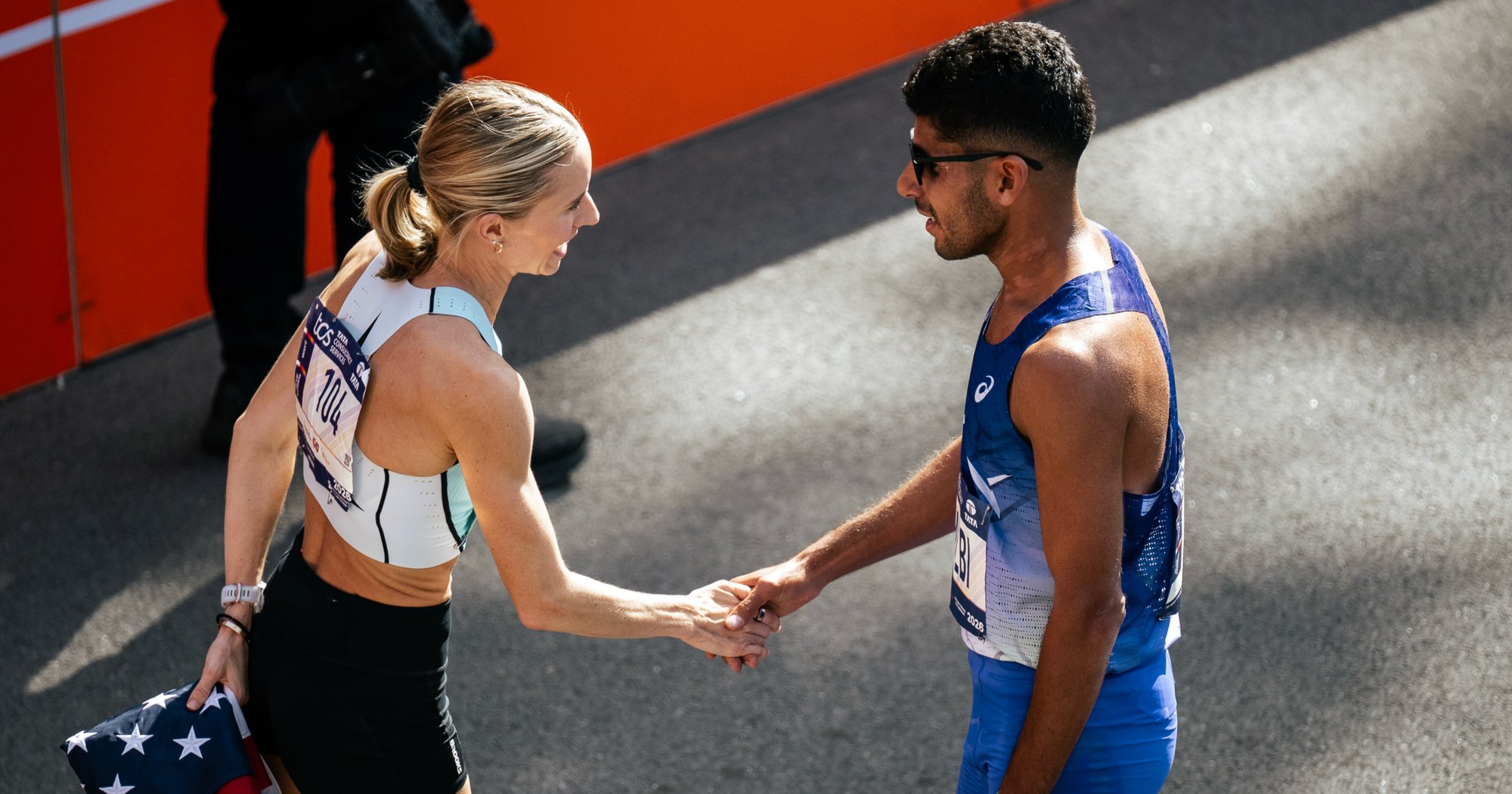
One of New York’s most intriguing subplots was the first marathon showdown of the year between Mantz and Talbi. Talbi won that battle handily. Armed with the confidence of his 2:03:45 in Boston, he tested the leaders at halfway, then again on the Queensboro Bridge. Neither move thinned the pack, but these were some of the world’s best runners he was trying to shake. He stayed with them through 24 miles before Benson Kipruto, Yemaneberhan Crippa, and Andreas Almgren surged away. Talbi faded slightly to sixth but still finished as the top American in 2:06:43. A Houston victory plus top American honors in Boston and New York is the strongest résumé on this list. And there’s more to come: with his allegiance switch set to make him record-eligible by Berlin or Chicago, it wouldn’t be a shock if he’s the American record holder a year from now.
Honorable mentions: Joel Reichow (17th in Cape Town, 16th in NYC),Daniel Mesfun (2:08:24 for 12th in Seville), Biya Simbassa (2:06:53 PB from 2024, 24th in Chicago), Andrew Colley (19th in Seville, 21st in NYC), Futsum Zienasellassie (2025 CIM champ, 15th in Paris)
U.S. Women’s Power Rankings:
T-15. Taylor Roe ( Down 7 spots)
Our last rankings reflected optimism about Roe’s marathon potential if she chose to debut this fall. Those plans are on hold after she underwent foot reconstruction surgery in July to repair a torn flexor hallucis longus (FHL) tendon. A full recovery comes first, but her move to train under Ed Eyestone adds intrigue to her eventual step up to 26.2 miles.
T-15 – Emily Venters ( Enters the rankings)
2025 Chicago was a rough debut for Venters (she officially ran 4:52 after spending a long time in the medical tent), but maybe there’s value in having gone through a marathon buildup, a taper and race day once already. She’s been on a tear lately under David Roche – highlighted by a 1:07:37 half marathon personal best – and that form is enough to get her onto the list. The question is whether she wants another crack at 26.2 before St. Louis.
14. Emma Bates ( Stayed the same)
Bates is the first of two athletes whose rankings we’re holding steady while they’re on maternity leave. She and her husband, Steve Finley, welcomed their baby, Warren, in July. Anyone with three top-five finishes at a World Marathon Major deserves to stay in the conversation no matter how long their time away.
13. Ednah Kurgat ( Enters the rankings)
Kurgat is one to watch for a potential marathon debut in 2027. This year, she finished as the top American at World Cross Country (10th overall) and set road personal bests over 5K, 10K, 10 miles, and the half marathon, clocking 1:08:11 for 17th at the World Road Running Championships. She also rode the lead vehicle for the women’s race in New York, which is a sign that NYRR is interested in securing her debut. It’s no guarantee though; NYC 2027 would fall fairly close to the Trials and it comes after shortly after an opportunity to run fast and compete the USATF Marathon Championships in Chicago, so we’ll see whether she opts to get one under her belt sooner.
12. Susanna Sullivan ( Down 3 spots)
Fourth at the 2025 World Championships but 12th here might look odd, but these rankings mostly reflect 2026, and Sullivan’s year hasn’t gone perfectly. She ran 2:28:35 for 19th in Boston, then dropped out of Chicago. Her ceiling is clearly much higher, and a strong performance next spring could put her right back in the conversation.
11. Natosha Rogers ( Up 1 spot)
Rogers set two marathon personal bests in 2025: 2:23:51 for seventh in Nagoya, then 2:23:28 for sixth and top American in Chicago. This year brought an unusual setback. Complications from a 15-year-old tooth implant caused four millimeters of bone loss in her jaw, requiring surgery and forcing her out of Boston. The return to training was rocky, and the disruption affected much of her season. She made it back to Chicago, running 2:27:22 for 14th overall and fourth American.
10. Amanda Vestri ( Down 3 spots)
Vestri left Boston wanting both a faster time and a longer stay with the top Americans, even after running a personal-best 2:24:49. Her return to New York, a year after her debut there, yielded a 2:30:16 and some unanswered questions. “I do know that I need to figure some things out with my body, my health and how they relate to race-day performance,” she wrote on Instagram. “Being a healthy female athlete means dealing with a lot more variables that I cannot control, and that’s challenging when you need every percent possible in the marathon.” She’s still just 27 and only three marathons into her career.
9. Carrie Ellwood ( Up 2 spots)
Ellwood is finally cracking the marathon code. Before this year, she hadn’t broken 2:31 since her first year at the distance in 2021, joking that she’d only gotten slower since. That’s easier to laugh about after a season that included a 2:22:53 for 10th overall and fourth American in Boston, followed by a 2:26:28 for sixth overall and second American in New York.She’s emerging as a strong dark horse.
8. Elena Hayday ( Enters the rankings)
Four years into her marathon career, Hayday broke 2:30 for the first time and went straight to sub-2:25. She ran 2:24:45 for 13th overall and sixth American in Boston, then backed it up with a 2:24:57 in Chicago, where she was again 13th overall and moved up to third among Americans.
7. Fiona O’Keeffe ( Down 6 spots)
O’Keeffe topped our first rankings on the strength of her run in New York last fall, where she held her own against some of the world’s best. A hamstring injury kept her out of Boston, and she later withdrew from New York. She revealed that she underwent proximal hamstring repair surgery in October at the Steadman Clinic in Vail, Colorado, after an MRI showed that the partial tear she sustained before Boston had progressed to a fully retracted tendon tear in her left leg.
If she misses the spring and returns next summer or fall, she’ll have gone more than 18 months without finishing a marathon. She could head into St. Louis with just one marathon since surgery, or none at all. Then again, she won the 2024 Trials in her marathon debut. If anyone has earned the benefit of the doubt with a light racing résumé heading into the Trials, it’s O’Keeffe.
6. Annie Frisbie ( Down 2 spots)
Frisbie delivered another strong run in Boston, finishing eighth overall and second American in 2:22:00. A tibial stress fracture in July interrupted her buildup, and she only got back to running 12 weeks before lining up in New York. She gutted out a 2:30:04 for 15th overall and sixth American on a tough day. At full strength, she can mix it up with each of the women ahead of her on this list.
5. Emily Sisson ( Stayed the same)
Sisson tested herself on Boston’s hills for the first time and passed, running 2:22:39 for ninth overall and third American. Valencia was originally on her calendar, and the flat course would have given her a chance to take another shot at her own American record. She and her husband Shane are expecting their first child in late March 2027, so Boston will be her only marathon this year. When she comes back, she’ll surely still be in the mix for a third Olympic team.
4. Dakotah Popehn ( Up 2 spots)
Popehn was one of the surprises of the 2024 Trials and went on to finish as the top American at the Paris Olympics. It seemed inevitable she’d take a big chunk off her personal best ever since, but the gains have come a few seconds at a time. She went from 2:24:20 in Chicago last fall to 2:24:04 in Boston this spring, then 2:24:00 back in Chicago. She was second, fifth, and second among Americans in those races, respectively. The clock has moved a little each time, and she’s consistently been in the mix against the best Americans.
3. Weini Kelati ( Stayed the same)
Putting Kelati at No. 3 in April before she’d run a marathon was an optimistic call. But the Olympic 10,000m runner and American half marathon record holder gave us plenty of reason to keep her there. She stayed with the leaders in New York until about mile 22, when she started having trouble keeping fluids down. She still held on to finish eighth overall and third American in 2:26:51. There’s time to dial in her fueling, and even on a B+ day, she showed she can contend.
2. Emma Grace Hurley ( Up 8 spots)
Hurley was No. 10 in April, coming off the USATF Half Marathon Championships debacle and her first national title at 10 miles. Then she went on a tear. She won the U.S. 25K title, set the American women’s-only half marathon record with a 1:06:23 for fifth at the World Road Running Championships, and ran the fastest marathon debut by an American woman. Her 2:20:47 in Chicago was good for seventh overall and put her more than three minutes clear of the next American.
Coach Andrew Begley and Hurley are taking things slowly and methodically so far. The plan is to go into the Trials with just two marathons under her belt. She’s already the fastest American marathoner of 2026 and there’s reason to believe she could go faster in 2027. Not bad for a race she’s just starting to learn.
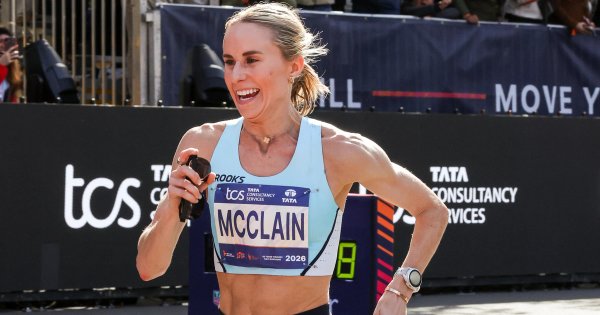
1. Jess McClain ( Up 1 spot)
This was an easy call. McClain hasn’t missed since the 2024 Olympic Trials. She’s stayed healthy and developed the confidence and poise to race with the best in the world. In Boston, she was the top American and shattered the U.S. course record with a 2:20:49, the second-fastest marathon by an American woman this year. Then she said out loud that she was going to New York to race for the podium. With a furious final 400 meters, she caught defending champion Hellen Obiri to take second, the best finish by an American woman in New York since Shalane Flanagan won in 2017.
It’s hard to watch that finish without thinking back to Paris, where McClain traveled as the Olympic alternate and never got to start. After coming so agonizingly close to making that team, she’ll have plenty of people rooting for her in St. Louis.
Honorable mentions: Keira D’Amato (#2 U.S. all-time, has not raced in 2026), Sara Hall (2nd in Houston, 21st in Boston, 18th in Chicago), Molly Born (2025 CIM champ, DNF Chicago), Paige Wood (8th in NYC in 2:27:29), Biruktayit Degefa (2:24:06 for 4th at Toronto Waterfront)
There you have it: plenty of fodder for debate and speculation in the days, weeks, and months to come. With a full season of racing between now and Trials, there’s also plenty of opportunity for the athletes themselves to shuffle things around on the strength of a new PB or a surprise podium finish. That’s what makes the Marathon Trials specifically so fun: unlike annual track championships, there’s years of buildup with the best runners circling around one another and only occasionally crossing paths. And despite résumés, rankings, and rampant speculation, it all leads up to the one big day when nothing that happened beforehand really matters.
Chris Chavez
Chris Chavez launched CITIUS MAG in 2016 as a passion project while working full-time for Sports Illustrated. He covered the 2016 Olympics in Rio de Janeiro and grew his humble blog into a multi-pronged media company. He completed all six World Marathon Majors and on Feb. 15th, 2025 finally broke five minutes for the mile.