By Paul Hof-Mahoney
July 20, 2026
The 2013 World and 2016 Olympic 100mH champion Brianna Rollins-McNeal has joined Bandit’s Unsponsored Project ahead of the 2026 U.S. Outdoor Championships.
Started in 2023, the Unsponsored Project is Bandit’s aim to support athletes without major shoe contracts, providing them an unbranded race kit and funding for travel, lodging, and a wide range of other needs. To date, 12 athletes in the Unsponsored Project have gone on to sign pro contracts.
Last month, Rollins-McNeal returned to the hurdles for the first time since the 2021 U.S. Olympic Trials, having served a five-year suspension that ended last August. During her suspension, Rollins-McNeal had two children as the landscape of the women’s sprint hurdles changed drastically, with her PB of 12.26 moving from a tie for fourth to a tie for 11th in world history.
Rollins-McNeal sat down with CITIUS MAG to discuss her approach to her comeback season, give insights on what her time away from the sport looked like, and share her reasoning on why she knows getting back to the top of the global stage is a possibility.
The following interview has been edited lightly for length and clarity.
CITIUS MAG: You’re about four weeks removed from your first 100mH races since 2021, with three on your results list this year. What has this return to racing been like for you?
Brianna Rollins-McNeal: It’s been pretty exciting! If it had been up to me, I probably would’ve been hurdling sooner, but I was trying to trust my coach. I have a new coach right now, so that has been a challenge on its own, trying to trust in a new program, a new person. It’s all an unknown space because I’ve never been out five years and I’ve never not been fit, so that’s an unfamiliar place that I had to get comfortable with. Throughout this whole journey back, I’ve just relied on God and trusted that process, knowing that things are gonna work out. I’ve only been hurdling for about three months or so, so it’s good to just get out there and do what I love to do. I’m pretty excited for this year, but more so next year, because I know this is just the beginning, the foundation that I’m trying to lay to follow through with the World Championships and Olympic years.
What is your training setup right now?
Right now I am with Greg Sholars at the AP Ranch, and I do my hurdling with coach [Fitz] Coleman. I just started working with him in April.
Did you get connected with them right when your suspension was up in August? What has the timeline of your return into a structured training setup looked like?
Before the suspension, my previous coach, Lawrence “Boogie” Johnson, we all moved here to Fort Worth right after the pandemic to get a more stable training environment. Obviously he’s not here anymore, he left and is at the University of Arkansas. I never left, I stayed here, and I was able to still have that relationship with AP Ranch. They were willing to trust in my journey and believe in that comeback as well.
After I had my daughter is when I started back training, maybe around October or November of 2024.
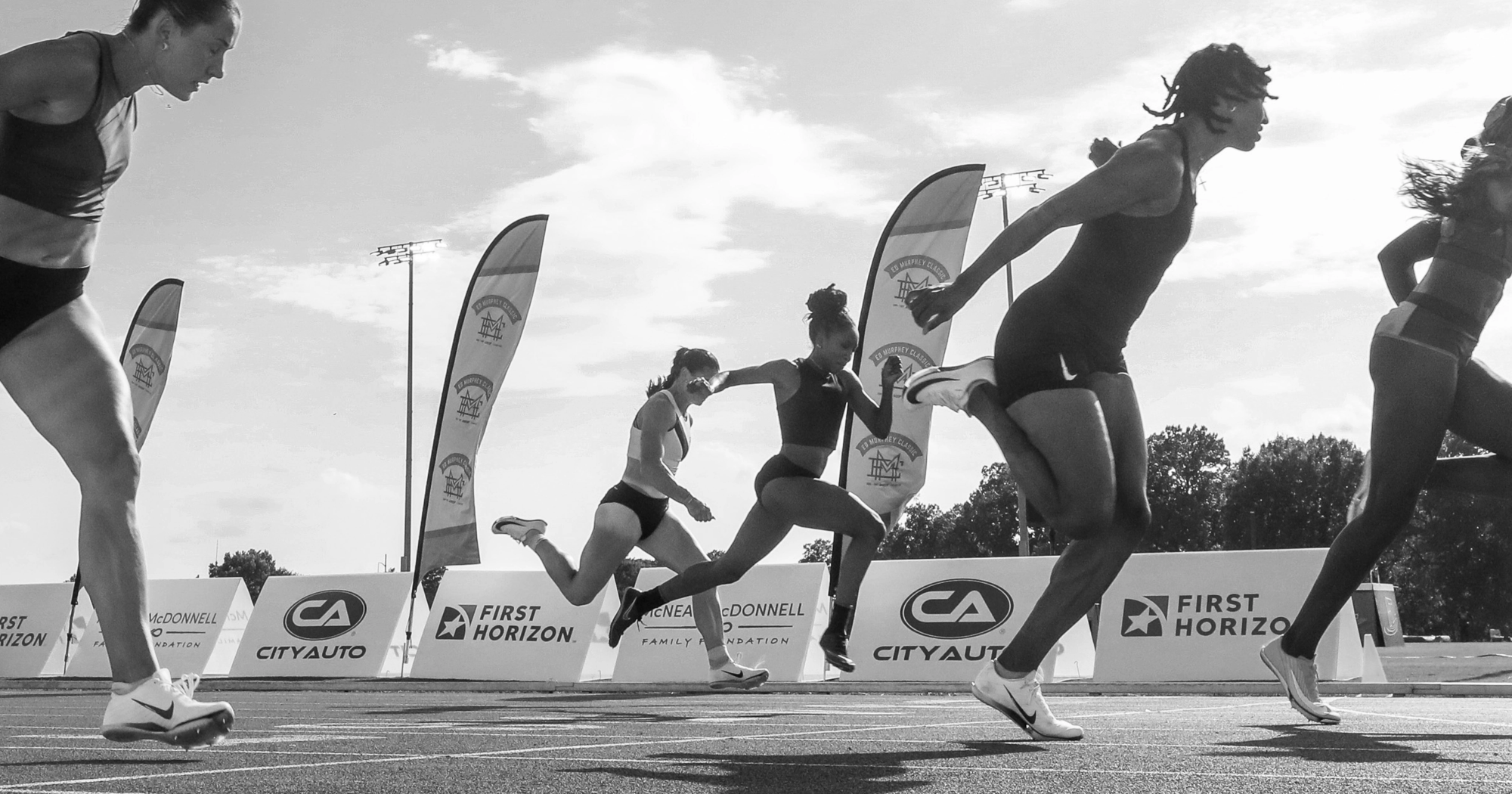
The races themselves this season, a couple of 12.9s in Austin and then a windy 12.88 at the Ed Murphey Classic. Are there important takeaways you can pull from those races, or are they really just to get your feet wet again in a competitive environment?
I would say both. I’m definitely trying to get my feet wet again, but I’m actually just learning through this whole experience. It’s kind of like I’m starting from the bottom again, which sounds really crazy, so I’m trying to work my way back up to the top. Having these races this year is just going to put me in a place where I can be like, ‘Okay, this is where I am, these are the things I need to work on into the offseason.’ I definitely have to get back used to that competitiveness, and even just the intensity of it, because I’ve been training alone for about a year now. I feel like training has been going well, but I know it’s going to take a lot more to get to that competitiveness that I want to be, where I was before. Especially now, these ladies are running crazy.
This year, these races, it’s just a foundation that I’m trying to lay so I can have a better year next year and the year after that.
You mentioned just how fast everyone is running now, and I was looking back at the fact that the time you ran for second at Trials in 2021 would’ve been sixth at USAs last year. How much were you still paying attention to the sport while you were suspended, and how do you see yourself fitting into this really fast picture heading into Beijing and Los Angeles?
I sort of paid attention to it a little bit, but it still was kind of an emotional place for me because I should be there. I do feel like I most definitely can get to that elite level status that these other ladies are. I think back to when I won my first World Championship and I had my first undefeated season in 2013, I ran 12.26, I ran 12.3, I was running those times well over 10 years ago, so it’s not like I’m not capable of doing those things. I just know that the training has to be a little bit different, especially now that I’m older. Technology has changed too that makes it—I don’t want to say easier—but it’s giving people the ability to tap into different parts of their training system and body differently than we were five to six years ago.
I do believe I’m very much capable and I have so much left in the sport. Having that hiatus in the sport for five years gave my body a little bit of rest. Although I am 34 years old, I don’t think my body is 34 years old when it comes to the sport of track and field because I had those five years off.
As you are able to look back on your suspension now, what was the most important of your support system to keep your head up when the situation could’ve overwhelmed you?
I personally think that God is the number one thing that has kept me going, and then having a loving, supportive family and friends. I kid you not, that’s the only thing that’s been keeping me going, people that remind me of who I am and not just nitpicking my flaws or my shortcomings. In life, everyone has shortcomings, mine just were displayed for the world to see, unfortunately. Having those people in my corner to keep my mind in a good space, just knowing who I am and who I belong to kept me going.
And also, there’s some therapy as well. That year that I got suspended, I lost my brother as well, so it was just a really heavy year for me. Having therapy throughout that whole year helped me a lot as well. Mental health is so important in general. Our sport is physical, but a lot of it is very mental, so just setting your mind up to do things at an elite level takes a lot of training of the mind, as well.
At the time of your suspension, you were about a month away from turning 30, you were already a World and Olympic champion and one of the fastest 100m hurdlers ever. Were there ever times where you could realize you had already had one of the greatest careers the event had seen and that motivation to return started to slip?
I don’t think so, because I feel like although I am a World and Olympic champion, I feel like there were a lot of inconsistent seasons for me. Before the suspension, I made a vow to myself that I was going to try to be as consistent as possible for the rest of my career, taking everything seriously and doing the things that I do, because I knew there was something more that I wasn’t tapping into. I wasn’t doing things on the level of consistency that I needed to be, I wasn’t as disciplined as I needed to be, so my focus level wasn’t always there. Knowing that I had those personal things going on, I was always motivated because I knew that there was so much more.
As you’re now re-entering the sport in this new phase of your career, how did you get connected with Bandit and how significant has the Unsponsored Project’s support been?
One of my training partners was part of it before, so she mentioned it to me and I looked into it. I was unsure if I would even be considered because of my history and I feel like there’s a stain on my name and sometimes people aren’t willing to help. But I am ultimately just grateful for the opportunity and it touches my heart more than anything. It is really hard to try to come back when I have the noise on the other side telling me who they think I am. Having their support means a lot in general, because it’s scary coming back from such scrutiny.
I think any type of results and any progress matters because it sets you up for what you need to do going forward. As far as next weekend, I’m trying not to put too many expectations on myself going into it. I’m just trying to put myself into a competitive environment that I haven’t been in in a while and see what I can do with that. I’m also trying not to count myself out in any way at all, and just have fun with it. This is a year for me to get back into it and have fun again and reinvent my wheel. Whatever happens, I’m pretty sure it’s going to work for my good regardless because it’s gonna be the setup for what I need to work on this upcoming fall and into next year.
Paul Hof-Mahoney
Believe it or not, his last name isn't actually “Throws”! Paul is CITIUS’s throws analyst and is currently a student at the University of Florida. When he's not posting his Fact of the Day just before midnight, Paul is trying his darnedest to become a runner (5K PB currently sitting at 26:29) and probably complaining about living in Florida. He'd like to thank his girlfriend and CITIUS digital producer Audrey Allen giving him free photos and videos of throwers and YouTube thumbnails to help build a facade of professionalism around Paulie Throws.