By David Melly
October 7, 2026
There are many reasons to watch a World Marathon Major. The distance’s biggest stars going head-to-head… the plucky Americans trying to take on the world and land on the podium… the hefty implications for rankings, qualifying standards, and Olympic prospects of athletes who only compete two or three times a year.
In a race like Chicago, there’s one more big one in particular: the clock.
Seven times in the race’s long and illustrious history has a world record fallen on the streets of the Windy City, thanks to its combination of flat course, strong competition, and well-paid pacers. Both the men’s and women’s current American records were set there; Conner Mantz’s 2:04:43 turns one year old on Monday. While race conditions are often favorable, the course is so historically fast that it doesn’t need to be a perfect 45 degrees and completely still for records to fall.
Record-breaking isn’t the be-all, end-all of any major marathon’s success or failure. (It is first and foremost a race after all, one with a prize purse north of $900,000.) But it would be ignorant to pretend like fast times aren’t a central part of Chicago’s sell. Athletes come to run fast, whether they’re looking to break two hours or five.
That being said, it won’t necessarily come easy this year. Currently, the forecast predicts temperatures in the mid-60s for most of the elite race creeping up into the 70s by late morning—about 20 degrees north of ideal. The wind and humidity won’t be a huge factor, but they won’t be negligible, either, at ~8mph and 60% or so, respectively.
The question then becomes, which records will live, and which will die? Of those that fall, who’s going to break them? That’s where we come in, breaking down each of the four major marks to chase and their likelihood of going down.
Women’s world record: 2:09:56
Oof. Well, on one hand, it’s physically possible for a woman to run sub-2:10 on this course, because that’s exactly what Ruth Chepngetich did in 2024. On the other… she was busted for doping shortly thereafter, and even in the immediate aftermath of her mind-blowing achievement, there was significant speculation about the possibility that her performance had been chemically enhanced.
It would be great to see this mark go, and while no woman in history has come within a minute of Chepngetich’s time, the two names atop the entry list have the talent and resumes to give it an honest try. Brigid Kosgeidid break the world record in Chicago back in 2019, running 2:14:04 to take over a minute off Paula Radcliffe’s mark. She hasn’t improved upon her PB in the six years since, with some time off for motherhood and a few injuries thrown into the mix, but she’s squarely back on top in 2026 after her 2:14:29 victory in Tokyo this past spring. And somehow, she’s still only 32 years old. She’ll take on the defending champ, Hawi Feysa, who was something of a surprise winner last year in 2:14:57. Kosgei already has one over Feysa this year, as the Ethiopian finished third in Tokyo in 2:17:39, but if they stay close late in the race, that could be the extra juice needed to keep the back half close to record pace.
Sutume Kebede may be entering Chicago feeling like she has something to prove, given that she finished second behind Chepngetich in 2024 which arguably means she is that year’s rightful champion even if Chepngetich’s result still officially stands. She’s been more consistent in the 2:15-17 range, with her 2:15:55 PB coming en route to victory in Tokyo in 2024, but big breakthroughs have been shown to be possible in women’s marathoning recently.
Speaking of big breakthroughs, perhaps the most intriguing name on this list is Sharon Lokedi. The three-time WMM champ has bounced between Boston and New York, winning for the second time in Boston this past spring, but she’s never really taken on a fast, paced race, so it feels like an improvement on her 2:17:22 PB is nearly inevitable if she’s entering the weekend fully healthy and fit. 2:17 to 2:09 is a stretch, but then again so is anyone running 2:09 in this race, so if the WR chase doesn’t materialize, that could work out great for Lokedi coming up with both a fast time and another huge win.
Men’s world record: 1:59:30
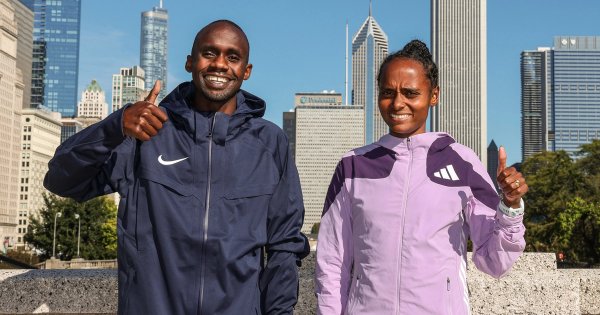
It feels wild to suggest that Sabastian Sawe’s barrier-breaking run in London might not survive the year as the world record… and it probably will, but you can’t quite dismiss the prospect entirely with Jacob Kiplimo in the race. Kiplimo is now the third fastest man in history thanks to his 2:00:28 behind Sawe, and he’s also the defending Chicago champ, running 2:02:23 in just his second marathon ever last fall. When you consider that Kiplimo’s run 2:03, 2:02, and 2:00 in his first three efforts, it’s not totally insane to suggest that a further one-minute improvement is outside his capabilities.
The question will be whether he’s got the stuff to do it solo. Unlike the women’s race, which benefits from male pacers (and other elite racers, for that matter) all the way through, if Kiplimo is going to break the WR he’s likely going to have to push the pace himself in the latter miles. That’s not to say that someone like Amos Kipruto, the 2022 London champ and last year’s Chicago runner-up who ran 2:01:39 in London this spring, couldn’t hang with Kiplimo on his absolute best day, but without giants like Sawe or Yomif Kejelcha on the list, it’s not likely that multiple men on this particular start line will find themselves in sub-two-hour shape on the same day.
Women’s American record: 2:18:29
While Emily Sisson’s mark from 2022 is the oldest of the four records in play, it’s also probably the most likely to survive as no American women in the field are currently within two minutes of the mark.
There’s two main scenarios in which Sisson’s record gets broken. The first would be for one of the experienced racers to hit a home run on race day, with someone like Susanna Sullivan or Natosha Rogers daring to go out way under PB pace and finding a way to hold on. Rogers was the top American at this race last year, running a personal best of 2:23:28 for sixth overall, and she’s still relatively new to the marathon, with only three career finishes to date.
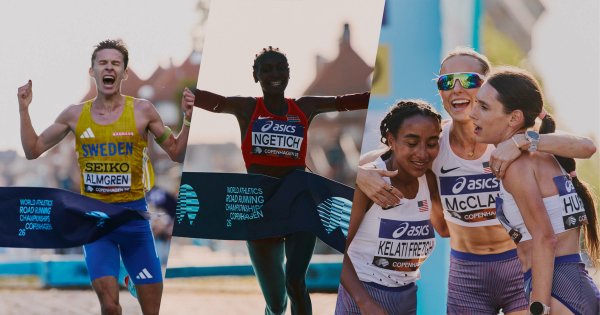
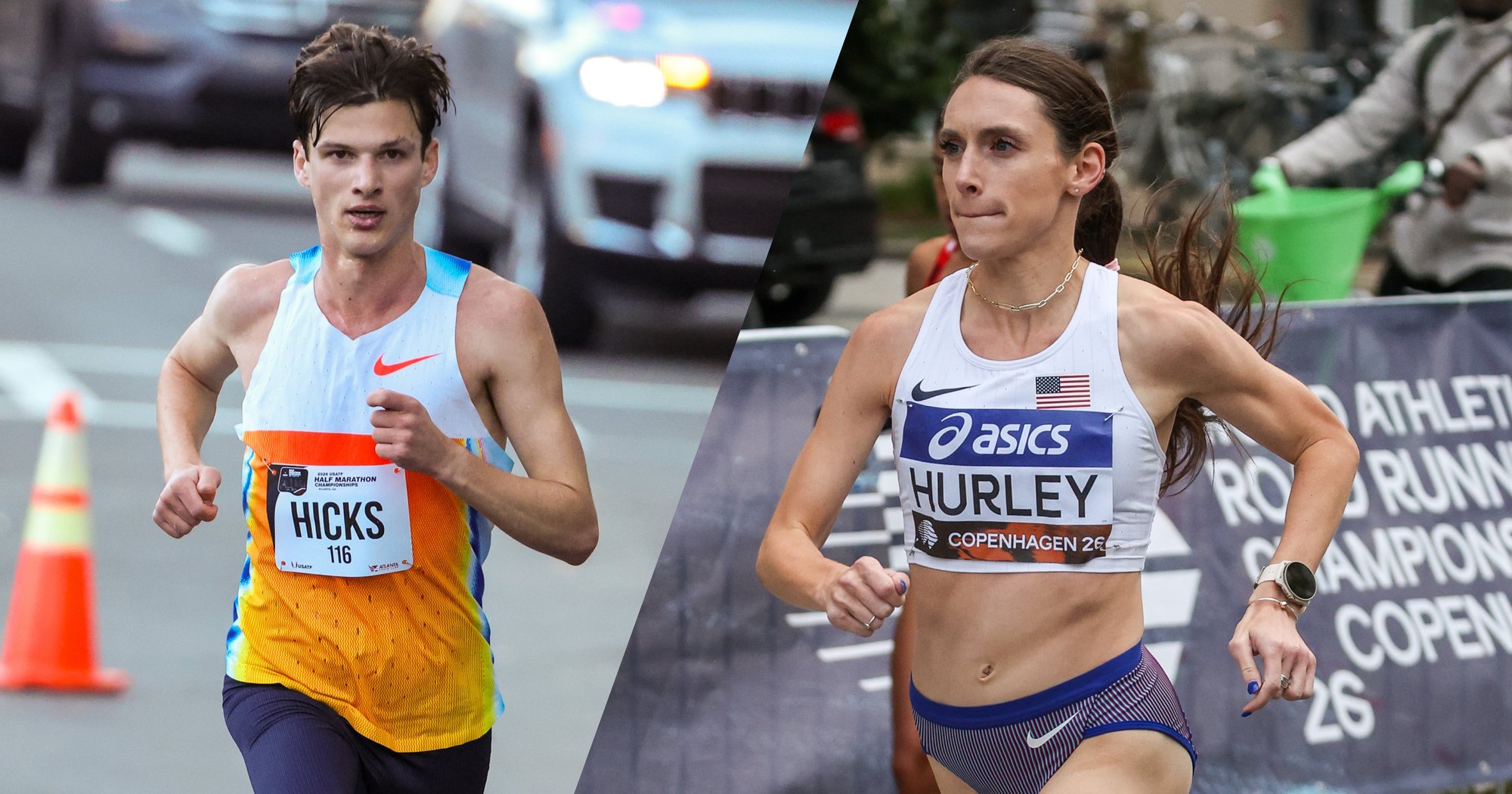
The other is less likely but not impossible: Emma Grace Hurley absolutely smashes her marathon debut. Hurley has been on an absolute heater across multiple road distances this year, winning the USATF 25K title, claiming top American honors at the Cherry Blossom 10 Mile, and taking fourth at the Falmouth Road Race. But perhaps the biggest indicator yet that she’s set for something special in Chicago came a few weeks ago in Copenhagen, when Hurley ran 1:06:23 for fifth at the World Half Championships to move to #3 on the U.S. all-time list.
In Denmark, she finished one spot ahead of American record holder Weini Kelati, who it’s safe to say is the most hotly-anticipated marathon debutante of the year when she toes the line in NYC next month. But Hurley could easily steal her thunder for the second time this fall with a big run in Chicago. 2:18 in her first go would be truly remarkable, but don’t forget that Hurley’s half marathon PB is now 30 seconds faster than Sisson’s, which she ran three months after her record-setting run at Chicago 2022.
Men’s American record: 2:04:43
We saved the best for last. On paper, the record that’s most likely to go has to be the men’s AR, with three entrants on the list having run within 71 seconds of Mantz’s time last year. Unless Galen Rupp has a late-career stunner no one saw coming or someone like 2025 breakout Matt Richtman takes another huge leap, if the record does get broken it’ll almost certainly come from one of the trio of Charles Hicks, Clayton Young, and Vinny Mauri.
Hicks has already run faster than 2:04:43, but he did so in perfect conditions at this year’s Boston Marathon, which isn’t record-eligible because it’s point-to-point and net downhill. At 25 years old, Hicks (who has dual British and American citizenship but grew up in Florida and switched allegiances to Team USA last year) is a baby in marathoning years, having debuted with a top-ten finish in New York last fall before his eye-popping Boston time. The sample size is small, but he’s shown he can hang with the best of ‘em. In his pre-race CITIUS MAG podcast interview, Hicks said he’s focused more on place than time in his goal setting, but any improvement on his seventh place from Boston at the WMM scale would necessitate running a pretty special mark along the way.
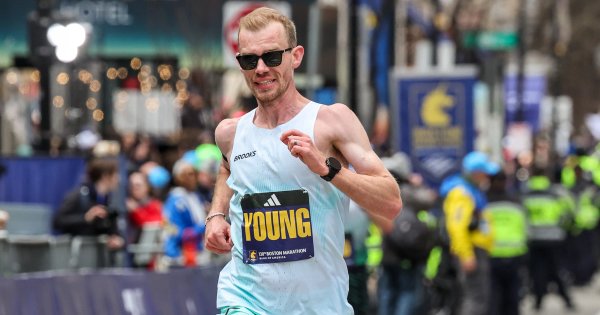
Young’s conversation with Chris Chavez was a little more concerning, as the 33-year-old Provo-based marathoner revealed he’d been diagnosed with a hamstring tear during his buildup. He’s still going to give it the ol’ college try, however, that’s a high-risk strategy that makes a DNF feel more likely than a PB. Young hasn’t finished outside the top ten in a marathon in his last seven outings, a streak that includes World Championship and Olympic appearances and a 2:05:41 in Boston. If he can power through the pain, recent history shows he’s competitive enough to be in the mix alongside Hicks.
Last, but not least, we have the enigma that is Vinny Mauri. It would stand to reason that a guy who can solo a 2:05:54 marathon debut with no pacers at the little-known Glass City Marathon in Ohio can run a minute faster in a setting like Chicago… but logic really doesn’t apply to anything about Mauri. The Notre Dame grad didn’t have anything on his collegiate resume that would suggest 2:05 capability before he did it, and he hasn’t run any tune-up races to show his cards in the months since. Instead, he’s logged comically high volume on the treadmill at his local Planet Fitness (more on that below), betting big that his unique self-coached training system will continue to pay dividends. There’s no way of knowing whether 40-mile days of triple workouts at five-minute pace is too much, because literally no one ever has done that before.
The only possible analog for Mauri is fellow Chicago entrant CJ Albertson, who’s made a perfectly respectable career out of his highly-scrutinized ambitious training loads, but Mauri has already surpassed Albertson’s 2:08:17 lifetime best on the first try. And unlike Albertson, who has been racing between three and six marathons a year every year since 2021, Mauri is far from a known quantity at this point. Both he and Richtman, who ran 2:07:57 in his debut at LA last year, will attempt to answer the big question of what exactly these anomalous performances mean in the larger scheme of things when they come completely out of left field.
So what will actually happen on race day? Unless the forecast dramatically improves over the next few days, we’ll somewhat pessimistically put the over/under at 0.5 records and hope to be proven wrong. Each one of these four scenarios in one way or another would require the stars to align, and banking on multiple sets of stars lining up on the same day at the same race feels unrealistically greedy.
If we’ve learned anything from the last few years, it’s that everything we know about marathon times can go straight out the window with one performance, whether it’s a 1:59 in London or a 2:05 in Toledo. When it comes to marathoning in 2026, everything is impossible until it happens. On Sunday, the best of the best will take to the streets and try their hardest to show the world the run they’ve been envisioning every step of every workout isn’t just wishful thinking; it’s record-breaking.
David Melly
Since David began contributing to CITIUS in 2018, he's done a little bit of everything, from podcast hosting to newsletter writing to race commentary. Currently, he coordinates the social media team and manages both the CITIUS MAG newsletter and The Lap Count, supplying hot takes and thoughtful analysis in both short- and long-form. Based on Boston, David breaks up his excessive screen time by training for marathons, crewing trail races, baking sweet desserts, and mixing strong cocktails.