By David Melly
September 30, 2026
Don’t it always seem to go that you don’t know what you got ‘til it’s gone?
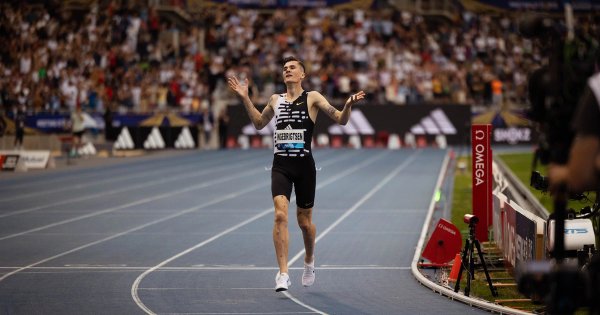
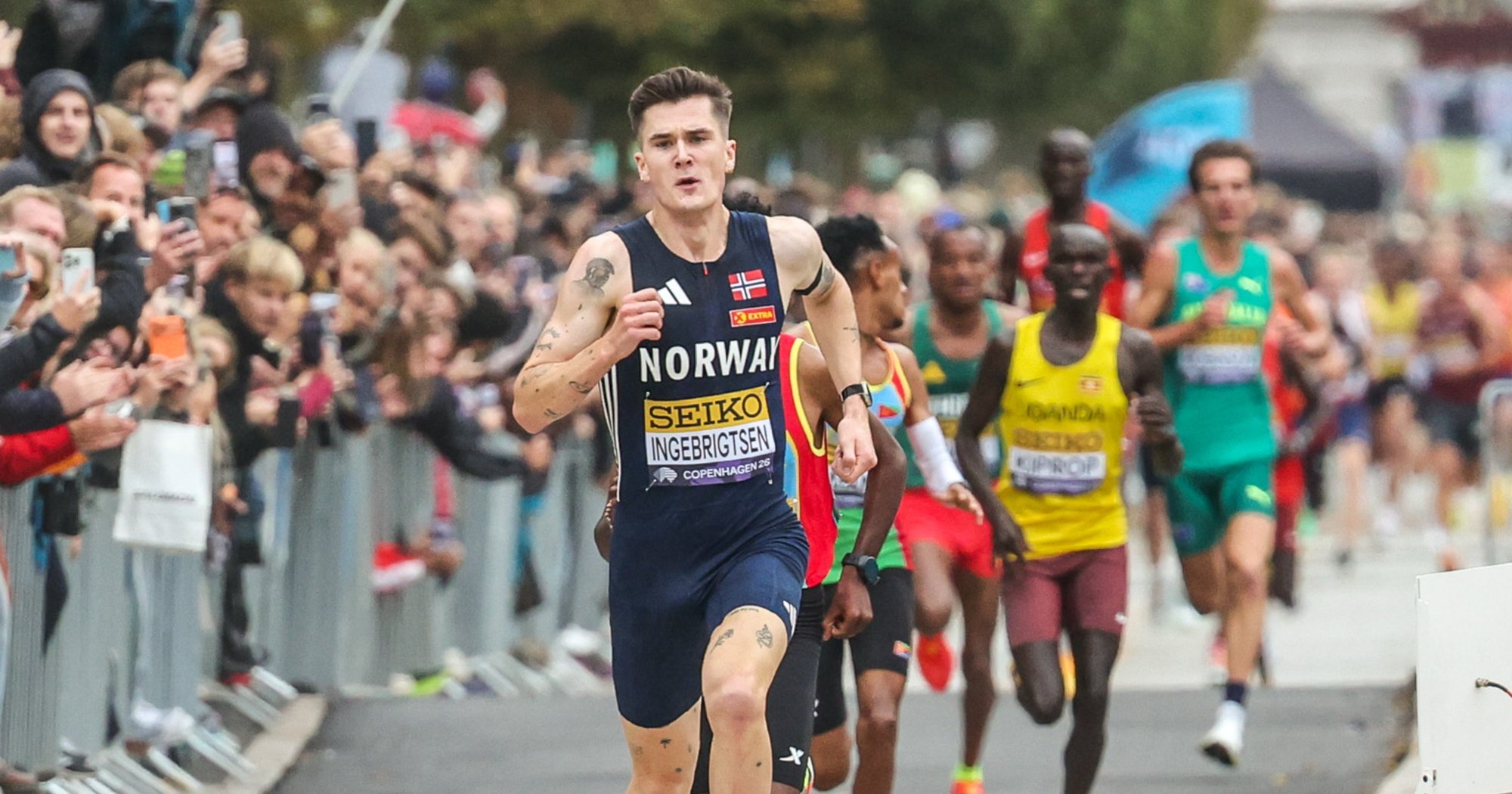
In the front half of the 2026 season, track and field was really missing Jakob Ingebrigtsen. The persistent Achilles trouble that had shortened parts of his 2024 and 2025 campaigns reared its ugly head, requiring the nine-time global medalist and five-distance world record holder to undergo surgery in February. That meant that for the better part of the summer, Ingebrigtsen wasn’t taking the lead of every Diamond League 1500m, but perhaps just importantly, he wasn’t walking through every mixed zone.
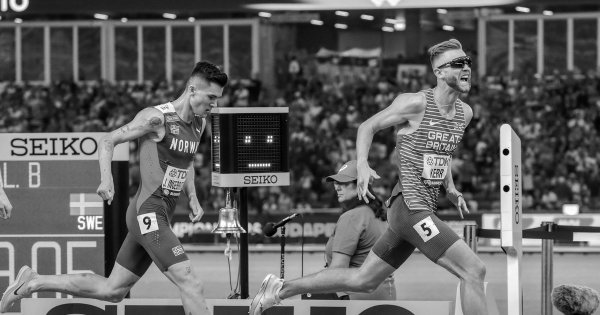
As has been well-documentedbythis newsletter, Ingebrigtsen is one of the sport’s most prolific racers on the track and talkers off it (often in direct opposition to his grand rival, Josh Kerr). Among other unfortunate impacts of Ingebrigtsen’s injury, the lack of direct reaction to Kerr’s world-record run in London surely deprived us of a memorable soundbite or two. Ingebrigtsen is, after all, both the indoor mile WR holder and the man who came closest to taking down the previous outdoor mark before Kerr got to it first.
Of course, the Norwegian superstar isn’t always making headlines in direct opposition to his Scottish counterpart. Whether it’s voicing his desire to get every single distance world record, offering what some considered to be excuses after losing, or speculating that he himself may be on the autism spectrum, a Jakob Ingebrigtsen interview is never boring. Even when pressed to consider the very nature of his rivalry with Kerr, Ingebrigtsen dropped this heater in the Telegraph in January:
“I don’t know why he is so interested in me, but I guess it’s because I’m the one to beat. I respect my competition and my opponents but that’s what they are. If I can do what I am able to do, and try to focus on my own things, and do that as good as I can, it’s irrelevant who I am standing beside. I’m on my own mission.”
You don’t get that sort of bravado from many others in track and field. This sport and those who follow it love hard work and humility, even at the expense of entertainment. It’s easy to understand why many athletes are far more risk-averse than Ingebrigtsen when it comes to talking with the press. Just look at the recent collective crash-out on track Twitter when Melissa Jefferson-Wooden simply said she aspires to be the greatest of all time on the Night Cap podcast. That wasn’tt exactly a radical statement from a professional athlete, and yet, all the most annoying people on the Internet had plenty critical to say about it. It’s hard out here in the comment section.
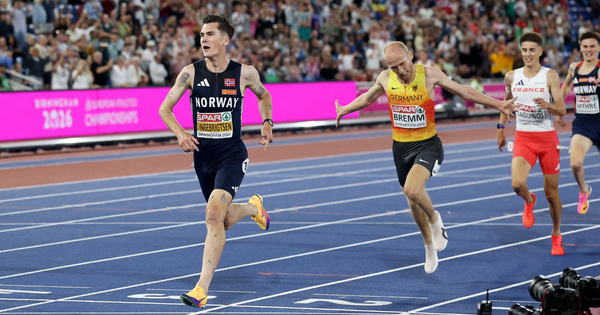
So whether it makes you love him or hate him, the fearlessness with which Jakob Ingebrigtsen steps in front of a microphone was sorely missed during his injury. But then he returned, winning the European Championship 5000m in a lethal kick, and with his winning ways came the sh*t-talking.
Basking in the glow of his seventh European title, Ingebrigtsen was asked about Kerr skipping the UK-hosted championship. He didn’t mince words. “I definitely think it is ruining the sport if we are not participating,” he responded, leading to another round of inflammatory headlines along the lines of JAKOB SAYS JOSH IS RUINING THE SPORT.
In just his fourth race back, Jakob found himself a little miffed at the pacing and racing situation in the Brussels Diamond League final. In a fiery post-race mood, he summed up the experience as “racing against a bunch of cowards” and referred to “everyone in the race, me included” as losers. That didn’t take long.
In a matter of hours, Camp Ingebrigtsen tried to fix up that that little PR snafu by clarifying his comments, but in his apology, he still maintained that Olympic champ Cole Hocker “acted cowardly” by bringing his own pacer than not chasing the rabbit when the gun went off. It seems the drama between Hocker and Ingebrigtsen was later resolved with an in-person, off-the-air chat, but the overall message was clear: cocky Jakob was back, baby.
In the leadup to World Ultimates, middle-distance fans and drama-lovers around the world were salivating at the advertised reunion between Ingebrigtsen, Kerr, and Hocker in the 1500m, the first time the trio had raced head-to-head in two years. Kerr, of course, had to respond to Ingebrigtsen’s earlier comments, pleading that he was “not a robot” and carefully selected his races to maximize performance while staying healthy. (Ironically, it was Ingebrigtsen who ultimately prioritized his health over the competition, dropping out of the 1500m after winning the 5000m in Budapest.)
With the books now closed on the 2026 season, the return of Jakob Ingebrigtsen like a proverbial tornado ended up being one of the most memorable and closely-followed narratives of the entire year, even if it was largely confined to a month or so of racing. In that short period of time, it reminded us of three key elements in selling sports as mass entertainment:
Rivalries drive views. There’s only so much interest you can mine from one athlete vs. the clock; a time-trial race only plays out one way and the barometer of success is often the binary “did you, or did you not, break the record you’re chasing?” Personality-driven rivalries can be entertaining week in and week out, with endless permutations and a lore that grows with each race.
Races are short. There’s only so much a broadcast can do with three and a half minutes of racing. If you want people to stay tuned before and after, you need to give them something else to watch. Whether that’s online interviews or social media chirping, it’s a critical part of the draw of any sport broadcast.
Keep ‘em coming back. Part of what made the last month on the 1500m circuit so entertaining was the next race always being around the corner. Will being called out for not leading change Hocker’s race strategy? Will Josh and Jakob shake hands at the finish? It’s not enough to have drama after one race; you ideally need the next big matchup to be coming up soon to strike while the iron is hot.
And perhaps at the end of the day there’s a secret, important fourth lesson: it’s not that serious. Everyone we’re talking about here is making rent by running in circles, not by going to war or performing open heart surgery. Perhaps that’s a lesson that Ingebrigtsen has learned as he’s matured as an athlete and person—he hadn’t always matched his fiery rhetoric with humor in his younger years. Now married and a father at the ripe old age of 26, Jakob isn’t afraid to inject a little levity, capping his World Ultimate experience with a joke Instagram caption under a photo of him and Kerr chatting on the infield.
Jakob Ingebrigtsen is many things, but here’s a few he’s not: Bland. Cautious. Dull. He’s hardly the most polished political presence on the circuit, and thank goodness for that. If you want to hear an Olympic medalist stick to the script and ruffle no feathers, there’s literally hundreds of hours of press conferences and podcast interviews to choose from. But after a few long months without the Jakob Ingebrigtsen Media Experience in our lives, it’s a welcome relief to see one of the best talkers in the sport back at the top of his game. Keep it up.

David Melly
Since David began contributing to CITIUS in 2018, he's done a little bit of everything, from podcast hosting to newsletter writing to race commentary. Currently, he coordinates the social media team and manages both the CITIUS MAG newsletter and The Lap Count, supplying hot takes and thoughtful analysis in both short- and long-form. Based on Boston, David breaks up his excessive screen time by training for marathons, crewing trail races, baking sweet desserts, and mixing strong cocktails.