By David Melly
December 17, 2025
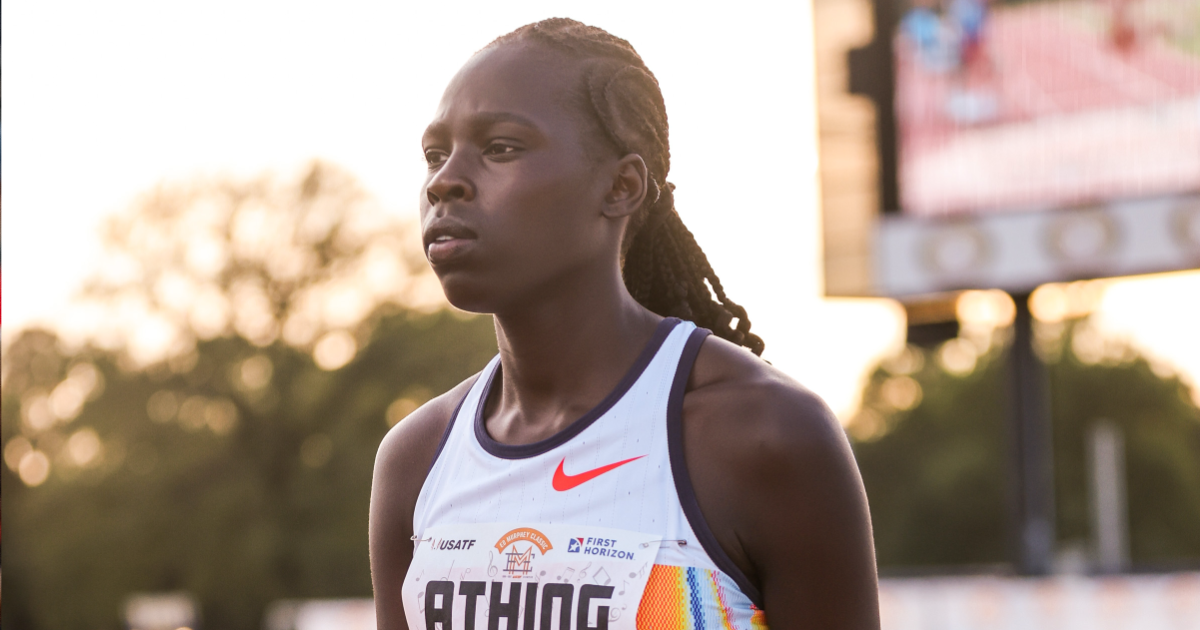
Last week, a major story disrupted what’s traditionally to be a slow period in track and field news: American record holder Athing Mu-Nikolayev has parted ways with coach Bobby Kersee after three years working together.
Normally, a coaching switch for an athlete who didn’t make it out of this year’s 800m semifinal at USAs would barely warrant a bullet point in the highlights zone of this newsletter, let alone its own section. But Athing Mu-Nikolayev is no also-ran, even if her 2025 season didn’t go as she’d hoped. In case your memory got hazy over the last few seasons, remember that:
– In 2019, Mu-Nikolayev broke the American indoor record over 600m at age 16. In that race, she won her first U.S. senior title and beat Raevyn Rogers, who would go on to win World silver in Doha later that same year, while Mu-Nikolayev was still in high school.
– In her sole collegiate campaign, Mu-Nikolayev set the indoor and outdoor NCAA 800m records, plus the outdoor 400m record (since broken), and won three NCAA titles. Despite all the trackflation that’s followed, she remains the sole woman to run under 1:59 indoors and 1:58 outdoors in college.
– Just after turning 19, she proceeded to win USAs outdoors and the Olympic title in 1:55.21, an American record, becoming the youngest American woman to win gold on the track since 1964.
– The next year, she won the World title at Hayward Field in Eugene, the first American World champion in the 800m.
– Since switching to Kersee in 2023, the results haven’t been as consistent and she has battled injuries, but she did lower her own American record to 1:54.97 at the 2023 Prefontaine Classic.
– Mu-Nikolayev currently holds the No. 1, 2, 3, 6, and 7 marks on the American all-time list for 800m.
– She is only 23 years old. By the time the 2036 Olympics roll around, she will be 34.
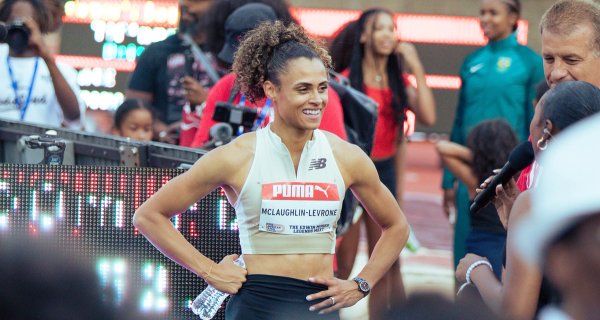
Okay, you probably knew most of that. But when laid out all at once, it helps demonstrate why the career and coaching status of one athlete matters so much. On the current track and field scene, the list of athletes who have accomplished so much so young is pretty much three names: Mu-Nikolayev, Mondo Duplantis, and Sydney McLaughlin-Levrone. You could argue that Femke Bol and Keely Hodgkinson deserve inclusion on that list, but their best stuff has come in their 20s, not as teenagers, so their prodigy status deserves at least a small asterisk. With the LA28 Olympic cycle firmly underway, the stakes for the next phase of Mu-Nikolayev’s career—not just for her personally, but for all of Team USA and the sport of track and field broadly—are about as high as it gets.
Without dwelling on it too much, it’s safe to say that the Bobby Kersee experiment was largely unsuccessful. It was certainly an interesting notion: see if one of the greatest sprints/jumps coaches of all time could steer a speed-oriented middle-distance runner toward world domination, but for whatever reason—poor coaching fit, poor injury timing, or just poor luck—it didn’t translate. But despite having done a bit of it to open this section, we’re not here to navel-gaze; it’s time to envision a bright future ahead.
Where should Athing Mu-Nikolayev look next for guidance? Surely, her options are pretty limitless (within the bounds of what is surely an iron-clad Nike contract), but in some sense, there really isn’t a perfect fit. Coaches capable of consistently producing world-class 800m results aren’t exactly a dime a dozen, and those with experience guiding a truly generational talent to long-term success are even fewer. Throw in a presumed desire to remain in a warm part of the U.S. and the aforementioned contractual obligations, and you’ve got a lot of competing interests with no obvious solution. Here are a few of the best ones:
Retire: We pray to the track gods this isn’t a realistic option, but we fear it’s not as unlikely as it might be for a 23-year-old with many fast years ahead. Athing has been candid about the mental challenges of being so good, so young, combined with the challenge of bouncing back from the devastation of her 2024 fall at the U.S. Olympic Trials. Given that she has plenty of time to right the ship and rediscover her love of competing, this particular path is hopefully a long, long ways away.
Joanna Hayes: The UCLA head coach is known for her accolades as a hurdler, but Hayes’s stable of professional athletes includes Mu-Nikolayev’s co-medalist from Tokyo, Raevyn Rogers, as well as fellow former teen phenom Sammy Watson. In many ways, this is the safe choice—staying based in Los Angeles, sticking with a coach with a very similar resume to Kersee, and training with other speed-focused 800m runners.
Diljeet Taylor: The charismatic force behind the ladies of BYU and the Provo chapter of Swoosh TC may have more of a reputation as a long-distance coach, guiding the likes of Jane Hedengren, Courtney Wayment, and national-championship-winning cross country teams, but she also coaches the woman right behind Mu-Nikolayev on the NCAA all-time list, Meghan Hunter. Living at altitude and training with a more distance-oriented approach would certainly be a change for Mu-Nikolayev, but if anyone has shown the capacity to thrive on the mental side of coaching as well as the Xs and Os, it’s Taylor (who is, herself, a former elite middle-distance athlete).
Another college-based group: If what Mu-Nikolayev wants to do is stay close to a university-based program, there are a few options, most notably returning to her former Texas A&M coach Milton Mallard (now at Arizona State), Stanford coach JJ Clark, or the growing group of pros training under the Johnsons at Arkansas. In an ideal world, there would be more separation between the collegiate and professional ranks of track and field, but we’re not going to hold Athing to task to our broader gripes about the sport.
Derek Thompson: It’s been a little while since the Philadelphia-based 800m guru was consistently churning U.S. titles out of his star pupil Ajee’ Wilson, but others, including Raevyn Rogers, Nia Akins, and Charlene Lipsey, have been guided by Thompson in recent years as well. And let’s not forget that Wilson made the final at USAs last year, and in many ways is the perfect training partner-slash-mentor for an athlete like Mu-Nikolayev. Wilson parlayed a standout high school career into a decade of international success, and though she never quite reached the heights that Mu-Nikolayev did, she and Thompson sure know a thing or two about what it’s like to be in those shoes.
Hear us out… M11 track club: What would the craziest possible plot twist for 2026? If Mu-Nikolayev crossed the pond to train alongside her chief rival, 2024 Olympic champion Keely Hodgkinson. But it’s not as crazy as it sounds: Hodgkinson already welcomed another friendly rival, Georgia Hunter Bell, into her training group, and just last month, the group, led by Trevor Painter and 2009 World 800m medalist Jenny Meadows, added American Elise Cranny. Location aside, it may very well be the best fit in terms of training partners.
Wherever Mu-Nikolayev does land, they’ll be lucky to have her. And whatever path she takes will, for better or worse, be dissected and scrutinized by fans and media alike. While it may not be the fairest or truest lens, the success of her next coach will ultimately depend on the results the two produce together. For an athlete of Mu-Nikolayev’s caliber, true long-term success probably depends on accomplishing one of two things: A second Olympic gold, something only one other woman in history has achieved, or the world record, which has stood for 42 years. Talk about grading on a harsh curve.
David Melly
Since David began contributing to CITIUS in 2018, he's done a little bit of everything, from podcast hosting to newsletter writing to race commentary. Currently, he coordinates the social media team and manages both the CITIUS MAG newsletter and The Lap Count, supplying hot takes and thoughtful analysis in both short- and long-form. Based on Boston, David breaks up his excessive screen time by training for marathons, crewing trail races, baking sweet desserts, and mixing strong cocktails.