By David Melly
January 7, 2026
It may be a new year, but trackflation isn’t going anywhere.
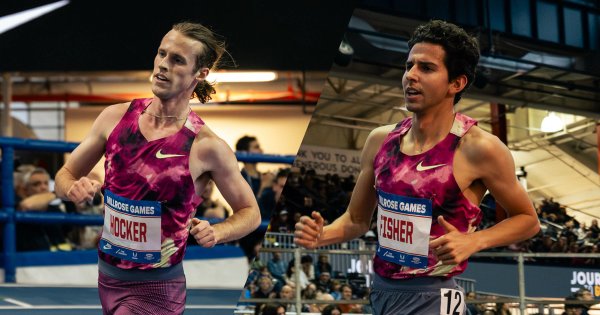
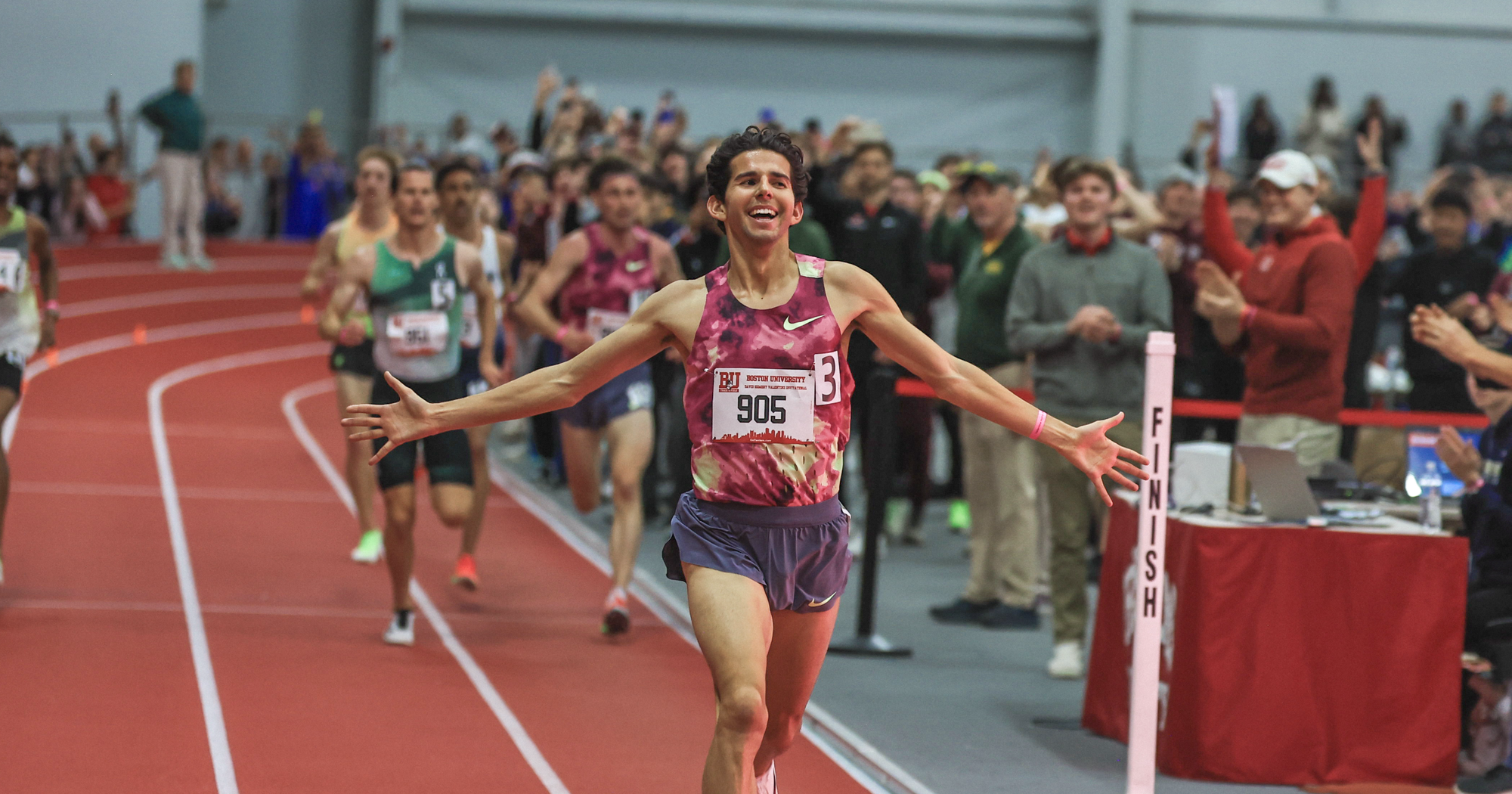
Every American distance runner who isn’t dusting off their cross country spikes or tuning up for Houston—which is to say, almost everyone—is begging their coach to send them to Boston with an exaggerated seed time in hopes of picking up a big PB or an early qualifier.
But if it’s not the tracks, it’s the spikes… the Wavelights… the bicarb… the training systems… the everything else… Looking at times from even ten years ago to now, we’re in a totally different ZIP code, particularly in the distance events.
A totally understandable response is to wanna rip up the record book, throw your hands in the air, and say that times don’t matter at all anymore. As tempting as that may be, however, there’s still a tiny, less-jaded, less-cynical fold in our brains that lights up when Grant Fisher clicks off lap after lap after lap of 30-second 200s en route to a new American record.
We inherently love to watch people run fast! Even if results become more difficult to compare across eras. That’s something the “competition is all that matters” crowd will always have to reckon with. And said crowd is probably feeling especially defensive after Grand Slam Track didn’t quite pan out as hoped. But there’s room for all sorts in the 2026 track tent, and we’re all about solutions that attempt to appease all stripes of track fan.
Whether or not you love World Athletics as a governing body, they have a lot of power to explicitly and implicitly tell us as fans what to care about. The World ranking system, meet quality ratings, championship qualifying standards, and even which events count as a “world records” versus a “world bests.” They’re all ultimately the product of WA telling us what matters, and how it matters, when it comes to performance.
And yet World Athletics doesn’t in any formal way track one of the most important determinants of time (at least for multi-lap races): whether or not there was a pacemaker.
For long-distance women’s times, WA does recognize the difference between the marathon world record (run with the assistance of mixed-gender pacing) vs. the world record (run in a women’s-only race). The latter is particularly important to Brits as the London Marathon has played host to the four “women’s-only” marks on the books since the difference received official recognition.
There’s ample precedent for World Athletics saying, essentially: These are different kinds of races that deserve different all-time lists. That’s the entire concept of an indoor—sorry, “short track”—world record. At this point, there’s way more difference between a rabbited and championship-style race than an indoor or outdoor track. Sure, you could draw up any other arbitrary distinction—old spikes vs. carbon, sunny vs. rain, etc.—but paced vs. unpaced racing is a recognizable, pre-existing phenomenon with a significance that track fans inherently understand.
Should this new system go into effect, plenty of the new records would have come from Olympic or World Championship events, especially in the 800m-5000m range. But that’s because there isn’t really an incentive for regular-season, non-paced racing. After World Athletics expanded its recognition of road world records down to the mile, an influx of road-specific exhibitions like the adidas “Road to Records” event and pretty much everything that happens in the city of Valencia followed.
In the long distances, it could make the marathon scene even more interesting. There are high-profile unpaced marathons, like Boston and New York City, but typically they also occur on tough, point-to-point courses where official records aren’t feasible or even an option technically speaking. As the World Marathon Major circuit continues to expand, it would be great for one of the additions to be a flat, fast course with no rabbits, since that’s not currently on offer.
It could also create an exciting new narrative in an event that… has a little bit of awkwardness around both official world records. The late Kelvin Kiptum’s 2:00:35 and Ruth Chepngetich’s 2:09:56 may very well not get broken again for a few more years (although don’t bet against Sabastian Sawe on the former point for too long…), but the unofficial unpaced world bests of Tamirat Tola’s 2:04:58 from NYC 2023 and Gotytom Gebreslase’s 2:18:11 from the Eugene World Championships are very gettable.
Editor’s note: Because this is not an officially recognized record, these are the research team’s best guess of the unpaced world records. If you know of a faster run we missed, let us know!
One of the most memorable world records of all time—David Rudisha’s legendary 1:40.91 800m at the 2012 Olympics—was made all the cooler by its purity. Rudisha led the whole race from gun to tape, no pacer. And while someone like Emmanuel Wanyonyi or Marco Arop could try and replicate his performance out of pure gamesmanship, why not try and create the circumstances for other events in non-championship settings to be just as dazzling? Noted frontrunners like Gudaf Tsegay, Jakob Ingebrigtsen, or Winfred Yavi would surely be up for the challenge.
We’ll never have a future where time doesn’t matter. But we can build one where context changes what times mean. As everything else around the constant of a ticking clock evolves rapidly, it’s worth exploring how we too can change without moving backward.

David Melly
Since David began contributing to CITIUS in 2018, he's done a little bit of everything, from podcast hosting to newsletter writing to race commentary. Currently, he coordinates the social media team and manages both the CITIUS MAG newsletter and The Lap Count, supplying hot takes and thoughtful analysis in both short- and long-form. Based on Boston, David breaks up his excessive screen time by training for marathons, crewing trail races, baking sweet desserts, and mixing strong cocktails.