By David Melly
October 14, 2026
Heading into the final miles of the Chicago women’s race, another intriguing battle was being waged up front.
The field featured four women who’d previously won World Marathon Majors. Of those four, Sutume Kebede was never really in the race from the jump, dropping out around halfway. Early on, the two expected names were hammering five-minute miles alongside their pacers: reigning champ Hawi Feysa and 2019 champ Brigid Kosgei, also the former world record holder. Kosgei was coming off a resurgent victory in Tokyo this past spring, and it looked like the two 2:14 women were prepared to turn this thing into a record-chasing slugfest, humidity be damned.
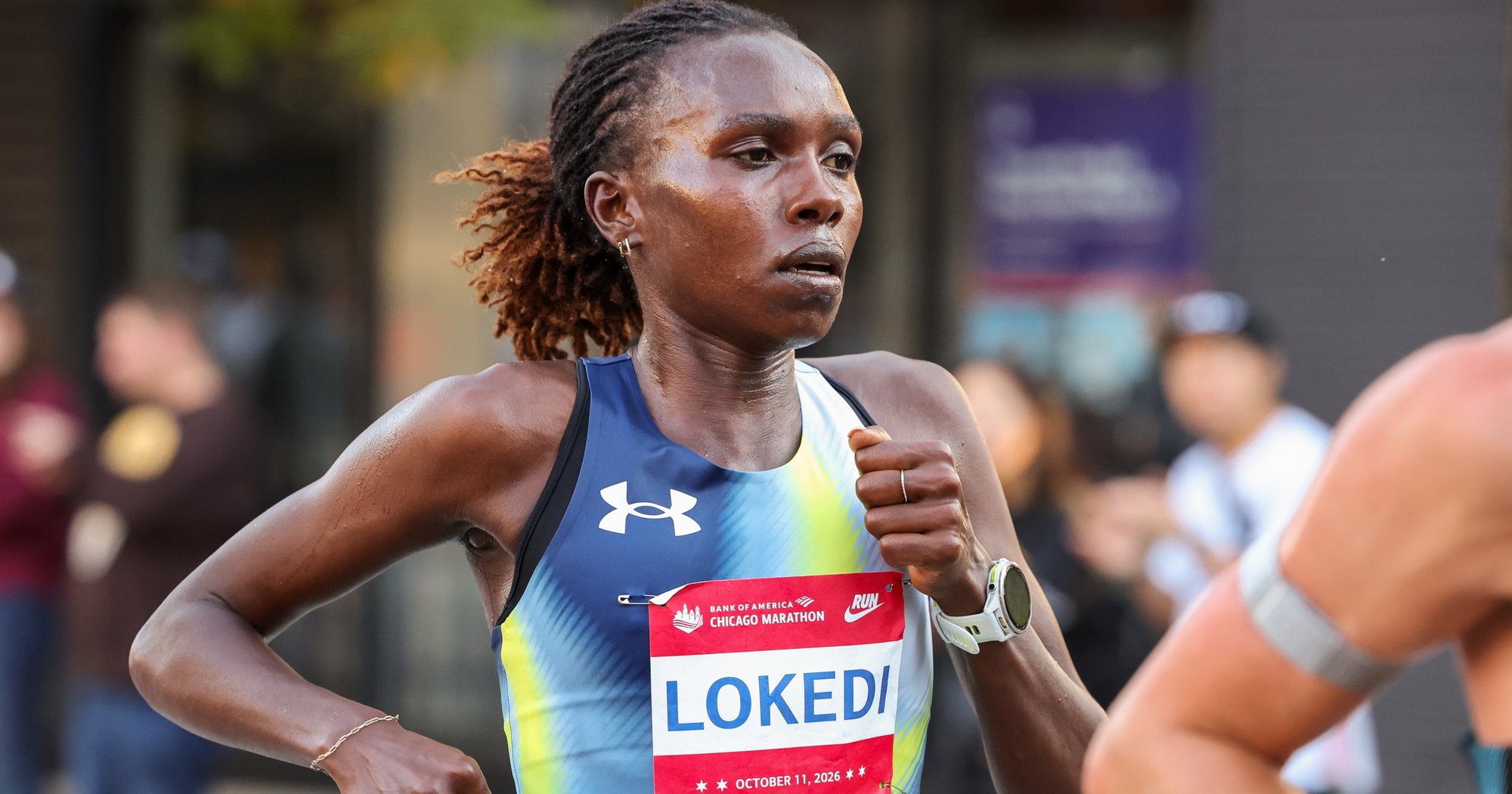
Relatively quickly, however, Feysa and Kosgei seemed to realize they were out a little too quick, which allowed a chase group to link back up with them by 20km. Comfortably nestled into that chase pack behind her teammate and pacer Jacob Thomson was one Sharon Lokedi. Lokedi had eight career marathons under her belt already, but she’d never run a race like this.
Aside from her fourth-place showing at the Paris Olympics, the Under Armour-backed Kenyan has bounced back and forth between Boston and New York, with pretty flawless results. In just shy of four years of marathoning, she’s now got seven podium finishes at World Marathon Majors and three titles, the most recent being a picture-perfect title defense in Boston this past spring. She’s run fast on those tough courses—most notably clocking the Boston course record during her 2025 victory over friendly rival Hellen Obiri—but she’d never run a flat, paced marathon before Chicago.
2:17:22 on Boston is nothing to sneeze at, but it’s also not a time that pops out on an entry list in an era where 10+ women have broken 2:18 each of the last five seasons. When the annual world #1 conversation comes around, athletes like Lokedi and Obiri get knocked down a peg (perhaps unfairly) because they prioritize championship-style racing over time trials. So it’s commendable that both Lokedi and Obiri, who ran 2:15:53 in her first London this past spring, would relish the opportunity to switch things up and try a new style of marathon rather than fall back on the familiarity of the Boston-NYC double.
Before the race, Lokedi’s coach Stephen Haas said he thought she was in 2:12 shape, but you never know how that’s going to translate. Lokedi’s run 31:06 for 10km and 65:00 for the half, but setting out at such a hot pace might feel uncomfortably quick for a runner who’s more accustomed to a steady progression toward a fast finish. It was both smart racing and good fortune that she didn’t go out with Feysa and Kosgei and that they came back so quickly, putting Lokedi firmly in the mix for the kind of performance she historically has used to win: a blistering closing 5k, or even last mile.
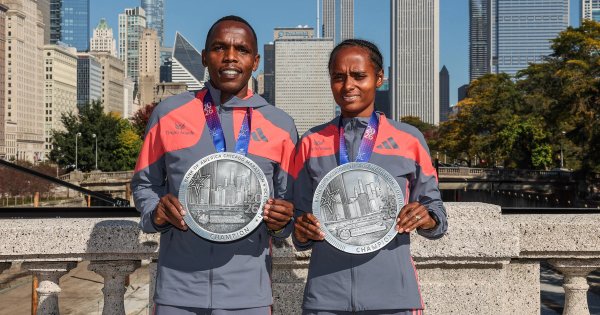
By 18 miles, the pace and the conditions proved too much for Kosgei, who would end up a perfectly respectable third but wasn’t able to contend for her seventh major title. With two miles to go, Feysa and Lokedi had a full minute’s lead but were locked stride for stride. If there were live odds available at the time, Lokedi would’ve surely been the favorite given her track record of strong kicks. But in the end, Feysa was able to give Lokedi a taste of her own medicine, closing in a 5:00 mile to defend her title in 2:13:33, an 84-second improvement on her PB from last year. Lokedi was forced to settle for second, but she still filled in the missing piece of her resume: her personal best is now 2:14:07, placing her #8 on the all-time list.
Of the seven women ahead of her, only a few can really empirically say they have better resumes than Lokedi. The three that stand out are Ruth Chepngetich (ugh), Tigst Assefa (five WMM wins, six podiums, #3 all-time), and Kosgei (six WMM wins, ten podiums, #7 all-time). Sifan Hassan is also worth a mention, but her love for the track has kept her marathoning career shorter than her peers’.
Lokedi’s reward for switching it up (aside from what was surely a generous appearance fee and prize money) is that she’s now inarguably among the five best women marathoners of the current era. The only name on the list she’s never beaten head-to-head is Assefa, although they have a small sample size, having only raced once, at the 2024 Olympics. Following Assefa’s London-Berlin double and gutsy tendon-shredding 2:11:04 at the latter, it’s hard to argue anyone else is world #1, but just as hard to argue that anyone else is empirically ahead of Lokedi.
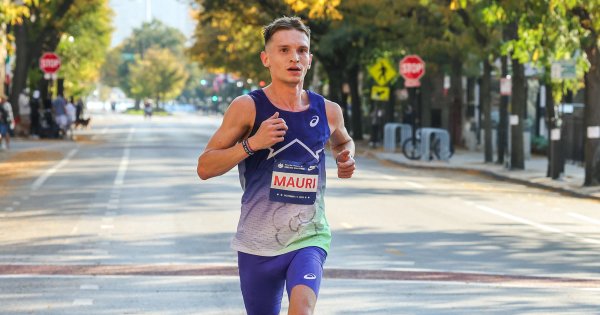
Stepping back, it’s a pretty wild career trajectory for the 2018 NCAA champion at Kansas who spent the first 3-4 years of her pro career hammering away at the track and short roads with no real breakthrough. Lokedi is, without a doubt, the most decorated marathoner to come up through the collegiate system since the days of Joan Benoit Samuelson and Frank Shorter. She certainly didn’t have the out-of-nowhere ascendance of a Vinny Mauri, but having three times as many WMM titles as NCAA titles is a pretty rare phenomenon.
Perhaps it’s hyperbole to say that Sharon Lokedi running Chicago was a bold risk to take, but it nevertheless delivered what we as fans want: the best athletes testing themselves in new and different circumstances in the primes of their careers. Even though she didn’t get the victory and complete her U.S. major set, she proved that she’s not a one-trick pony. If she returns to the streets of Chicago next year, it’d once again be hard to bet against her.
David Melly
Since David began contributing to CITIUS in 2018, he's done a little bit of everything, from podcast hosting to newsletter writing to race commentary. Currently, he coordinates the social media team and manages both the CITIUS MAG newsletter and The Lap Count, supplying hot takes and thoughtful analysis in both short- and long-form. Based on Boston, David breaks up his excessive screen time by training for marathons, crewing trail races, baking sweet desserts, and mixing strong cocktails.