By Citius Mag Staff
December 31, 2025
By David Melly & Paul Snyder
Happy last day of 2025! We hope that, for you, it was a year to remember and not one to forget.
For the track and field community, this year left us with a lot to process. A quick search through the newsletter archives finds four uses of the word “change” in our subject lines this year, with phrases like “forecast,” “wide open,” “worth a try,” and “what?” sprinkled in as well. With one Olympic cycle firmly in the rearview and another just picking up steam, it makes sense: 2025 was, ultimately, a period of mass transition.
As the clock ticks to midnight tonight, we have a lot more questions than answers. Somewhere between “who will I kiss when the ball drops?” and “how hungover will I be tomorrow?”, you may start thinking instead about the bigger, more long-term unknowns looming for track and field in the year to come.
What do pro leagues look like next year?
Every professional sport evolves over time, but few go through as many evolutions and permutations as ours. That’s because we’ve never really had a dominant professional circuit.
Currently, we have the Diamond League, which seems to persist as “best of all the bad options.” One big improvement we got out of the 2025 season was the reclassification of the DL final to one last big event before the World Championships. The positioning, in essence, traded a little bit of star power for real stakes: a lot of the top stars opted to skip out on Zurich, but increased prize money and the promise of a wild-card entry to Worlds kept things interesting. Sure, the meets are still hard to watch (in the U.S.) and can feel repetitive mid-season, but it’s still the closest thing we have to a Premier League for track and field.
There was still enough of a perceived gap in the market, however, that several entities stepped up to try and fill the void. Grand Slam Track took the biggest swing at a legitimate Diamond League alternative, but unfortunately was also the biggest flop. All the public-facing messaging around the League’s bankruptcy filing insists that GST will return for a second season, but there’s a bit of a “fool me once, shame on you; fool me twice, shame on me” sentiment at this point in the game. It’s safe to say that, until GST is able to roll out a compelling argument for its own continued relevance, no one is taking for granted that it’ll be a genuine presence on the pro circuit moving forward.
At the other end of the spectrum, ATHLOS NYC’s second one-off exhibition meet was enough of a purported success that the event, organized by Reddit co-founder Alexis Ohanian, has announced it’s expanding into a multi-event league for the 2026 season with stars Sha’Carri Richardson, Gabby Thomas, and Tara Davis-Woodhall attached as “advisor-owners.” Much like GST, there are more questions than answers at this point in time: How does a women’s-only event map onto a landscape that prizes gender parity? Will keeping its events in the fall ever move ATHLOS out of novelty status to feel like a “real” part of the season? Does the limitation of events to sprints, middle-distance, and long jump continue? Unlike GST, however, they benefit (at least in public perception) from taking an approach that’s generally seen as safer: starting small and expanding, rather than swinging for the fences and coming up short.
And then there’s the 11th-hour announcement that, once again, USATF will by trying to tie its disparate offerings into a branded package. This time, it’s a “USATF Tour”, which unifies 17 meets scheduled from March to July under one calendar. It’s unclear how this will be different from these meets operating entirely independently; the landing page for the site includes the notation “TBD” no less than seven times. You’ll need at least three different streamers to watch all the meets, and there doesn’t seem to be any clearly-stated prize or other incentive for athletes to participate in multiple events. The number of events isn’t even clear: the website says “16 unique events” but lists 17, the LA Distance Classic and LA Grand Prix are listed as separate events despite occurring on back-to-back days in the same city, and there’s an unnamed “Grand Prix” event set to air on NBC that has a date but no location.
It would be great if there was a unified domestic circuit for professional track and field in the U.S. It would be great if there was a premiere showcase for the best of women’s sports with a hefty prize purse. And it would be great if we all agreed to prioritize one A-tier circuit that mattered throughout the regular season. But more than anything else, it would be great if we could build a little year-over-year momentum for any one of these initiatives rather than facing down a whole bunch of unknowns each December.
How does World Ultimate Champs shape the season?
One of the few positive side effects of a life-altering global pandemic was that we haven’t had a track season without a global championship since 2018. In 2026, we’ll see what a season looks like when the entire sport isn’t oriented toward a ten-day conclusion where gold medals drown out any other metric of success.
Or will we? World Athletics is rolling out its new “World Ultimate Championship,” which, despite its name, is a three-day track meet and not a frisbee tournament. On paper, it’s sort of an unholy hybrid of a true global championship and a beefed-up Diamond League final, with most, but not all, events slated for a one-round final with big prize money on the line.
How this slots into the global calendar, and how it is perceived, remain to be seen. For steeplechasers, it might be business as usual, given that the event is omitted entirely (same goes, at least this year, for a number of jumping and throwing events). Small fields of 16 athletes on the track and 8 in the field will mean that simply qualifying for the meet will be prohibitively difficult, if not impossible, for even most pros. Conversely, it relies a lot on the biggest names to lend their star power to the event—only a few passes or withdrawals from reigning World/Olympic champs could make this event feel too small in a hurry.
Adding a new championship-style event to a non-championship year is a great idea in theory, but it has to feel like a championship level of stakes and competition to be taken seriously.
Does 2026 become the year of the comeback?
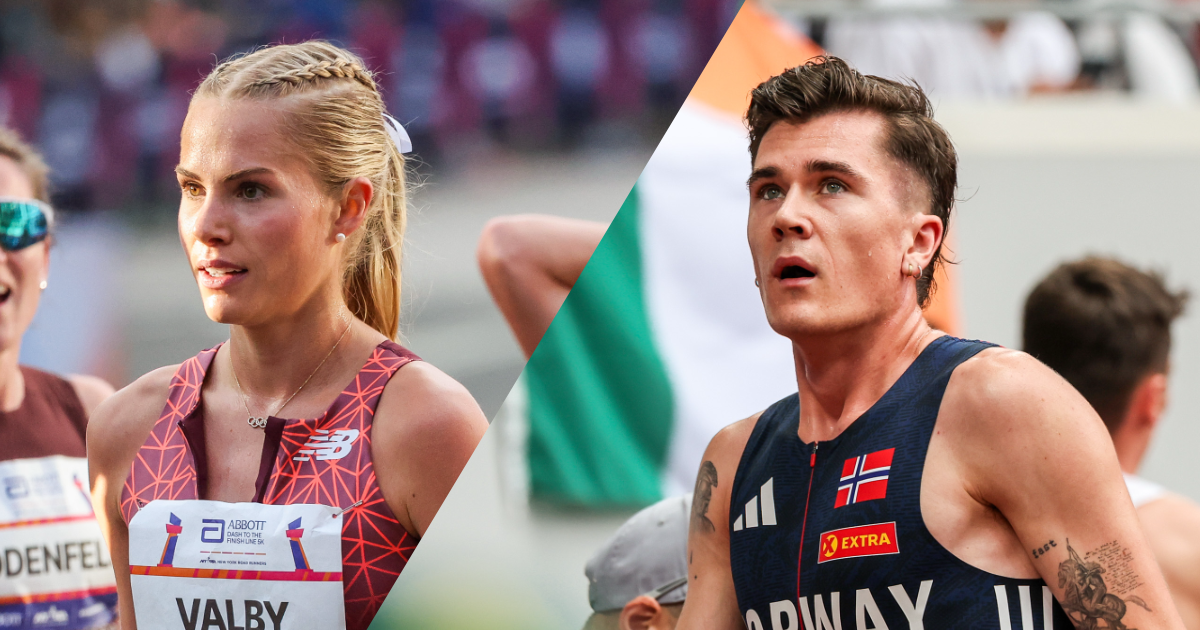
2025 was a year to forget for more than a few of the sport’s biggest stars. Olympic champs like Grant Holloway and Jakob Ingebrigtsen battled injuries and less-than-perfect returns, whereas domestic stars like Elle St. Pierre and Parker Valby returned late from long breaks. Some of the most dominant athletes of the last decade – like Yulimar Rojas, Shericka Jackson, and Soufiane El Bakkali—were not able to return to the top of podiums they’d once frequented.There’s a silver lining in each of these individual storm clouds, however: everybody loves a comeback story.
A year or two ago, athletes like Holloway and El Bakkali simply couldn’t seem to lose, and it was starting to get boring. Now, they get to head into 2026 with a chip on their shoulders rather than a target on their backs. Ingebrigtsen and Rojas are current world world record holders who remain squarely in their primes, at 25 and 30 years old, respectively. A few years of bad Achilles luck can’t possibly keep two of the sport’s biggest talents down for too much longer, right?
St. Pierre and Valby both returned to racing in November at the Abbott 5k in New York. St. Pierre was coming back from giving birth to her second son in May, and Valby was finally healthy again after an injury-plagued rookie season. Together, they represent two of the country’s biggest distance talents, but right now, we’re not quite sure where they fit into a broader pecking order where Nikki Hiltz and Sinclaire Johnson are dominating the middle distances and Shelby Houlihan has re-entered the chat.
Last, but certainly not least, there’s the crop of 30-something sprint stars who aren’t quite done. Shericka Jackson is just two years removed from her epic 21.41 200m gold in Budapest, and at 31, she’s still got the better part of a decade ahead of her if her countrywoman Shelly-Ann Fraser-Pryce is a model to follow. Trayvon Bromell already had a bit of a comeback season of his own, getting back atop the 100m ranks on the DL circuit but still falling short of the podium at USAs. And let’s not forget that both Tokyo Olympic champions, Elaine Thompson-Herah (33) and Lamont Marcell Jacobs (31) aren’t totally over the hill just yet, even if they’re a little farther removed from their best seasons and haven’t shown signs of life in a while. Ya never know.
Who tries a new event next?
2025 saw Sydney McLaughlin-Levrone forego the hurdles during her typically blistering trips around the oval. That foray into a new-ish-to-her event culminated in another gold medal, a 47.78 world-leading time, and a new American record. We already know that the closest thing to a rival SML has in the 400m hurdles—Femke Bol—will be experimenting with the 800m in 2026, and has already been spotted exploring fascinating training systems in her pursuit of half-mile glory. New events are in!
It’s pretty clear that if McLaughlin-Levrone gives the 400m her undivided attention for another season or two that she would have realistic ambitions to break the world record. She’s demonstrated world-class ability at this “off event” at every level of her competitive life. And what else does she have to prove in her primary event?
Male 400H World champ Rai Benjamin has also talked about wanting to take on the flat 400m or even the 200m in future seasons. Is there something about the hurdles that makes them get really boring over time? Regardless, it’ll be fun to see if Benjamin can improve on his PBs of 44.21 from 2023 or 19.99 from 2018. Heck, he even ran a wind-legal 10.03 in 2020 – is 2026 the year that births the first sub-10/sub-20/sub-44/sub-47 runner in history?
If there was ever a time for stars who’ve solidified their place atop one event to try another, it’s now. What’s to stop Faith Kipyegon from going even longer in distance, when she could always retreat to the safety of the 1500m if it doesn’t work out? Heck, even Jakob Ingebrigtsen has teased a return to the steeplechase. And simply typing out the words “Grant Fisher marathon debut” will trigger some sort of seismic activity as distance bros all over the world start to jump up and down with excitement all at once. And over in the infield, there’s one true wild card who could mix things up: Ryan Crouser.
Crouser is the best male shot putter in history, yes. But he still holds the American high school national record in the discus (72.40m) and secured World Youth Championship silver in that event back in 2009. During Crouser’s last complete outdoor season, 2024, his World ranking score in the shot was 1520. During 2025, the highest ranking attained by a discus thrower was 1476, belonging to Mykolas Alekna. Now those numbers should be taken with a grain of salt—comparing greatness across disciplines is tricky business—but if you’re Crouser, coming off an injury-shortened-ravaged campaign that still saw you win World gold in the shot, don’t you at least think about kicking the tires on a different event that you were historically great at as a teen, and that might tax your shot-put-worn body in different, career-extending ways?

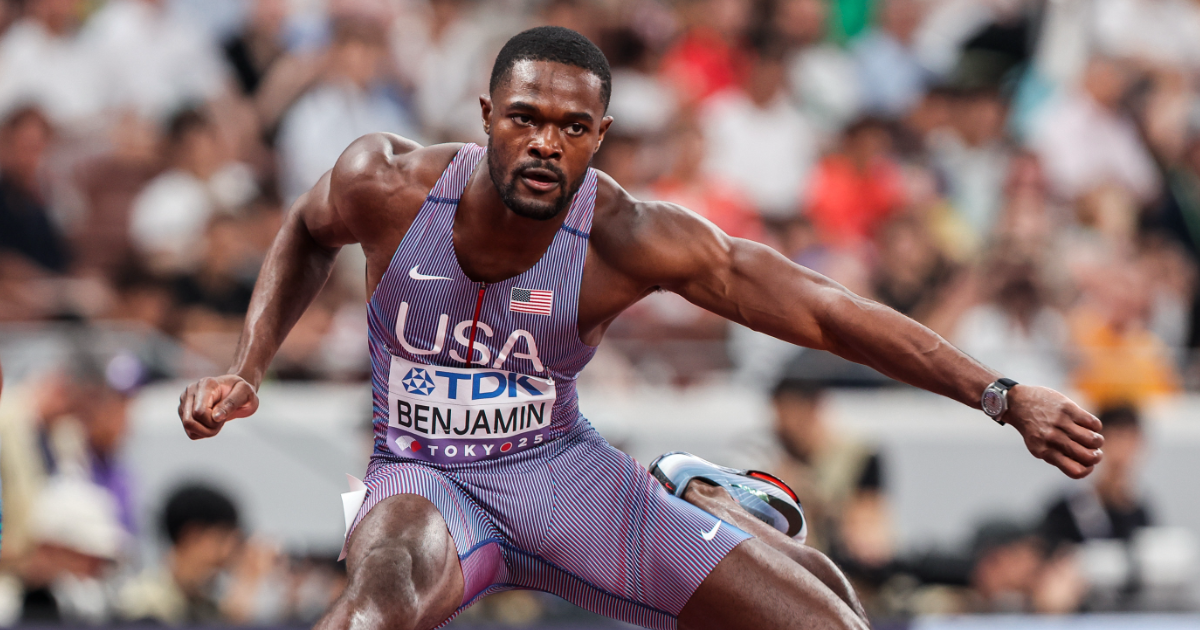
Rai Benjamin | Photo by Kevin Morris / @kevmofoto
Will those pesky sprint records ever start to sweat?
If there’s one thing we haven’t wondered lately, it’s whether or not the men’s and women’s sprint world records will survive the season. Usain Bolt and Florence Griffith-Joyner’s 100m/200m ma\rks haven’t come under serious threat in a long while, with the potential exception of Elaine Thompson-Herah’s 10.54 in 2021 or Shericka Jackson’s aforementioned 200m.
That feeling of certainty may start to get shaky before long, however. Melissa Jefferson-Wooden’s breakout 2025 season ended with her running 10.61 and 21.68, and she’s not yet 25 years old. Just as importantly, the rivalry between her and Olympic champ Julien Alfred will keep both women pushing one another forward, potentially creeping under that 10.60 barrier or even closer to FloJo’s 10.49.
Bolt’s legendary records feel a little safer, but Kishane Thompson’s 9.75 from June was the fastest wind-legal 100m in six years and he too is only 24 years old. He’ll get plenty of competition without even leaving the island of Jamaica, as World champ Oblique Seville is only 24 as well. And speaking of competition, a full season of healthy racing from the third- and fifth-fastest 200m runners of all time, Noah Lyles and Letsile Tebogo, could be just what the doctor ordered for both men to hone in on Bolt’s 19.19 mark.
Will Swoosh TC become a real thing?
Go ahead and type “swoosh tc” into Google. You might expect to be served a deluge of hype-building content, slick branding, or pre-fabricated ads coming out of Nike’s new-in-2025, three-headed pro distance running training collective. At the very least, you’d think the group would have a website or an Instagram page. Instead, we just have a handful of press release-type articles from the usual outlets, all from February, when the group’s formation was made public.
This isn’t to say Swoosh TC—based in Eugene, Flagstaff, and Provo, and coached by Jerry Schumacher and Shalane Flanagan, Mike and Rachel Smith, and Diljeet Taylor, respectively—was a flop. It’s still likely the best-funded, best-coached, most promising collection of young athletes in the U.S. But… what is it?
Aside from the Smiths, the group’s coaches are currently double-dipping in the NCAA, blurring the lines between this being a purely professional venture and something more along the lines of a collegiate crew with “volunteer assistants” showing up for key workouts and using school facilities.
That sort of confusion can be overcome with some good old fashioned branding muscle—something the folks at Nike know a thing or two about. It’s very weird that the company known for powerful storytelling as much as its flashy shoes seems to have let the best runners from its home country in its favorite sport languish in this much ambiguity. So now the burden is on the athletes themselves to create an identity. Charles Hicks landing on the podium of a World Major sure would elevate the status of the Club Formerly Known as Bowerman! Perhaps the former UNC duo of Ethan Strand and Parker Wolfe continues its rapid ascension on the pro circuit. Or maybe Meghan Hunter brings a World medal home to Provo.
Until the Swoosh TC crew get defined by their results (or by a well-funded marketing campaign), they’ll be asking themselves the same question as the fans: “Who are we?”
Is Jane Hedengren a “one-and-done”?
There is probably no safer futures bet in all of sports than AJ Dybantsa, BYU’s star basketball player and the consensus #1 freshman in the country, declaring for the NBA draft at the end of the NCAA season. And yet, Dybantsa may not even be the best athlete on campus: That’s because his classmate, 19-year-old Jane Hedengren, just ran a ridiculous 14:44.79 for 5000m in December to knock eight seconds off the NCAA record.
But while Dybantsa’s next few months are set in stone, we don’t really know what the future holds for Jane. Given that she would be able to continue training under Coach Taylor—should she sign with Swoosh TC at least—and continue to live, train, and even study in her hometown of Provo, it’s gotta be awful tempting to ink a professional contract now while her stock is as high as it might ever be. If she were a male basketball player of equivalent talent, she’d surely be a “one and done.”
And yet, there are plenty of reasons to stay at BYU. While she very likely will end up racking up collegiate titles, she doesn’t have a single one yet. It’s never been easier to get the best of both worlds when it comes to elite running: she’ll get in high-quality reps against world-class competition in the NCAA and still get to toe the line at USAs, all while getting a college degree for free. Now that the NCAA, flush with NIL cash, is ostensibly a professional league in its own right, she can even make [some amount of] money doing it.
The trajectory of Hedengren’s freshman year will be the story to watch in the NCAA this spring. That much is certain. But which record and title boxes she’s able to check off, how fast she gets them done, and what the market looks like come June are far from certain, so her career path will be just as hotly speculated upon with each passing race.
Can Team USA reach the podium in Tallahassee?
The first-ever World XC on U.S. soil brings with it the promise of American medal potential… but can it really be done?
It’s been over a decade since either the men’s or women’s senior teams have landed on the podium—a 2013 silver for the men, and a 2011 bronze for the women. 1987 was the last time Team USA won gold, and even the rosiest of American boosters don’t see that as a realistic possibility in the face of Kenyan and Ethiopian dominance. In 2019, Uganda managed to claim a team win thanks to the 1-2 finish of Joshua Cheptegei and Jacob Kiplimo, but you’ve gotta go back to 1994 to find another gold medal winner that didn’t come from either of the two favorites.
The most recent U.S. medal-winning teams shared a 1-2 punch of star power that helped lower the score: Ben True and Chris Derrick for the 2013 men, and Shalane Flanagan and Molly Huddle for the 2011 women. Similarly, the men’s podium hopes for 2026 rest squarely on the shoulders of Nico Young and Graham Blanks, despite the fact that the duo finished only fifth and sixth at USAs. In order for a top-three finish to be realistic, Blanks and Young (plus U.S. champ Parker Wolfe) will need to contend on the international level they’ve shown themselves to be capable of via the Diamond League circuit.
On the women’s side, Weini Kelati is about as reliable a low stick as you can ask for, but whether she’ll be steps or minutes ahead of her teammates will be the deciding factor. It’s a lot to ask of Grace Hartman, still a junior at NC State, for example, but veterans like Karissa Schweizer and Ednah Kurgat could close the gap between USAs in December and Worlds in January and make things very interesting.
Can World Athletics finally make fetch happen relays relevant?
World Relays has always been the weird ugly duckling in the World Athletics family. You think World Indoors struggles for relevance? That thing is the Super Bowl compared with World Relays.
This year, the powers that be are betting big on the star power of 2024 Olympic 200m champ Letsile Tebogo to bring an electric home crowd to Gaborone, Botswana, in May, the first time the event will be held on the continent of Africa.
Tebogo, alongside with World 400m medalists Collen Kebinatshipi and Bayapo Ndori, will surely want to repeat their gold-medal performance from Tokyo, where the men’s team held off the American juggernaut to win the 4x400m title by 0.06 seconds. And given Tebogo’s versatility, he could headline the 4x100m as well, potentially setting up a rematch with the likes of Noah Lyles, should the U.S. star be enticed to make the trip. The events are 19 minutes apart on the current schedule, so it’s not likely, but a cameo appearance in the qualifying rounds could still put some butts in seats.
As World Relays enters its second decade of existence, its quest for relevance remains a very open question. Particularly in a year without a full World Championship schedule, the Relays may feel less relevant than ever before, as there’s only two events (the mixed relays at World Ultimate Champs) to qualify for.
Who leads track’s next foray into mainstream media?
For better or worse, the 2025 season did not put an end to one of the most persistently annoying questions facing the sport: Sure, track and field is a cute little niche pastime, but when will it really break through to mainstream audiences?
Whether you think the continued novelty status of the sport is good, bad, or somewhere in between, it’s a question that hasn’t gone away. Track and field highlights don’t dominate the SportsCenter Top 10, and you’ve gotta scroll way down on the list of highest-paid athletes to find your first runner. We’d like to think that the sheer excitement and thrill of the sport, marketed correctly, will one day break through, but it’s highly likely that extracurricular gimmicks will be as much of a factor as performance.
Does Sha’Carri Richardsonfind herself on the next season of The Traitors? Will Noah Lylesfinally race DK Metcalf? Will HBO’s next smutty gay romance series be based on Jakob Ingebrigtsen x Josh Kerr fan fiction? One can only hope. Beggars can’t be choosers when it comes to headlines and eyeballs, particularly if that attention drives badly-needed investment to our little-sport-that-could.

Citius Mag Staff