By Paul Snyder
June 24, 2026
The last time the U.S. U20 Championships were held in Eugene, Oregon, the year was 2014. The San Antonio Spurs were cruising toward the franchise’s fifth NBA title. Barack Obama was president. Hayward Field was still the wooden old Hayward Field. And a bunch of American teenagers qualified for their first taste of international competition as part of Team USA.
Qualifiers at that meet included: Raevyn Rogers (800m), Elise Cranny (1500m), Mary Cain (3000m), Kendell Williams (100m hurdles), Arianna Washington (100m), Kaylin Whitney (200m), Shamier Little and Sydney McLaughlin (400m hurdles), Elle Purrier (steeple), Quanesha Burks (long jump), Keturah Orji (triple jump), Raven Saunders (shot put), Valarie Allman (discus), Brooke Andersen (hammer); Trayvon Bromell (100m), Grant Fisher (1500m), TJ Holmes and Kenny Selmon (400m hurdles), and Curtis Thompson (javelin).
Twelve years later, this group has collectively accomplished quite a bit in the sport: Olympic and World medals, American records, impressive showings on the Diamond League circuit. Not all of them progressed into global podium threats, but each of them carved out something of a career for themselves in the sport—no small feat.
However, just like qualifying for World U20s didn’t necessarily lead to a big boy/big girl medal a decade later, there were plenty of athletes who finished outside of qualification at U.S. U20s back in the day and went on to much bigger and better things (Brittany Brown, for example, took third in the 200m and sixth in the 100m).
So which is it: a U.S. U20 breakthrough means O20 (a phrase we are desperate to coin for “over-20” competition) stardom; or making a U20 team basically means very little? It depends! The answer is complicated.
For starters, U20s are a weird event at both the U.S. and World level. They aren’t held every year, so there’s an element of randomness to who is eligible to compete. Being 19 in the right year can be a real advantage. Unless you’re the best to ever compete in your event—like Sydney McLaughlin-Levrone—you likely aren’t going to be good enough at 14(!) to take on college freshmen.
For American athletes, U20s aren’t necessarily a top priority before fall cross country season or after a long indoor/outdoor campaign. Distance runners especially may already be deep in summer training, and frankly, some kids who had a lot of success during the school year might, understandably, simply want a vacation. And of course there are the true freaks, the Cooper Lutkenhauses and McLaughlin-Levrones who are legitimate medal contenders at the senior level while still teenagers. The true top-end talent has the luxury of skipping U20-level competition entirely and jumping directly to the big show.
Even still, it’s worth keeping close tabs on U20 Team USA members to seem like a cool, knowledgeable track fan a few years from now. In 2014, the top U20 athletes were essentially still prospects: athletes you squint at in hopes of divining their futures. But this past weekend, about a dozen qualifiers for next month’s U20 World Championships—also in Eugene—are already competitive on the world stage at the senior level.
That’s where this current batch of U20 athletes feels different. This past weekend, New Hayward in New Eugene hosted the U.S. U20 Championships sort of in conjunction with Nike Outdoor Nationals. And a lot of the names at the top of the results have been at the top of high school ranks for years and making a splash in bigger ponds. They may not be poised to extend their season to the World Ultimate Championships after a speed run of Diamond League outings, but they’re already ranked favorably among their senior peers and have to be thinking that senior U.S. teams—and even medals—is no more than a year or two out of reach.
Take the 110m hurdles, for instance, which is rapidly becoming a Hayward Field trademark. Zacchaeus Brocks won it in 12.98, a new high school national record and a top-five time in the world this year including the seniors. Brocks, who will attend Ohio State in the fall, won by 0.002 seconds over Georgia freshman Le’Ezra Brown. To qualify for the World U20 team you had to break 13 seconds!
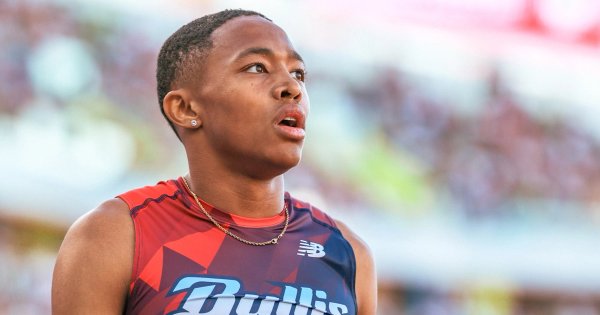
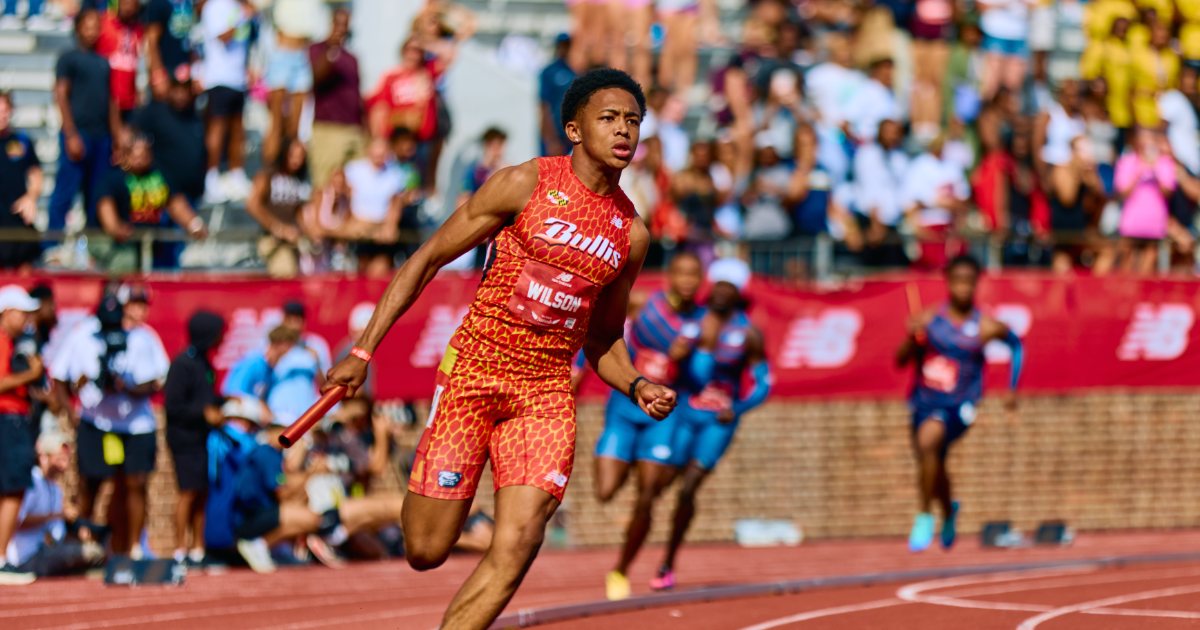
Quincy Wilson is already an Olympic gold medalist. He predictably made the U20 team after running 44.84 in the 400m final. But less predictably, he placed second to Jayden Deleon (44.52), which forces us to ask the question “is the kid with the Olympic medal even the top freshman going into the next year of NCAA competition?” Wilson will compete for Maryland and Deleon for LSU. Tate Taylor, a Texas Tech-bound high school senior, spent the better part of the spring traveling the world and competing against professional 200m runners. He’s ranked 14th in the world this year after his 19.94 victory in Eugene.
Wondering whether or not these guys take the next step to become stars almost feels like asking the wrong question… by basically any metric, they’re already stars. Even if they don’t get much better, they could all conceivably make a World final in 2027.
While the U.S. U20 women don’t have as many super-highly ranked athletes in the mix as the men do, to place in the top-two and advance to… well, Eugene again… you’ve gotta be a top-100 ranked athlete in the world, at least in the sprints or throws.
Oregon Duck signee Jaslene Massey is the high school record holder in the discus and California record holder in the shot put. She won both events in Eugene, and is ranked 43rd and 99th, respectfully, in the world in each. Mia Maxwell, who won both the 100m and 200m, is ranked 57th and 33rd. Her sister Mariah Maxwell placed second behind Mia in both events, and ranks 70th in the world in the 100m and 28th in the 200m. Ataja Stephane-Vazquez won the 400m in 51.08, which ranks the Georgia-bound senior 52nd in the world this year. Natalie Dumas’s 56.13 puts her in the 80th slot in the world in the 400m hurdles, but given her lifetime PBs—all set last outdoor season—span impressively from 51.14 in the 400m to 2:00.11 in the 800m, she feels like someone whose best event going forward could change.
An athlete ranked 28th through 80th in the world is already elite. You don’t need to perform advanced calculus or practice the dark arts of sports scouting to make the argument that plenty of 2026 World U20 Team USA members will go on to be great at the next level, too. That’s what makes this year so intriguing. Junior athletes generally have high ceilings, but these are high-floor athletes already established as globally competitive. We’ll certainly be tuning into World U20s in July… and keeping tabs on potentially lucrative futures bets for 2028 Olympic medals.

Paul Snyder
Paul Snyder is the 2009 UIL District 26-5A boys 1600m runner-up. You can follow him on Bluesky @snuder.bsky.social.