By Paul Snyder
December 10, 2025
It’s totally understandable if you’re feeling a little down about the world of elite marathoning over the past few years.
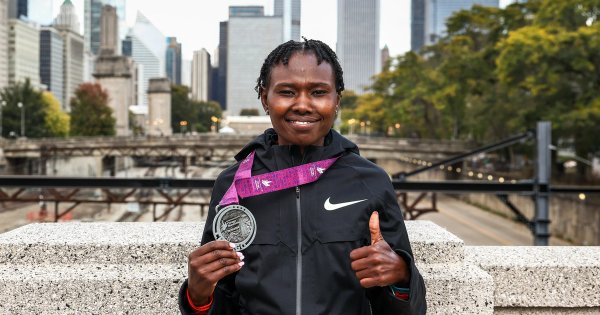
In 2024, Kelvin Kiptum, the fastest man to ever cover the distance (in a legal race setting), was killed in a car accident just four months after he ran 2:00:35 at the 2023 Chicago Marathon. At the 2024 edition of Chicago, Ruth Chepngetich obliterated the women’s world record, going 2:09:56—one year later she was handed a three year suspension after testing positive for a banned substance. And the marathon’s most celebrated figure and inarguable G.O.A.T., Eliud Kipchoge announced his formal retirement from elite racing, and a pivot to marathoning as a means of raising funds and improving global vibes.
A horrific loss of life. A serious blow to the sport’s integrity. A bittersweet farewell to the best to ever do it.
And yet, as we prepare to hang a new calendar and welcome in another year on the road racing circuit, we’re feeling more excited than ever. At the top of the heap, we’re witnessing some historically great athletes ascend into their racing primes—with true parity to boot, thanks to a continual reshuffling of the podiums at World Majors! Just behind them, we’re being treated to some fascinating career resurgences. And for good measure, we’re also sitting in the front row for a sort of living thought experiment on how technology, training, and tactics can expand the realm of the possible. What’s more, pretty much all the 2026 storylines we’ll be following got a lot more interesting after last weekend’s Valencia Marathon.
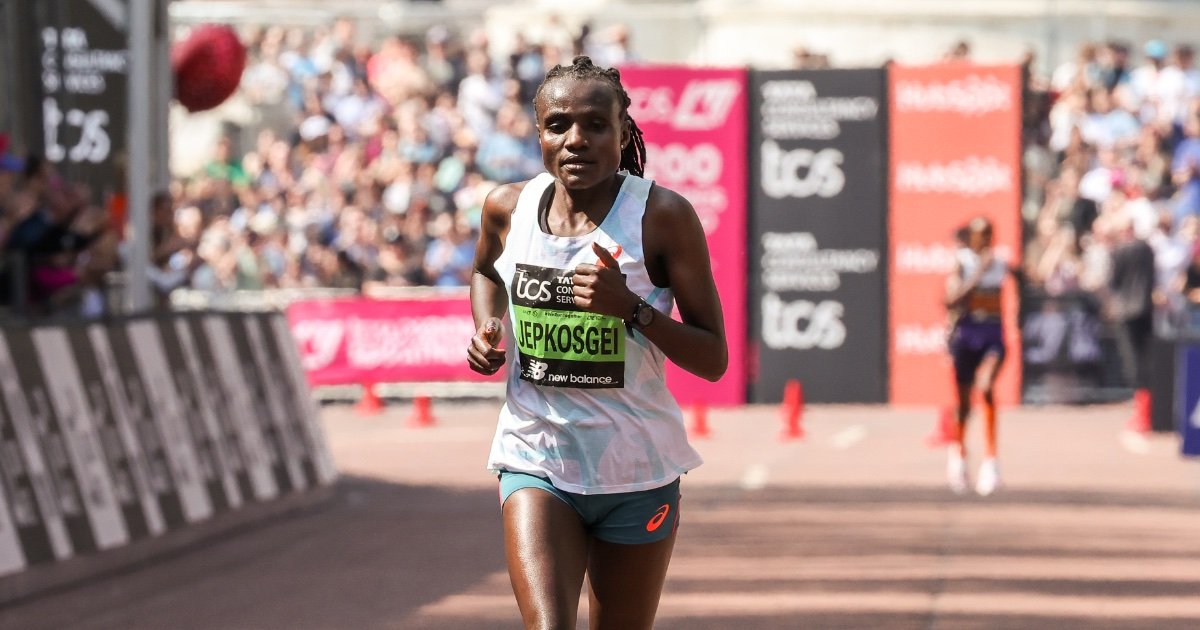
Let’s start with the thrilling duel that headlined the women’s race, which saw Joyciline Jepkosgei and Peres Jepchirchir running stride for stride until just under two miles remained in the race. At which point Jepkosgei turned the screws on Jepchirchir, and began to open up a gap that grew to 43-seconds wide at the finish line: 2:14:00 to 2:14:43—the next finisher clocked in at 2:20:38. For both Jepkosgei and Jepchirchir, it was their first time under 2:16, which puts them at No. 4 and No. 6 all-time, and elevates their PRs into the same echelon as the rest of their impressive resumes.
Coming in, Jepchirchir had never lost to Jepkosgei over 26.2 over their three previous showdowns. Jepchirchir had just one other marathon—and race, period—on her card for 2025: her gold medal performance from the World Championships. Jepkosgei’s 2025 schedule has been far busier, with plenty of under-distance racing, and only one other marathon: a 2:18:44, second-place showing at London. This is all to say, that with both athletes in their early 30s as they continue to get better, we are entering a truly exciting era for women’s marathoning.
Jepchirchir and Jepkosgei already sat firmly in the mix of the best-active-marathoner discussion, but both had some credible arguments going into their season that their best days were behind them. Jepchirchir looked damn near invincible in 2022, when she became the first and, to date, only woman to win the Olympic, New York, and Boston marathons in the space of nine months. She won London last year as well, but finished only 14th at the Olympics. Now, with two signature performances under her best in 2025, it’s clear she isn’t facing a downturn anytime soon. Similarly, Jepkosgei’s two World Major wins came in 2019 and 2021, but she hadn’t won a marathon in over four years before her victory Sunday. Her PB also knocked 2+ minutes off her prior lifetime best.
Their lowered PBs place them in even more rarefied air, and much closer to Tigst Assefa’s and Sifan Hassan’s. Plus, Brigid Kosgei isn’t done yet, as evidenced by her recent 2:16:36 clocking in Shanghai. But all these millennials will have to contend with Hawi Feysa, the 26-year-old “wunderkind” and reigning Chicago champ. If you look at the all-time list, a staggering number of ranking performances were posted over the past three years. All these stars shining so brightly at once can only mean we are in for even more exhilarating matchups in a year that didn’t have a decisive number one.
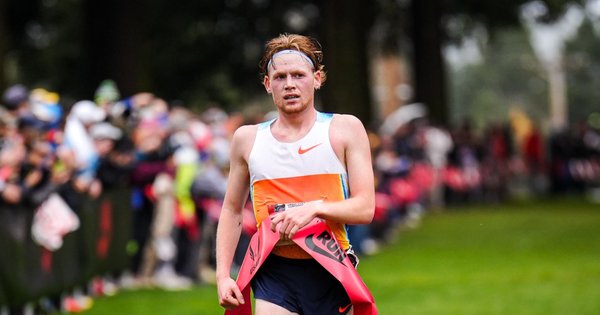
The men’s race wasn’t quite as captivating from a one-on-one slug-fest perspective, but it did solidify one thing in the minds of marathoning fans: John Korir has put that whole Chicago DNF thing behind him and believes he is the best marathoner alive. He won Valencia in a 2:02:24 after opening up a gaping hole on the field around 25k, a 20-second PB using a big negative split that sets him up nicely for an assault on sub-2:02 next season. It was a perfect end cap to a year that saw him also win the Boston Marathon.
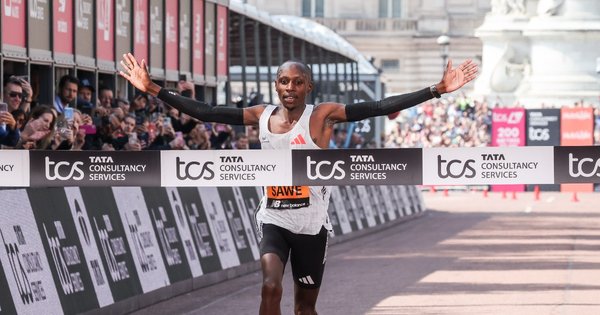
Korir, now No. 8 on the all-time list, has his work cut out for him as he stakes his claim as the current world’s best, but he’s gotta like how he theoretically stacks up in a battle between him, Jacob Kiplimo, Benson Kipruto, and Sabastian Sawe. Among that group, only Sawe has a stronger claim to 2025 supremacy, with two major wins to Korir’s Boston-Valencia double.
We obviously love rambling about the fastest times run on a given day, but part of what makes sport interesting is the more unexpected results and idiosyncratic approaches taken by those just behind the winners.
Case in point: in fourth place was Suguru Osaka. Yes, that Suguru Osaka. The former Oregon Project member who was, for years, treated more as a sparring partner for Galen Rupp in practices, and who last ran under 2:06 back in 2020. He appears to be back-back if his shiny new 2:04:55 PB is any indication. He last made a World Major podium in 2018, but he just broke the national record of a country that worships the marathon. If he’s thinking what we’re thinking, he’s likely hoping to stand atop another in 2026.
Just under two minutes behind Osaka came Paris Olympic gold medalist… in the triathlon(!) Alex Yee. Yee, who was making his second ever attempt at the distance, ran 2:06:38, and might be the only man in human history who could run a time like that and (intelligently) not decide to go all in on the marathon. Anyway, whether he wades deeper into roadrunning world or dives back firmly into the tri camp, he’s now the second fastest Brit ever behind only Mo Farrah.
And we’ll conclude what could have been an even longer section with a shoutout to somebody the mid-oughts track fans won’t soon forget: King Ed Cheserek. He didn’t run a PB, and didn’t place in the top-10, but he mustered a 2:07:13 showing for 14th. If that’s what he’s running on what’s clearly an off day, that’s not a bad spot to be in for a 2:05 man. Still in a sort of allegiance purgatory—despite publicly stating his intention to compete for America, he still represents Kenya, one of the only countries on earth where an athlete of Cheserek’s caliber will not get picked for international teams. But imagine the alternate reality where an American not named Conner Mantz had run 2:07, 2:07, and 2:05 in his last three big races.
2025 was one hell of a year for the marathon. But with the top dogs hitting their stride in unison and a slew of wild card-types waiting in the wings, 2026 is poised to be even better. So rest up road racing fans—we’re just over a month out from marathon season liftoff with Houston and things surely won’t slow down from there.

Paul Snyder
Paul Snyder is the 2009 UIL District 26-5A boys 1600m runner-up. You can follow him on Bluesky @snuder.bsky.social.