By David Melly
February 4, 2026
There’s been a lot of talk around the track scene recently around the benefits of [legal] supplements like bicarb, ketones, and heck, even prebiotic sodas. But you know what we should be pushing on top pros? Vitamin C! B12! Zinc! Homemade chicken noodle soup!
Clearly, the immune systems of the world’s top athletes are fighting an uphill battle during this cold, dreary winter, because all the news leading up to the 2026 Millrose Games seemed to descend into hourly announcements of which athletes had withdrawn with sickness. Grant Fisher, Quincy Wilson, and Elle St. Pierre all fell victim to illness in the days leading up to New York’s best indoor meet, as well as Josh Hoey (who gave no specific reason for his DNS) and Cian McPhillips (dental issue…?), two more athletes who’d picked up wins at the New Balance Indoor Grand Prix the week prior.
While we’d generally prefer to see all the fit, fast people show up and race each other, there’s a silver lining to the randomness of the cold and flu season: it mixes up the fields and their dynamics at the last minute, throwing all our carefully-concocted analysis and predictions into disarray. In the men’s two mile and women’s Wanamaker in particular, that meant that two noted pace-pushers who were among the favorites for the win wouldn’t be around for the kickers to key off.
The close proximity of the two biggest U.S.-based pro indoor meets meant that most of the people who were fit on January 24th were—unsurprisingly—still fit eight days later. Dina Asher-Smith and Ackeem Blake made quick work of their respective 60-meter fields for the second week in a row, and Roisin Willis didn’t let a drop down in distance (or an American-record detour to BU) stop her from taking the 600m. In the hurdles, Danielle Williams doubled up on titles, while Cordell Tinch improved on his fifth-place showing in Boston with a Millrose win.
It’s unfair to call the first 30 or so minutes of the Millrose program boring, because we still got some damn good races, but it was the most predictable segment of Sunday’s festivities. That sentiment didn’t last long, however, because the distance races were intriguingly drawn. The women’s 3000m gave everyone the pre-NCAAs matchup of Jane Hedengren vs. Doris Lemngole we wanted. Though Lemngole beat her rival handily in cross country, it was nevertheless wild to see the Alabama superstar so handily dispatch a 14:44 5000m runner en route to a new collegiate record of 8:31.39.
And that was just the beginning. The men’s two mile may have lost some of its “Greatest Field Ever Assembled” shine with the loss of Fisher, but the indoor 3000m world record holder not running meant that there wasn’t a guy in the race who would probably have hit the front in the last 1k, squeezed the pace, and tried to hold off the kickers. Maybe Fisher’s untimely cold cost us a true shot at the world record, as the whole field had sagged off 8:00 pace by 1200 meters and no one looked particularly eager to step up and keep things honest.
Instead, it was Graham Blanks who decided to enter the mix, moving up six places to the front with five laps to go and injecting a little pace and intrigue. The last lap came down to a trio of kicks, but instead of Fisher, Josh Kerr, and Cole Hocker, it was U.S. XC champ Parker Wolfe mixing it up with the big dogs. Clearly having to go fast-twitch-for-fast-twitch with Ethan Strand every day in practice is pretty good prep, because Wolfe, who’s historically known as a bit more of a strength runner, gave two of the best championship milers in the world a true run for their money.
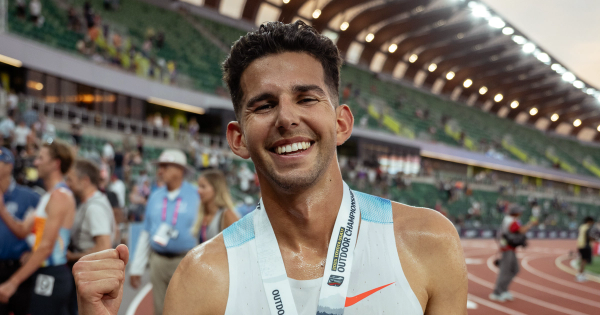
In the end, the finish order was still 1. Hocker, 2. Kerr—a fairly expected outcome for the two most decorated runners in the field. Hocker may have two global golds, but he finished second, third, and third in his previous Millrose appearances behind three guys that were in the race (Kerr, George Beamish, and Cooper Teare), so this result was actually a bit of table-turning that seemed to have left Cole in need of a nap.
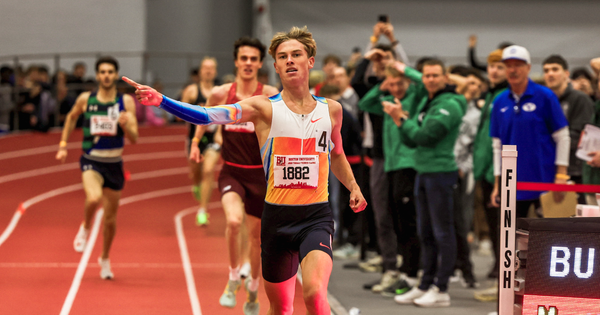
Before we could even get to the main events, the surprises kept coming. The men’s 800m featured the first- and third-fastest Americans of all time in Bryce Hoppel and Donavan Brazier taking on 1:42 man Mohamed Attaoui… so you probably could’ve cashed out pretty big by betting on Colin Sahlman, who entered the race with a 1:47.49 indoor PB. Indeed, it was Sahlman, the 22-year-old NAU senior, who kicked his way to a shiny new lifetime best of 1:44.70 and broke Paul Ereng’s 36-year-old NCAA record. Two months ago, Sahlman was finishing 16th in the 10k at NCAA XC, and now he’s closing in 26.3 to show up the best middle-distance pros in the world. Must’ve been a productive winter break!
Last, but certainly not least, the Wanamaker Miles. (And lest you sprinter and field eventers get mad at us calling them the “main events,” take it up with the Armory, which literally waited until three-quarters of the way through the meet to have someone sing the national anthem.) The withdrawal of Elle St. Pierre meant that no one would break the all-time women’s victory record, and the absence of any other former champ on the start line meant that the race would end with a new victor.
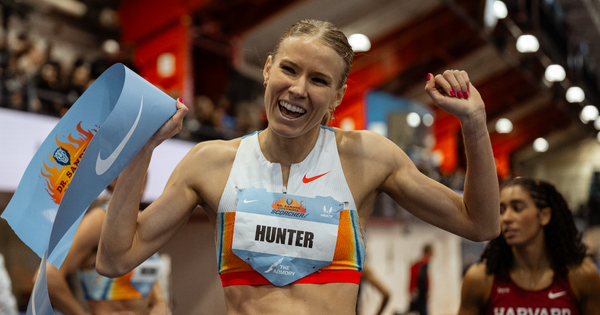
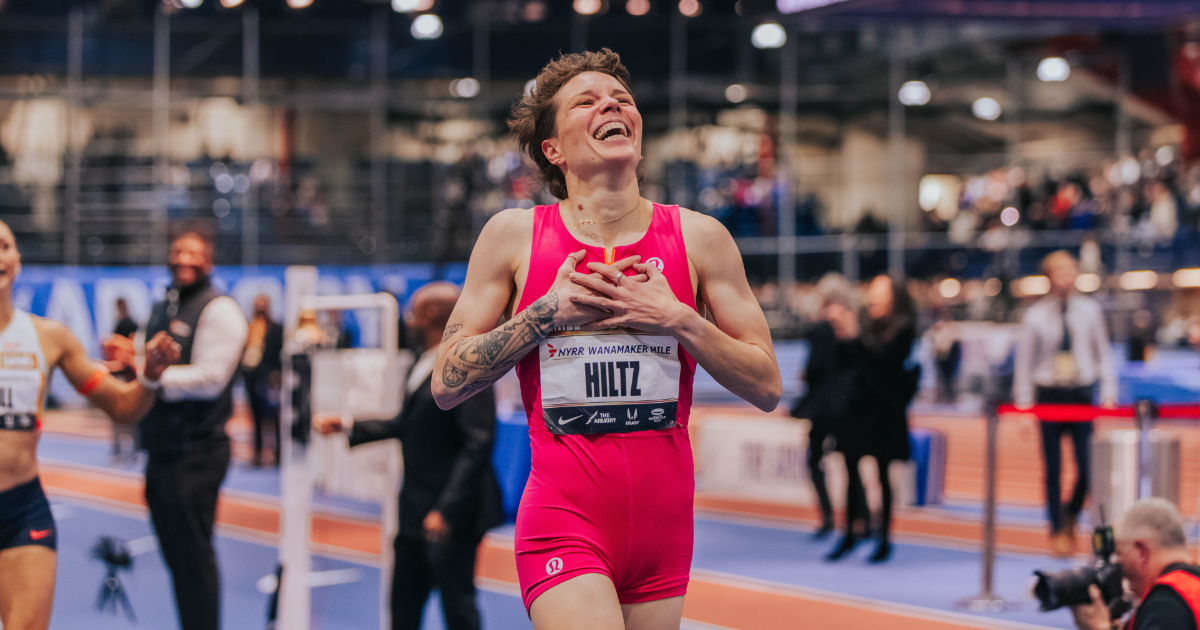
For anyone who’s watched any of the last six USAs, it wasn’t a surprise to see Nikki Hiltz kicking their way to a 4:19.64 victory, but they still had to beat out Jess Hull, the #6 all-time miler outdoors at 4:13.68, to do it. In third was an athlete we’ve got to start paying more attention to as she enters her first full year as a pro: Klaudia Kazimierska of Poland and formerly Oregon. For the second week in a row, Kazimierska set a new PB and national record in a top-three finish, picking up where she left off in 2025, a season where she only finished fifth at NCAAs but ended up seventh in the World final.
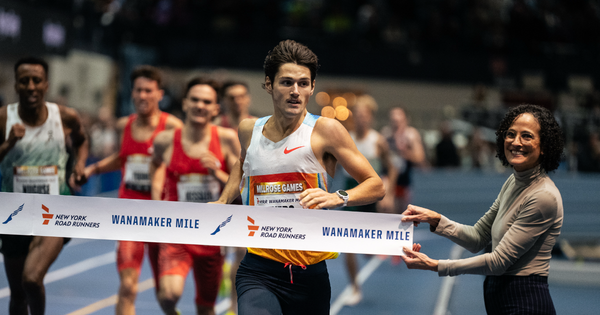
The men’s mile saw Yared Nuguse make a brilliant effort at four straight, but the boundless talent of 19-year-old Aussie Cam Myers won out, as last year’s Wanamaker third-placer got to hoist the trophy this time around. Nuguse still ended up second in 3:48.31, doing a bang-up job of holding off Hobbs Kessler in third. But perhaps the biggest surprise was Nico Young—yes, U.S. 10,000m champ Nico Young—finishing fourth in 3:48.72. You don’t win a U.S. title over any distance without some serious wheels, but given that Young was slogging it out in Tallahassee just three weeks ago, it’s seriously impressive to see him ahead of more traditional milers like Andrew Coscoran and Ollie Hoare. When you think about the long-term potential of an athlete like Nico Young, who’ll just be entering his distance-running prime when LA rolls around in a few years, this is one of those races where we may just be seeing the early flashes of global podium potential.
For a meet with a long and storied history that featured and promoted a lot of past winners in its 2026 program, it was refreshing to see so many unexpected outcomes. Yet the races didn’t feel shallow or deflated, even with a few big names missing. Instead, they were full of kinetic energy and restless tactics, generating electric finishes and introducing the broader NBC audience to fresh faces. It’s a fitting blend of old and new for a race in its 118th edition on a track that means so much to New York’s high school runners. It’s also hopefully a sign that the international pecking order is far from set and that this pro season will be full of surprises.
David Melly
Since David began contributing to CITIUS in 2018, he's done a little bit of everything, from podcast hosting to newsletter writing to race commentary. Currently, he coordinates the social media team and manages both the CITIUS MAG newsletter and The Lap Count, supplying hot takes and thoughtful analysis in both short- and long-form. Based on Boston, David breaks up his excessive screen time by training for marathons, crewing trail races, baking sweet desserts, and mixing strong cocktails.