By Kyle Merber
February 25, 2026
And just like that the Winter Olympics are over! It feels like just yesterday that this newsletter received a cease and desist from the IOC for selling conceptual Milano-Cortina Cross Country shirts. Ah, the memories! Anyway…
At least at the start of competition, most of us probably had close to zero understanding around how scoring worked in almost every event in the Winter Olympic program. But if you’re like us, over the course of the event, the snow- and ice-based escapades inched forward from half-paid-attention-to background noise to something that had you shouting at your TV
That’s because even if the sports appear to be entirely made up on the spot (“yeah, luge is cool and all, but what if we stacked another person on there?”) there’s something familiar and captivating about them: beautiful human moments and inspiring stories behind every medal won and lost. As fans of track and field, it doesn’t matter if the person bawling their eyes out in triumph or collapsing onto the ice in anguish is a lawyer who moonlights as an elite curler—we are familiar with the soaring highs and crushing lows that accompany loving a niche sport that won’t always love you back.
But no matter how many bobsled upsets left you teary eyed or snowboard near-misses left you gasping, few moments made a more impactful impression than Alysa Liu winning gold in the free skate. The routine itself was nearly perfectly performed. Liu’s joy was radiant, before, during, and after her skate. And she surged to the top of the scoreboard near the end of competition—how’s that for dramatic tension?
But it wasn’t just watching someone at the apex of their craft pop off a career-defining performance when it mattered most. (In all likelihood, most viewers have no real understanding of the basis by which a routine gets scored. While a triple Lutz-triple loop might be harder on paper, the spinning knee slide really captured hearts.) It was about Liu’s journey to that moment.
Liu’s father, a Chinese dissident who was exiled to the United States, had been inspired by Michelle Kwan’s success and poured hundreds of thousands of dollars into his daughter Alysa’s training. Although he had been accused of being overbearing, it all seemed to pay off; Alysa won the senior national title at just 13 years old. But after competing at the 2022 Olympics as a 16-year-old, Liu retired, citing burnout and the accomplishment of her goals.
Two years later, Liu returned on her own terms, skating seriously again because she wanted to, not because it was something expected of her. And we all saw how that went.
Of course Alysa Liu is not the only elite athlete to take a significant break and return better for it. Simone Biles is on her second extended post-Olympic breather. Michael Phelps won six more Olympic medals in Rio despite retiring after London. Dara Torres retired in 1992, came back in 2000 to win five more medals before retiring again, then returned in 2008 to win three more at 41 years old. And Michael Jordan definitely retired on his own volition in 1993—you can bet on that!
Is there something the sport of running can learn from this? After all, we certainly have something of a burnout problem ourselves. Sure sure, a few weeks ago, Kyle wrote about how mature and level-headed this current crop of young stars appear to be. But burnout is not an age specific issue—it’s the result of creating a singular identity which neglects the fun that fuels the motivation.
As a high-level track athlete, yes, track is essentially your job. But hopefully track is also still a sport you enjoy training for and competing in! And if it starts feeling like a slog or a chore, the pressure feels like it exceeds the pleasure, or injury cycles last longer than training blocks… you can just walk away. Nobody’s gonna stop you from walking back later on.
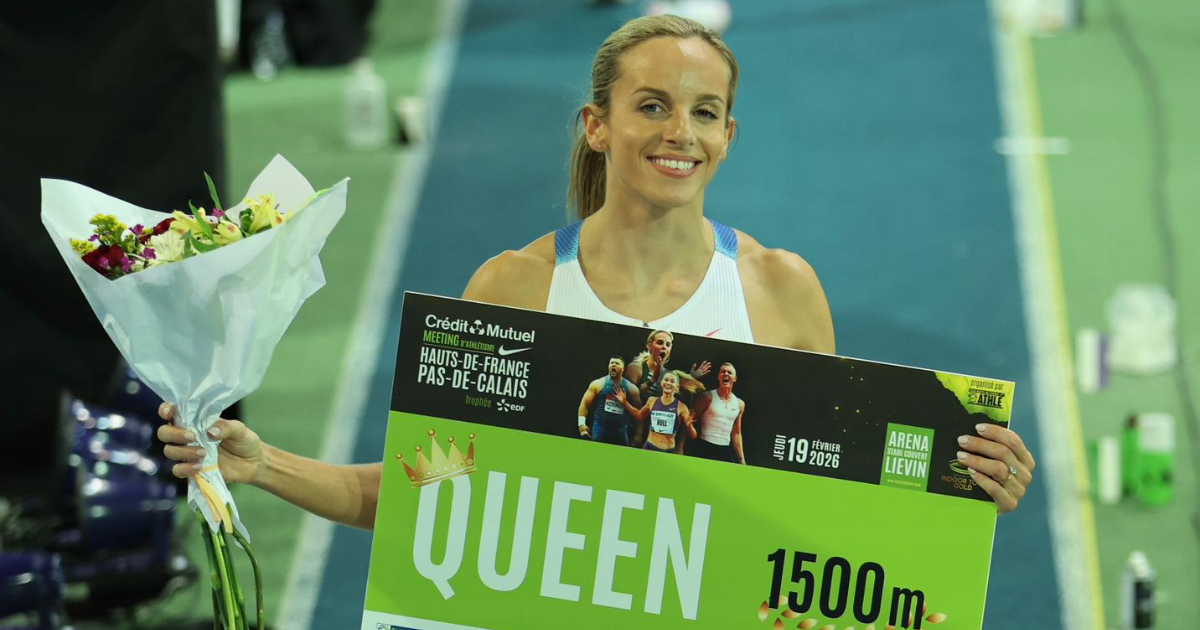
Take a look at Georgia Hunter Bell, or Keira D’Amato, or Allie Ostrander, or Kim Collins, or Tigst Assefa, or Donavan Brazier. It feels like competitive peaks are short in this business, but ultimately, second acts are far from rare, and often what’s required to find balance in performance and joy.
It seems that a key to Liu’s second-run success has been doing it her way. What does that look like in track and field? For Hunter Bell, maybe that’s bouncing between the 800m and 1500m based on whatever catches her fancy. She’s been candid in interviews that she chooses her race focus as much based on vibes as medal odds, and yet—the medals have followed anyways. Another great example is Elise Cranny. The 2023 national champion over 10,000m decided to double 1500m/5000m at the next year’s U.S. Olympic Trials simply because… she doesn’t like the 10k that much. Can you blame her? And yet she still made the Olympic team.
For D’Amato and Sara Hall, another American marathoner with a late career resurgence, rediscovering the joy in running also means rediscovering the joy in racing. After setting the then-American record in the marathon in 2022, D’Amato took on the ambitious Worlds-Berlin-NYC fall triple, repping out three marathons in four months just because she could. Hall is no stranger to three marathons and a handful of halves a year, either, turning her master’s career into a spree of bonus races.
It can also mean switching things up entirely. Allie Ostrander and Molly Seidel have both shown that a trip from the track to the mountains can be a beneficial detour, trading out concrete for trails. Or how about Cordell Tinch, who decided his next side quest after a World title in the hurdles was to revive his long jump career? Given that he’s currently tied for the U.S. season best at 8.29m, it seems like it’s working out so far.
Not all of these stars needed a break to get back on track, but a lot of them did. Next time you’re on the starting line feeling overwhelmed by the pressure or getting into the pool for what feels like the thousandth hour of cross-training through frustration, remember: it’s okay to hit pause.
Kyle Merber
Kyle Merber is a former professional miler turned media multi-hyphenate. While he’s not above dropping a quick “back in my day,” he’s far more focused on the present. Since 2021, he has brought his signature analysis and commentary to track fans across the CITIUS MAG network. When he’s not writing The Lap Count or hopping on podcasts, Kyle manages partnerships and pitches a relentless stream of ideas for Chris to consider. He might not be running a 3:52 mile anymore, but he keeps himself in just good enough shape to ensure the athletes still respect him.