By Chris Chavez
October 9, 2026
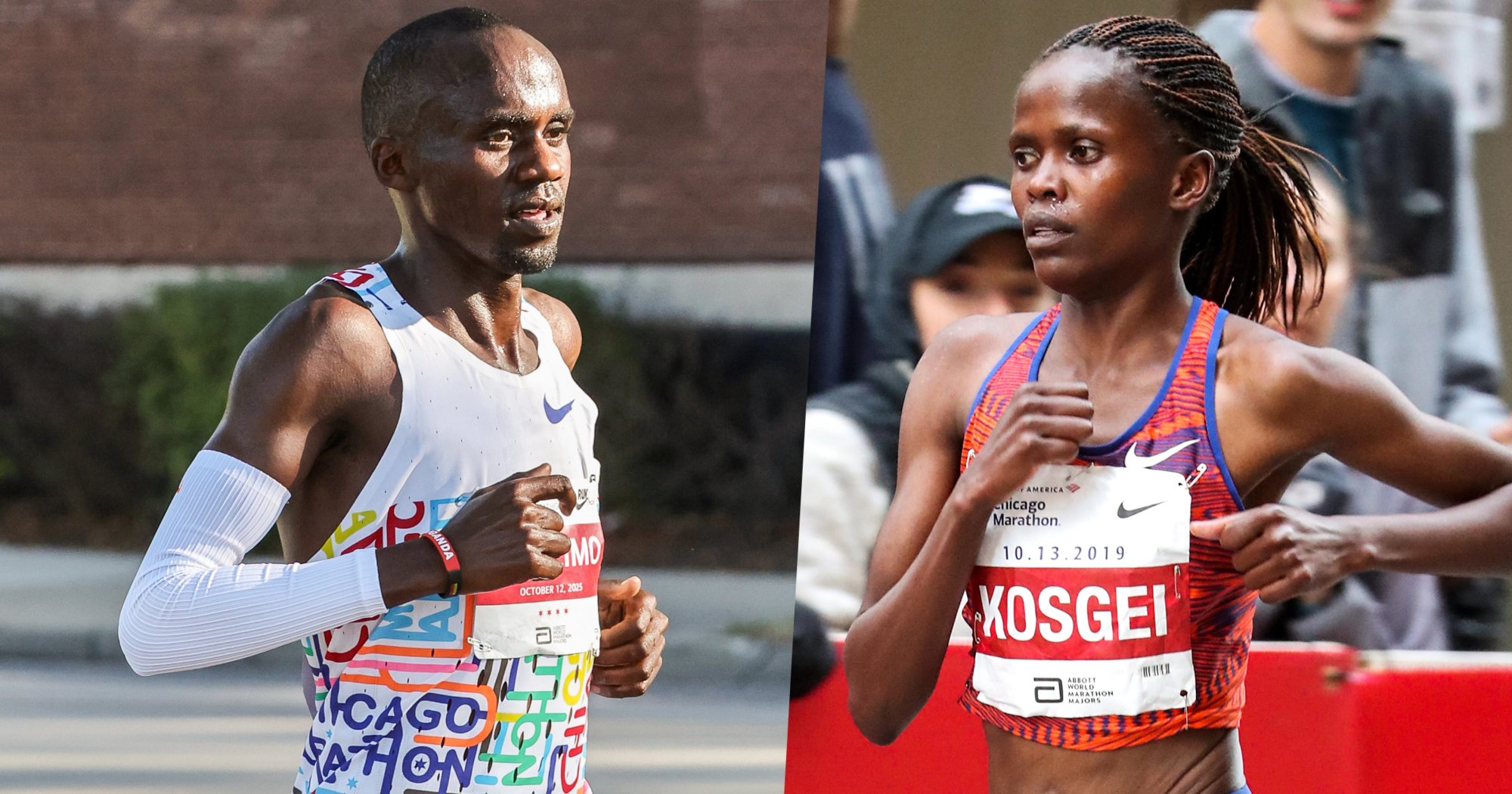
Former marathon world record holder Brigid Kosgei and Jacob Kiplimo, the third-fastest marathoner in history, have placed themselves under an enhanced anti-doping program run by the Athletics Integrity Unit, following the model set by Sabastian Sawe, who requested extra testing before his world record attempt in Berlin last year and this year’s London Marathon.
The initiative was athlete-led. Nike, which sponsors both athletes, and Rosa Associati, the management firm that represents them, are providing financial support for the program.
Under the program, each athlete is subject to a minimum of 25 out-of-competition tests per year, with 100 to 120 analyses performed on those samples. The AIU tells CITIUS MAG that is a sharp increase from the average within the marathon registered testing pool of six out-of-competition tests per year and 12 to 16 analyses. All 25 controls are no-notice tests, compliant with World Anti-Doping Agency rules and independently controlled by the AIU.
Beyond those minimums, the AIU said, each program is tailored using data and intelligence “to ensure the right test at the right time.”
The AIU said Kosgei and Kiplimo have been in the program since immediately after their spring marathons.
“They’ve been testing me three times per week, sometimes two times per week, in Kenya,” Kosgei told CITIUS MAG in Chicago. “It’s to prove to the juniors and young generation that I am clean.”
Before Berlin in September 2025, Sawe’s 25 tests were packed into a window of two to three months. Ahead of the 2026 London Marathon, the AIU advised that the same number be spread across the full 2026 year, which it described as a more sustainable approach that still provides a very high degree of assurance. Kosgei and Kiplimo are on that annual version.
“The AIU has been very open that there needs to be far more testing amongst the top athletes in the marathon,” the AIU said in a statement. It called it encouraging that Sawe, Kiplimo, and Kosgei “have shown leadership and proactively sought to place themselves under such a high level of scrutiny.”
Nike said in a statement that it is expanding its investment in independent anti-doping efforts alongside its policy against banned substances, and that supporting the two athletes reflected “our shared commitment to integrity, transparency and fair competition.”
The company did not say whether it would disclose testing totals after Chicago or extend the program to other athletes.
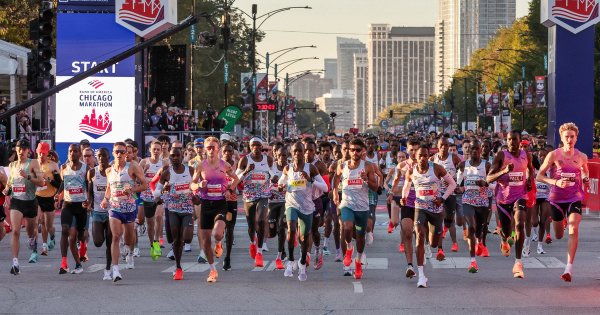
Both runners have a history in Chicago. Kosgei won the race in 2019 in 2:14:04, a world record that stood until Tigst Assefa ran 2:11:53 in 2023. Kosgei’s fellow Kenyan Ruth Chepngetich lowered it further, also in Chicago, in 2024.
Chepngetich, who was also represented by Rosa Associati, was later banned after a positive test for a diuretic and is serving a doping ban.
Kiplimo won in Chicago last year in 2:02:23 and is considered a favorite to repeat on Sunday after running 2:00:28 for third place in April’s London Marathon.
“For me, I decided on extra tests because I want clean sport and people can trust and know that we are running clean,” Kiplimo said.
The testing push comes as Kenyan distance running remains under heavy scrutiny, with more than 130 Kenyan athletes currently banned or provisionally suspended for anti-doping violations.
Chris Chavez
Chris Chavez launched CITIUS MAG in 2016 as a passion project while working full-time for Sports Illustrated. He covered the 2016 Olympics in Rio de Janeiro and grew his humble blog into a multi-pronged media company. He completed all six World Marathon Majors and on Feb. 15th, 2025 finally broke five minutes for the mile.