By Paul Snyder
November 4, 2026
On November 15th, 1979, the number one song in America was “Still” by the Commodores.
With apologies to any Baby Boomer readers who may have enjoyed “Still” as their wedding song, for the bulk of our readership this is prime grocery store music: soul-tinged easy listening schmaltz with Lionel Richie’s DNA all over it. It’s not the best Commodores song, nor is it their best-known. And if you’ve heard “Still” before now, it was probably while waiting to get your flu shot at the local pharmacy.
It’s an old enough song with a sparse enough radio legacy that it’s become a fragment of pop cultural ephemera that makes the distance between the time of its release and the present seem enormous. If this song was popular enough to claim the top position on the Billboard charts, even if only for a week, then surely 1979 was a time so vastly different from our own as to defy understanding.
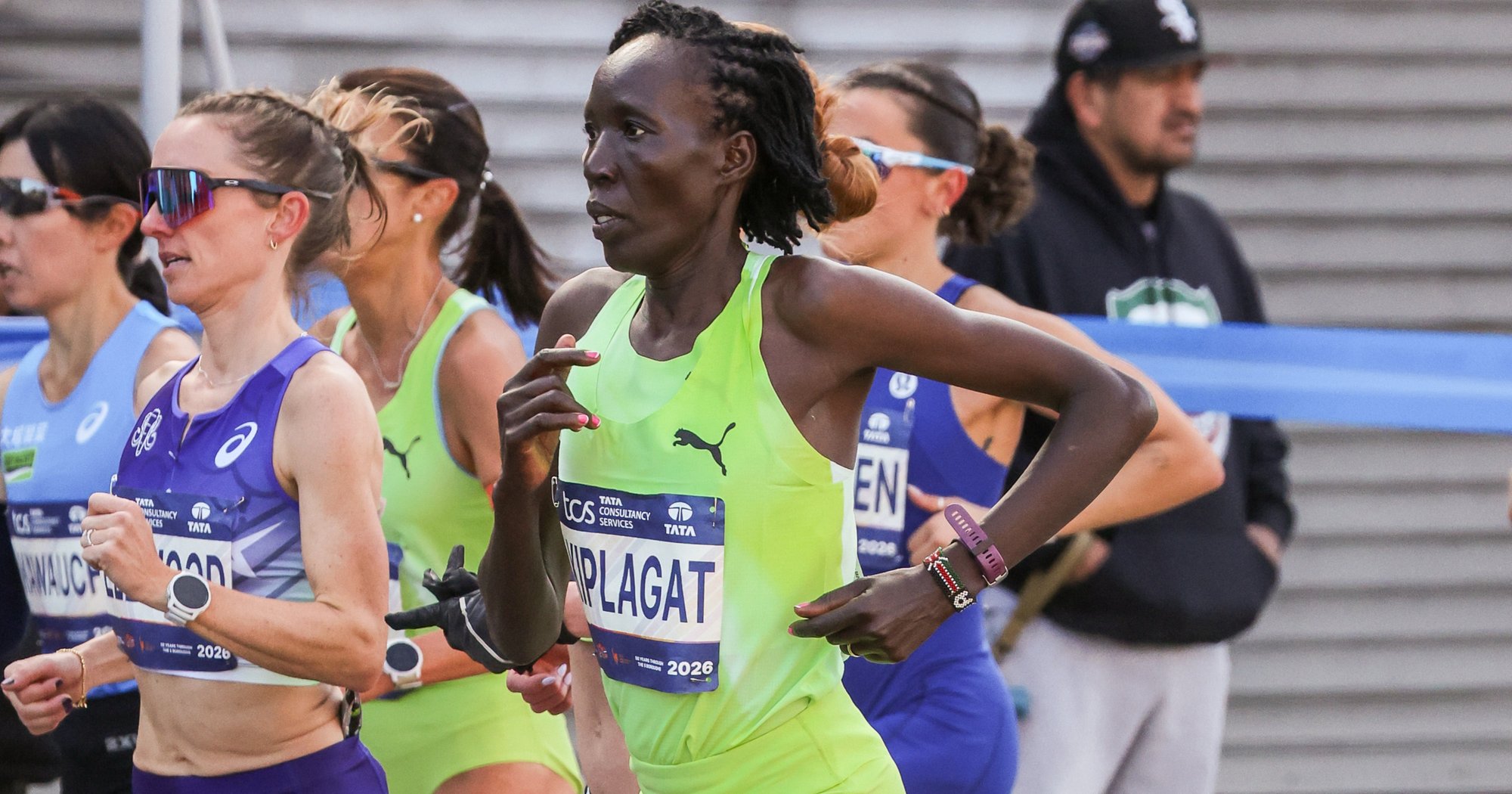
However, something else happened on November 15th, 1979 that ties us directly to the present: the birth of Edna Kiplagat, who, at age 46, just placed fourth in the 2026 New York City Marathon. (That’s right: Edna Kiplagat is “Still” going strong. Hold your eyerolls and please don’t unsubscribe.) The Colorado-based Kenyan is five years older than Eliud Kipchoge, two years older than Kenenisa Bekele, and heck, just six years younger than Paula Radcliffe, and she recorded two top-five finishes in international marathons this year.
Kiplagat’s World Athletics profile is really something to behold.
Her first listed results in the database are from 1996—a year before this past Sunday’s fifth-place finisher, Mercy Chelangat, was born. Kiplagat placed fifth at the World Cross Country U20 race in South Africa and nabbed a silver medal in the 3000m at the IAAF World Junior Championships in Sydney.
As we’ve discussed in this newsletter before, success at the junior level doesn’t always correlate to success against senior-level competition, and there wasn’t necessarily any early indication that Kiplagat would go on to become one of the greatest marathoners ever, let alone that she’d remain in contention for that accolade for about two decades.
For the rest of the 1990s, while the world frantically scoured lines of computer code in order to avert the Y2K disaster while basking in Cher’s triumphant return to the top of the charts with “Believe,” Kiplagat was more or less toiling away at about the same level as 1996. She placed well at a few more U20 global championships. She posted some—at least by today’s trackflated standards—solid but uninspiring marks on the oval, and entered the new millennium with a pedigree that maybe hinted at a career as a road dog, hustling the circuit to scare up some prize money here and there.
And that’s basically how she spent the early part of the 2000s: placing on the podium at 10Ks in U.S. cities that could generously be described as “third-tier.” She made her marathon debut in 2005, coming off a year away from racing, in truly unceremonious fashion—placing 10th at the Las Vegas marathon in 2:50:20, a time that wouldn’t have qualified for the 2008 U.S. Olympic Marathon Trials.
Then she didn’t race another marathon until 2010, after a half a decade of steadily improving results over shorter distances. She first won the L.A. Marathon in 2:25:38. A big jump from her previous outing over 26.2 but not quite a shot heard ‘round the world. That came eight months later in New York City, where, in her first ever World Major, she won the damn thing in 2:28:20. And from there it was—excuse the second bad joke—off to the races.
She won the World Championship marathon the next year, won it again in 2013, and placed second in 2017. She’s finished on the podium at nine other World Majors since 2010, including two wins at Boston, and another in London. And for most runners, a resume that includes five WMM fifth-place showings would be a huge bummer. But for Kiplagat, it’s just a footnote-style addition to her consistency over the past 16 years.
Other sports lend themselves to athletic evolution on the part of their longevity-blessed stars. Soon-to-be 42-year-old LeBron James has gone from high-flying first scoring option on championship caliber NBA teams to pass-first offensive glue guy on… well… championship caliber NBA teams. Justin Verlander’s final years in the MLB may have been a pale imitation of his three Cy Young campaigns, but he could still keep his ERA under 4.00 and throw 95 mph.
But running doesn’t really offer aging stars the benefit of switching up their style if they lose their fastball or ability to win on basketball IQ and a free-throw percentage. If you get slower as a runner, you are simply a worse runner. That’s what makes Kiplagat’s continued presence at the front of World Majors all the more impressive. She’s basically doing the same things at 46 she was doing at 30, and is far surpassing her output from her 20s: showing up at (typically hilly, non-rabbitted) globally competitive marathons and holding her own.
Particularly in an era where seemingly every great Kenyan marathoner is one doping bust away from falling from grace, it’s worth taking a little extra time to celebrate those like Kiplagat who have been really good for a really long time, doing it (seemingly) the right way and making both her home country and adopted home state proud for literal decades.
Is there a broader takeaway from what Kiplagat continues to do?
Maybe it’s “to have a long, fruitful running career, you’ve gotta ease into being great.” Maybe it’s “more men should take a year or two off during their competitive primes like so many top female marathoners do due to starting families.” Maybe it’s “your track times don’t have to define your success as a marathoner—some people were just born for the roads.”
Or maybe it’s simply this: Edna Kiplagat is an all-time classic, and no matter how many spins she gets, it never gets old. She’s easy like Sunday morning. She can run all night long. And she will always be our endless love.

Paul Snyder
Paul Snyder is the 2009 UIL District 26-5A boys 1600m runner-up. You can follow him on Bluesky @snuder.bsky.social.