By Kyle Merber
July 9, 2026
The summer of 1999 was a magical one for Noah Ngeny. He raced on 30 occasions across 12 countries and either won or got second each time. Unfortunately, he’s arguably now best known for a second-place performance: finishing just behind Hicham El Guerrouj in El Guerrouj’s world record setting mile. (Don’t worry though—he got his revenge at the 2000 Olympics.)
But his 1999 streak of incredible races also produced a still-intact world record in the 1000m.
Ngeny had attempted to break Seb Coe’s world record—2:12.18, set in 1981—earlier in his 1999 season. He mustered a 2:12.66, which was enough for him to give it another go two months later.
Then on September 5th of that year, he went to Italy and ran 2:11.96.
After leading Ngengy through the first 400m in just a hair under 50 seconds, rabbit David Kiptoo, made it to 700m before stepping off. Ngeny sailed through 800m in 1:44.6—the same split as Coe—before closing in 27.2 to get the record. His career would be cut short a couple years later due to an unfortunate car accident, but that fabled mark remains.
However, on Friday in Monaco that world record is being targeted, and the math says it should go down. 2:11.96 is only worth 1250 points according to the World Athletics scoring tables. That’s the equivalent of 1:42.54 800m or 3:29.66 1500m. So by value, this isn’t the hardest record on the books, and its survival is more likely attributed to the infrequency of competitions.
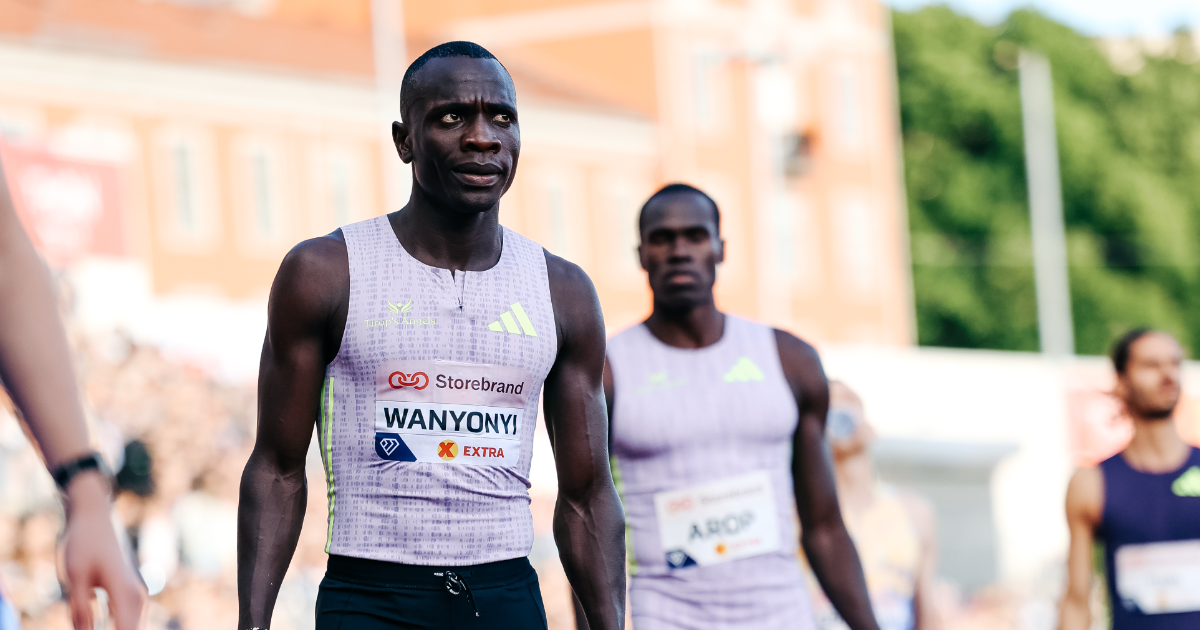
A handful of men in the field should—on paper, at least—have an outside shot at running quicker than 2:11.96, but the goal for any of these suitors cannot just be the time itself. They’ll all likely be running first and foremost to beat Emmanuel Wanyonyi, while trusting that doing so will put them within striking distance of Ngeny’s record.
That’s because if you manufactured an athlete in a lab with the tools to dip even lower into 2:11.XX territory, it’s Wanyonyi. When he ran his personal best of 1:41.11 in Lausanne, he did so with relatively even splits: 24.5 - 25.5 - 25.4 - 25.7. His best chance to improve on Ngeny is by taking a more measured approach, aiming for 26-low for each 200m.
When you crunch the numbers leveraging Wanyonyi’s best 800m time (1295 points) and best 1500m time (1187 points), and then weigh the scoring values based on their respective distance from 1000m, then Wanyonyi’s predicted 1000m would be worth 1264 points or 2:11.40.
That is of course if you believe that his lifetime bests reflect his current 800m and 1500m fitness. Earlier this season, he ran 1:42.09 in Oslo, getting nipped at the line by Cooper Lutkenhaus. So even if he’s not at his very best over two laps, he’s at least close.
And we know he’s in great 1500m shape since his PR of 3:34.11 came early this season, at altitude. Considering the conditions, pacing, and who he beat in that race, it would be quite reasonable to believe that performance’s score way undersells his current 1500m form. Especially when you factor in things like how he beat the entire Olympic podium early last spring, running 3:35.18.
The flipside is that Wanyonyi has never raced the distance before. Even during Ngeny’s magical 1999 run, it took a second effort over 1000m for him to break Coe’s record—calibrating to a new distance can take time.
That experience is something Mohamed Attaoui does have, as last year he made an attempt that came up just short when he ran 2:12.25—the third fastest time in history. Expect him to work his way through the field and see if he can hawk down the leader in the last bit of extra distance.
Oh yeah… and Azeddine Habz, Jake Wightman, and Ben Pattison are all in the field as well and likely have at least imagined themselves breaking the tape on Friday in world record time.
Our prediction: Emmanuel Wanyonyi wins in 2:11.53 for a new world record.
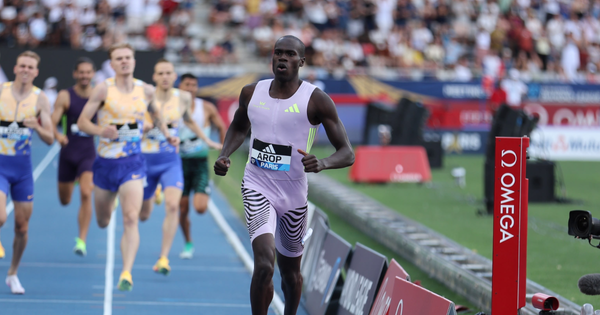
If he misses, then let’s make sure Marco Arop is in the next attempt.
Keep up with all things track and field by following us across Instagram, X, Threads, and YouTube. Catch the latest episodes of the CITIUS MAG Podcast on Spotify and Apple Podcasts. For more, subscribe to The Lap Count and CITIUS MAG Newsletter for the top running news delivered straight to your inbox.

Kyle Merber
Kyle Merber is a former professional miler turned media multi-hyphenate. While he’s not above dropping a quick “back in my day,” he’s far more focused on the present. Since 2021, he has brought his signature analysis and commentary to track fans across the CITIUS MAG network. When he’s not writing The Lap Count or hopping on podcasts, Kyle manages partnerships and pitches a relentless stream of ideas for Chris to consider. He might not be running a 3:52 mile anymore, but he keeps himself in just good enough shape to ensure the athletes still respect him.