By Chris Chavez
November 18, 2026
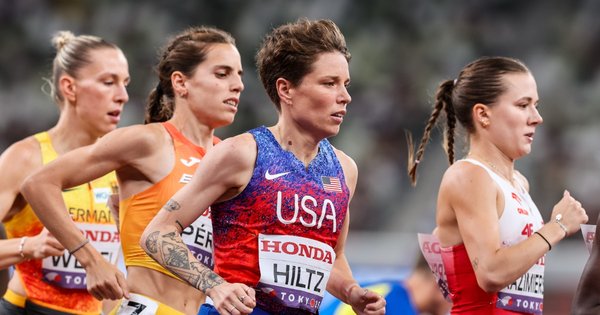
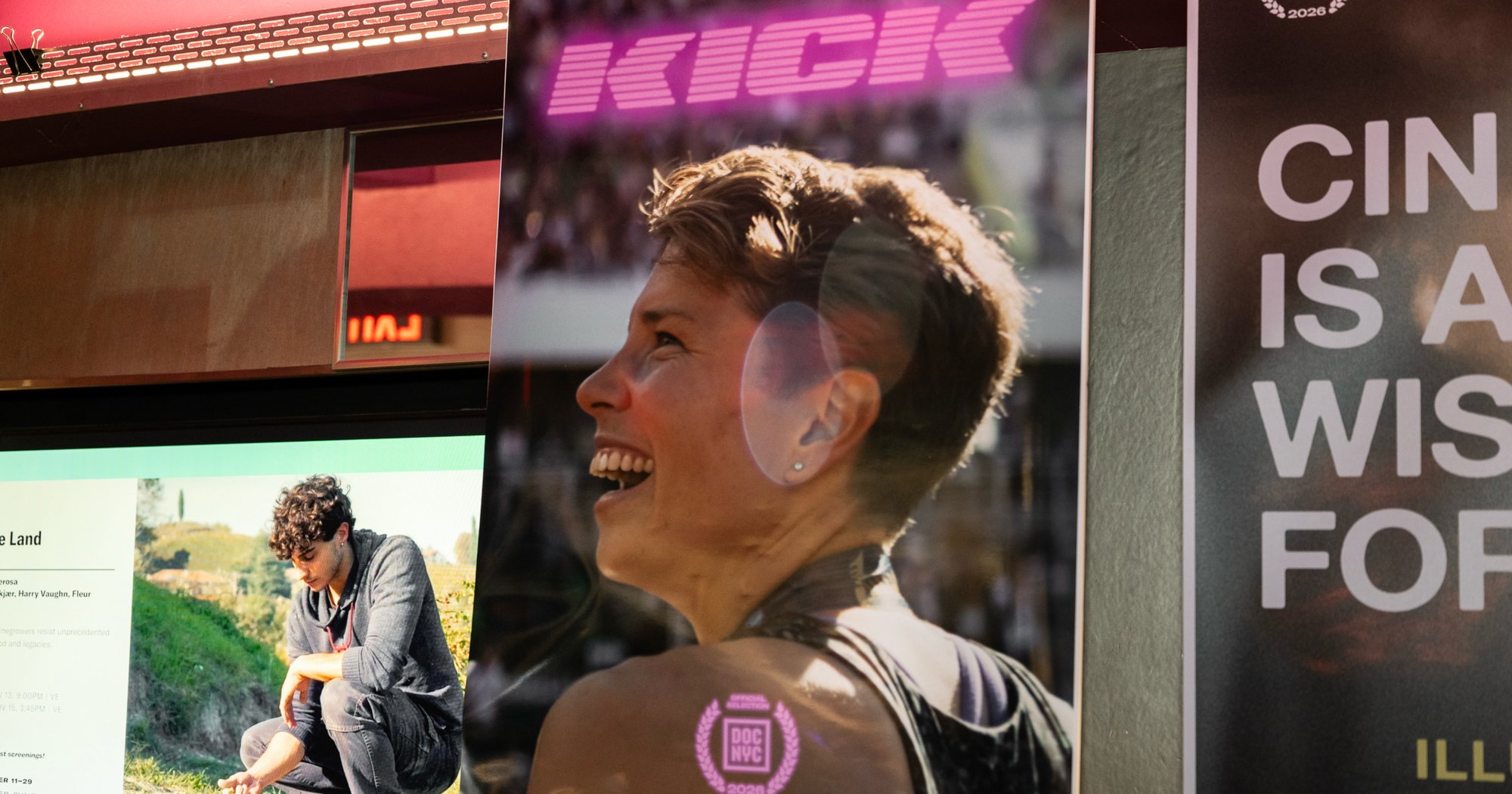
Every few months, someone in Congress, on social media, or on Fox News holds up a photo of a trans athlete as proof that women’s sports are under threat. That somehow, this person’s existence is proof that the end times are near. KICK, which premiered at DOC NYC and is now streaming on-demand through Nov. 29th, holds up Nikki Hiltz as proof of something else.
Here’s America’s best 1500m runner, who still gets anxious before big races. Someone unapologetically goofy over dinner and before bed. Someone wildly in love. Someone who calls themself “a track nerd with a dream.” The film’s argument is simple, and one a lot of people don’t want to hear: a person at the center of one of America’s most heated sports debates is just that: a person. In 83 minutes, KICK makes the case and wins.
Hiltz, a trans non-binary athlete who was assigned female at birth and uses they/them pronouns, is no stranger to a sometimes-uncomfortable spotlight. They’ve been out as queer since their college career, first at Oregon then Arkansas. They’ve been making U.S. teams since 2019, but there’s a double-edged sword to their ascent to the top of American distance running. With every national title and championship appearance, their profile grows, both inspiring legions of fans and attracting unwelcome online commentary.
Director Julia Schwalb followed Hiltz and their partner, Emma Gee, through the months before the 2024 Olympic Trials: the workouts and races, the doctor’s appointments, and the frayed nerves of the final weeks. Hiltz tells the story in their own words, and what comes through most is joy: how much they love to race, and how much they love Emma.
“I have an extra gear because it’s not just me out there,” they say at the end of the film. If you haven’t watched a U.S. 1500m final in the last four years, then by the end of the film, you certainly understand the title.
The emotional center of the film is Hiltz and Gee, and how well they complement each other. Hiltz avoids conflict and hates making anyone feel awkward. Gee grew up Mormon and became the first out athlete at BYU. She’s the firebrand: Gen Z, unbothered by the haters, and pushing Nikki to use their growing platform more loudly. Their discussions and disagreements over what visibility and fame asks of them are some of the film’s most intriguing moments, because neither Hiltz nor Gee is wrong.
Also central to the story is that as Nikki’s star rises and making the team looks increasingly likely, Emma is grinding through a tough season just trying to qualify for the same Trials. Watching Emma pour her love into someone whose dream is coming true while confronting her own struggles reflects a relationship dynamic that running couples of every level can innately understand.
If you read this newsletter, you already know how the movie ends, so this isn’t a spoiler. On June 30, 2024, the last day of Pride Month, Hiltz won the Olympic Trials 1500m in a meet-record 3:55.33 and became an Olympian. Knowing the results didn’t take any tension out of watching this unfold in KICK. You’ll still cry.
Those of us watching in Eugene didn’t know Hiltz was also deciding when, in an Olympic cycle, they could afford to step away for top surgery. KICK doesn’t pretend the fairness debate is imaginary. It just reminds you there’s a person in the middle of it, wearing spikes.
The film feels urgent to 2026. Two weeks ago, voters in Arizona, Colorado, Nebraska, and Washington approved ballot measures that restrict transgender athletes’ participation in sports. Polls say most Americans currently support these restrictions, and the results came through even amidst the “Blue Wave.” In an environment where young queer athletes are feeling increasingly attacked, the Olympic-sized beacon Hiltz is able to shine on a true success story feels larger than life and brighter than ever.
The fear behind those campaigns doesn’t stay at the ballot box. It reaches into running, too, shaping whose results get celebrated and whose stories get told. Imagine loving this sport and wondering whether there’s even a place for you in it. Then imagine watching Nikki race and hearing them describe what it feels like to finally run as themself.
Documentaries don’t often change laws. But they can infuse humanity and nuance into issues that get oversimplified and over-sensationalized in a tweet or news clip. Filmmakers, their subjects, and the audience are all the same thing: just… people. And the more we are able to see the humanity of people like us—and especially, people different from us—the harder it is to justify the rhetoric and policies designed to tear people apart.
The lasting feelings walking out of KICK aren’t anger or indignation. You don’t picture talking-head commentators or bumper-sticker slogans. Instead, you think of Nikki tearing down the homestretch at Hayward Field and Emma and the Hiltz family celebrating trackside. And some people watching will, maybe for the first time, picture themselves on that same start line.

Chris Chavez
Chris Chavez launched CITIUS MAG in 2016 as a passion project while working full-time for Sports Illustrated. He covered the 2016 Olympics in Rio de Janeiro and grew his humble blog into a multi-pronged media company. He completed all six World Marathon Majors and on Feb. 15th, 2025 finally broke five minutes for the mile.