By Kyle Merber
June 24, 2026
Who’s your favorite runner’s favorite runner?
Though it’s a title of endearment and a massive compliment to anyone in consideration, it’s a little backhanded given that being described this way means you’re probably not a unanimous fan favorite. That’s because fans know accolades, while the pros know each other.
Your favorite runner’s favorite runner is probably not a perennial medalist. They likely don’t have the most Instagram followers and almost certainly don’t have the biggest contracts. Instead, their popularity is earned by how often they show up, and how they show up once there. They’re the type of athletes who have run in every U.S. championship the last decade but haven’t always made the team. But they’re sure to keep the pace honest in a prelim because they always make the final.
These runners are staples on the circuit. They know their way around the train stations in Belgium and rack up loyalty points on every European country’s cheapest airline. This runner shows the college kids where to warm up and picks their meet schedule partly based on where the best afterparties are.
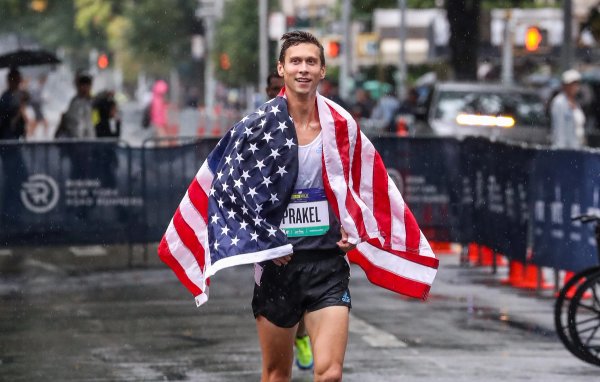
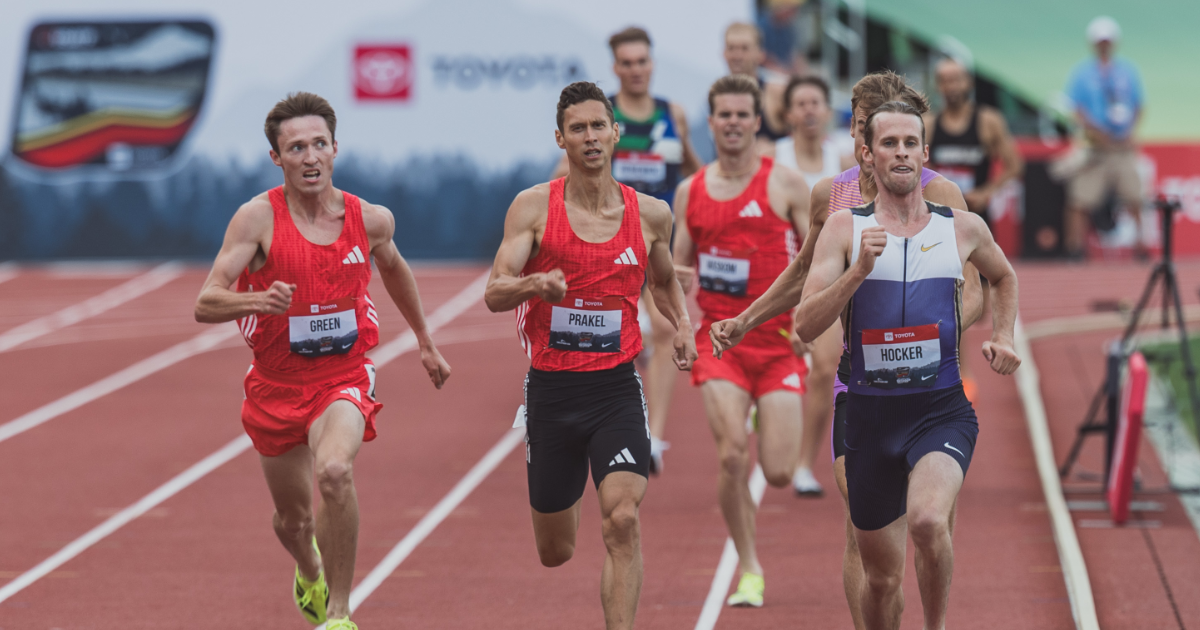
So when Sam Prakel ran 3:33.23 to win the 1500m in Hengelo, his peers let out a collective “Hell yeah!”
Prakel is 31 years old, has run 3:38 or faster every year since 2016, and this year has already posted a personal best of 3:32.76. Although he’s represented the United States at the World Indoor Championships and earned a bronze medal in the Road Running Championships, he’s never represented the nation at a global outdoor championship.
That’s not because he hasn’t been good enough—he was simply born in the U.S. around the same time as so many of its all-time great middle distance talents. But during this “off” year, that doesn’t really matter, because there are no caps on qualifiers per country for the World Ultimate Championships. Should Prakel scratch and claw his way to a high enough world ranking to sit within the field size quota, it doesn’t matter if three, or four, or five other Americans are ranked higher.
While considering how exactly to follow this strange conventional championship-less outdoor campaign, it’s worth keeping an eye on the Sam Prakels of the world. Can he earn a spot at his first outdoor global championship? Picking up 1199 points for the performance in Hengelo will certainly help the cause, but the additional 100 points for winning a Category A meet will help further.
Those extra points add up, particularly because the U.S. Championships will be worth less than usual. As a “Category B” meet with no qualifying spots on the line, there has never been a better time for A-listers to skip USAs entirely. Fortunately, the easy travel and novelty of a non-Eugene host—and a trip to New York City—will be enough to pull in some talent; we can assume Sam Prakel will be there.
Now here’s where we slide into interesting proposal territory: why doesn’t USATF game World Athletics’s own system to give its athletes a better shot at World Ultimate qualification?
One criteria that separates Category A from Category B meets could be addressed at no additional cost: a minimum of 15% of the total Athletes participating in a Meeting shall be based outside the host area. So why not open up the U.S. Championships to foreigners in off years? It would increase the overall level of competition while ensuring that performances are worth more in the eyes of World Athletics. And there’s precedent!
In 1993, Noureddine Morceli, the Olympic gold medalist from Algeria, won the U.S. Indoor Championship in the mile. In 2015, American Andrew Wheating won the 800m at the New Zealand National Championships. Some nations basically always open up their national championships to the rest of the world.
Just last year, Grenada’s Lindon Victor was allowed to compete in the decathlon at the outdoor U.S. Championships. This year, USATF is again encouraging international athletes to compete at USAs, so long as they’re heptathletes or decathletes—seemingly as part of the World Athletics Combined Events Tour. Let’s extend that policy to all events!
Allowing international athletes to compete in the U.S. Championships once every four years isn’t just a clever workaround for a complicated point system, it’s a lifeline to maintain fan interest. By inviting the world to race on American soil, there is an opportunity to elevate the national meet to a must-watch event. All while simultaneously giving the truest grinders in the sport—the Sam Prakels of the world—another chance to boost their rankings.
Kyle Merber
Kyle Merber is a former professional miler turned media multi-hyphenate. While he’s not above dropping a quick “back in my day,” he’s far more focused on the present. Since 2021, he has brought his signature analysis and commentary to track fans across the CITIUS MAG network. When he’s not writing The Lap Count or hopping on podcasts, Kyle manages partnerships and pitches a relentless stream of ideas for Chris to consider. He might not be running a 3:52 mile anymore, but he keeps himself in just good enough shape to ensure the athletes still respect him.