By Chris Chavez
June 4, 2026
USA Track & Field and the United States Olympic and Paralympic Committee have selected St. Louis, Missouri, to host the 2028 U.S. Olympic Team Marathon Trials. The races will be held on March 25th, 2028, and will be USATF’s first Olympic Team selection event for the 2028 Summer Games.
Here’s what you need to know:
Another Chapter of Olympic Lore
The 2028 Olympic Trials will come 124 years after the city hosted the first Olympic marathon ever contested on U.S. soil at the 1904 Games. St. Louis hosted the 2004 U.S. Olympic Trials for the women’s marathon, where Colleen De Rueck won in 2:28:25—just 10 days shy of her 40th birthday—to qualify for her third Olympic team and first as an American. She was joined on the team by Deena Kastor, who would go on to earn a bronze medal at the Summer Games in Athens, and Jen Rhines.
Stakes and Expectations are High
The top three men’s and women’s finishers across the finish line will earn spots on Team USA for the Los Angeles 2028 Olympic Games… as long as they have secured the Olympic qualifying standard or are sitting inside the World Athletics rankings quota within the qualifying window. The Olympic standard has yet to be announced by World Athletics. For context, the qualifying standards for the 2027 World Championships have been set at 2:06:00 for men and 2:23:20 for women—2 minutes and 10 seconds faster than the 2024 Olympic men's standard and 3 minutes and 30 seconds faster than the 2024 women's standard.
A Historic Course
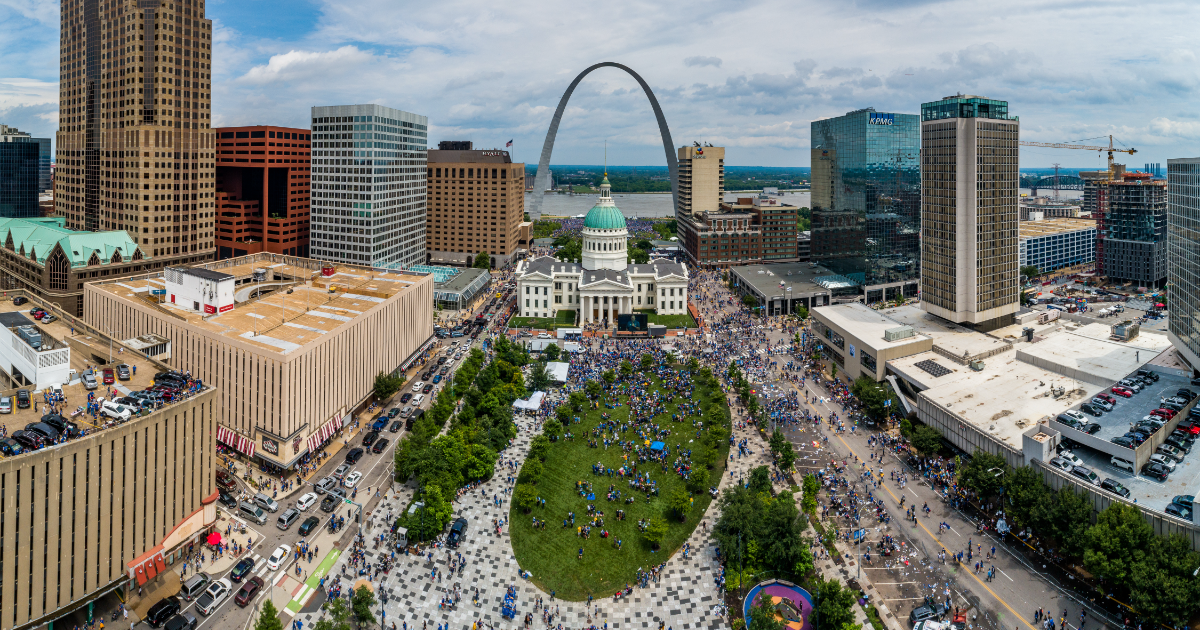
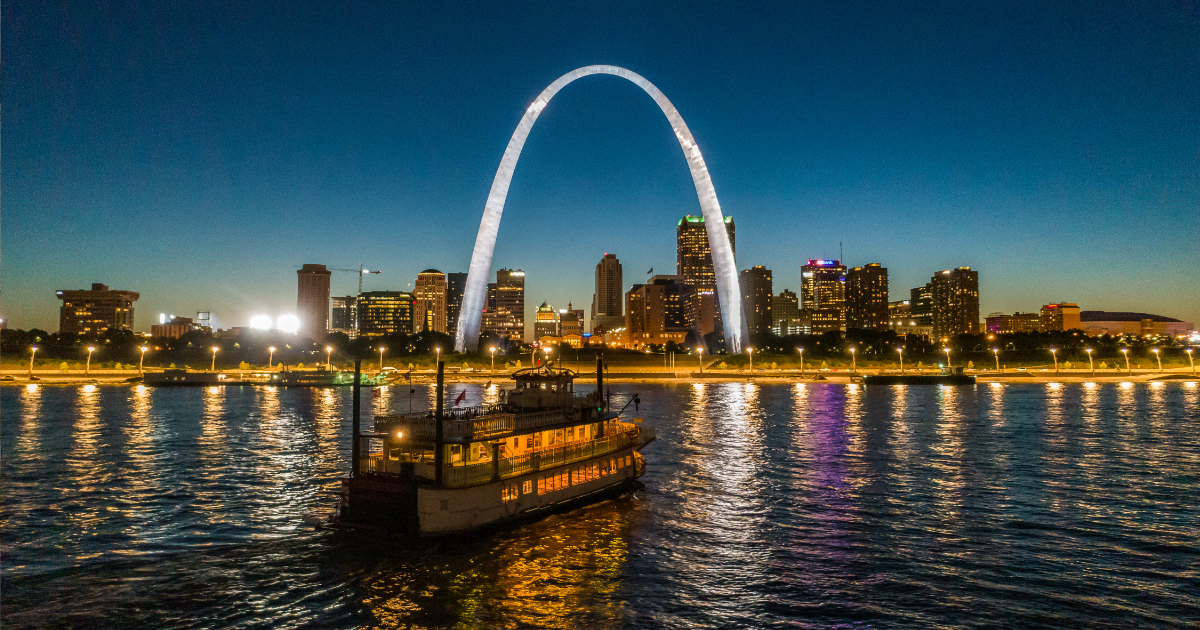
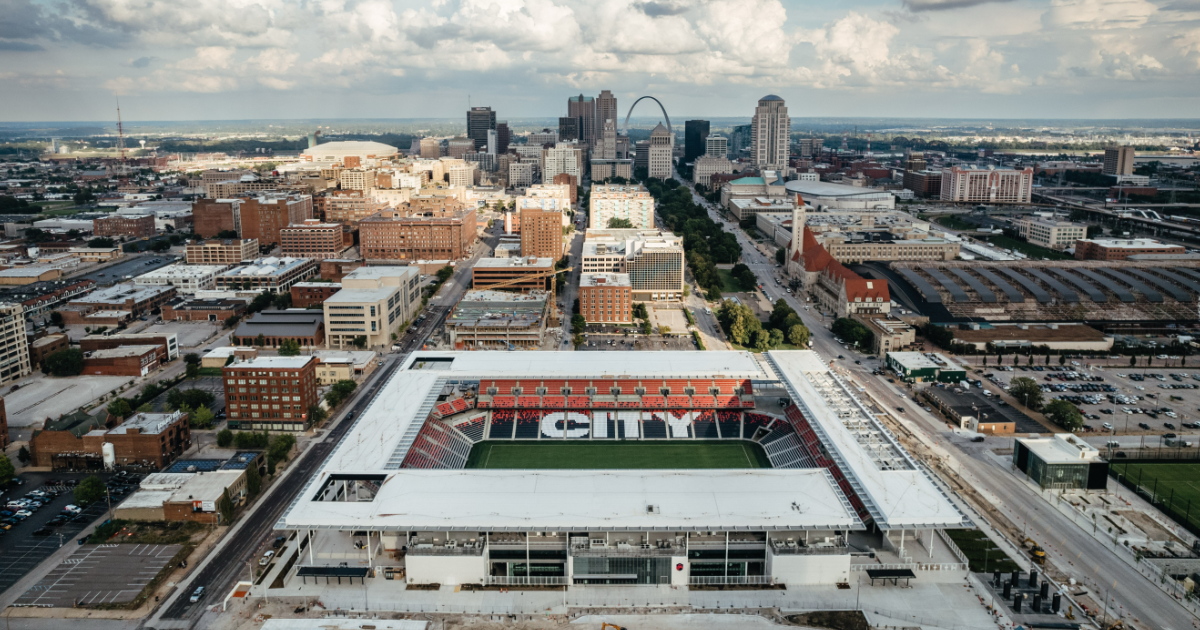
The proposed route passes by iconic St. Louis landmarks, including Washington University (home of the 1904 Olympic stadium), Forest Park, the Gateway Arch, Busch Stadium, and finishes inside Energizer Park, home of MLS club St. Louis CITY SC. The final course layout will be confirmed in the coming months.
Central Time Zone Defenders Rejoice
NBC will broadcast the race live starting at 11 a.m. CDT.
Potential for Ideal Conditions
A look at recent March 25th weather patterns in St. Louis suggests runners can expect cool-to-mild conditions be by late morning. Historically, temperatures in downtown St. Louis around 11 a.m. on March 25th most often fall between 48°F and 62°F. Cooler years can see readings in the low 40s, while warmer years occasionally push into the upper 60s.

Meet the Team Behind the Marathon
The St. Louis Sports Commission will serve as the local organizing committee with support from Go! St. Louis as key partners in staging the event. We spoke with St. Louis Sports Commission President Marc Schreiber, Organizing Committee Co-Chair Jackie Joyner-Kersee, and USATF CEO Max Siegel about why the bid won. The following interview has been edited lightly for clarity.
CITIUS MAG: It was down to St. Louis and Phoenix, and St. Louis gets it. What do you think ultimately tipped it in your favor, and at the same time, what are you most excited about?
Marc Schreiber: We're ecstatic. It's such a wonderful thing for St. Louis to have the marathon trials coming. It's such a great fit.
We were very proud of the bid we submitted. What I'd like to think rises to the top is the story and the vision we had for the event. That's everything from our Olympic legacy, which is very meaningful to our community as America's first Olympic city. It's something we don't take for granted, and we emphasize all the time to our region how important that is. When you can make that connection and say this is a community that cares about its place in the Olympic movement, and we want to celebrate that by hosting major Olympic events like the Olympic Trials, I think that resonates.
And then there's the vision for the event itself: the idea of starting at Washington University, the site of the 1904 Games and our oldest, most venerable sports venue, and then finishing at Energizer Park, our newest jewel. We hope that came across as something special to USA Track & Field. So you have the spirit, the collaboration locally with GO! St. Louis and our marathon, and the partners involved. You throw that all together with a community that really cares and was excited and passionate, and I think all of that hopefully rises to the top and is evident to our colleagues at USATF.
CITIUS MAG: Jackie, you're one of the greatest athletes this country has ever produced. What does it mean to you personally to have an Olympic Team Trials come home to this region?
Jackie Joyner-Kersee: I think it's really a compliment to the local organizing committee, first to put the athletes first. When you look at the competitors, the Midwest is a good location and easy to get to. And then there are the conditions. I'm just adding to some of the things Marc was saying about what could have taken us over the edge, because I think both candidates were great. But for me, as an athlete competing this time of year—and we can't control what Mother Nature is going to do—to have once been an athlete and to be from the area, it's just a moment of celebration to experience something you'd never forget.
For it to be in my backyard, where I grew up, and to play a small part of that, I'm very honored. But it's really something special for the athletes who are going to be trying to become Olympians, those who are already Olympians, and also a generation of young people, to be able to host something right here in the St. Louis area. And it makes the connection to the history of what St. Louis has always offered to the sport of athletics. More importantly, I hope these athletes will be overwhelmed—but not to the point that they don't do what they're supposed to do in making that Olympic team at these Olympic Trials.
CITIUS MAG: Jackie, you know better than anybody on this call just how brutal the Trials can be. What do you want the runners who are showing up in St. Louis to know about the community that's going to support them on that day?
Jackie Joyner-Kersee: It's my hope that they would feel the warmth of the region, and know that everyone here is pulling for them, because we realize and understand how important this day is. Again, you only have one shot at it. People from all walks of life will come from all over to support that one individual. The Midwest is always warm, but we also want them to explore and experience the city: the culture, the food, the entertainment. The entertainment comes after they make the team, but before that, it's just going to be exciting.
It's not just for those of us who aren't competing. More importantly, it's really about celebrating all these athletes who are going to come from all over trying to make an Olympic team. That's what this is really about. All the other things are great, but more importantly, you want to be able to say ‘I had the best experience competing in St. Louis in 2028 and made my Olympic team.’ I can always remember all my Olympic Trials. I'll never forget New Orleans—it was 100 degrees and we started the heptathlon at 12 o'clock—but you remember all those things, and that other people were there pulling for you.
CITIUS MAG: Max, how did we get to this decision?
Max Siegel: First, I want to say that it's a privilege for USA Track & Field to have communities across the country interested in our properties. That makes the decision and the process difficult. We have a great team that evaluates every one of the bids and the sites to make sure they meet the technical specifications. Once you do that filter and you have your finalists, it's about whether the teams are coordinated, whether you feel you have a good partner to collaborate with, and whether there's passion there. What are the things that are going to make the athlete experience the most memorable?
We had the privilege of working with organizations across the country. When you see the coordination, and you see a partner that wants to collaborate and understands everything from rolling up your sleeves to what happens behind the scenes with community engagement, that's something you think about. Marc and Jackie could be anywhere in the country, and they choose to be in St. Louis. They're ingrained in the community, and I think our team was so excited about the energy with everyone we met.
I'm looking forward to it. I've had the privilege of being in Indianapolis a lot—from the Olympic Trials back in the day to the Final Four to the Super Bowl—and you just know it, you feel it, when you have partners who are both emotionally and financially invested and have a passion for it. So we couldn't be more excited to partner with them. And on top of all the historic stories, this is just wonderful.

CITIUS MAG: Marc, the Marathon Trials have been a costly undertaking for some of the cities over the last couple of years. What are you doing differently this time around, or building with the local organizing community, to have the funding to really pull this off?
Marc Schreiber: That's a great question, Chris, and something we had to put good thought into early on, to make sure a bid was viable. Fortunately, we've gotten a great boost from several local partners. I think that's going to be a common theme you'll find in St. Louis—the passion and enthusiasm for this, not just from a fan standpoint, but from our business community and our political community as well. We have to go through a great effort to make sure we've got the resources in place to do a heck of a job producing the event, but we're off to a great start.
We're lucky to have somebody like Lal Karsanbhai. He's the CEO of Emerson Electric. Emerson has stepped forward already with a significant contribution to the effort and several other entities have done the same. That was while we were preparing the bid, and it gave us the faith that we could go forward and feel good from a fundraising standpoint that we could get to a point where we'll execute the event at a high level.
It's also gratifying to see the interest from Energizer Park and the soccer team, St. Louis CITY SC. They're not just doing this to stage the end of the trials. They built that magnificent facility to leverage soccer as a way to present and promote St. Louis to the country and the world, and they see hosting the trials there the same way. So you start looking across the board and you have many supportive partners who are going to help us from a financial standpoint. It's not just the artistic part—it's the financial part we feel positive about. It's not easy, but we feel good about where we are right now.
CITIUS MAG: In the bidding process request for proposals document, USATF projected $13.5 million in economic impact for the local organizing committee. And from what I read, you saw about $20 million from figure skating not that long ago. What are some of the learnings you've had from hosting events in hockey, gymnastics, and figure skating? And when was the turning point where St. Louis turned the corner into a major sporting-event city?
Marc Schreiber: I'd like to say it was a long time ago. That's due to many people who came before me. Jackie can attest to this. But I feel like we've been reinvigorated.
St. Louis is a place where, in the '90s, we hosted the Big 12 football championship, the U.S. Olympic Festival, Jackie's farewell track meet in '98, and the Final Four in 2005. So St. Louis has long been a great sports-event destination. The challenge for us is that our industry has become so competitive.
When I talk about being reinvigorated, it comes from the great momentum of late: we hosted the NCAA Frozen Four last spring, the U.S. Figure Skating Championships in January, and the men's basketball first and second rounds in March. And now, this fabulous announcement. We learn from every one of those events, and it gives us really good practice. I think that delivers a message to USATF: going through the U.S. Figure Skating Championships, assembling our local organizing committee, and all that goes into that conditions us really well. We can take the great takeaways and lessons from that and apply them in the planning process for 2028.
CITIUS MAG: I know the final course is going to be released much later on, but how did you design a route that's fast and fair while also showcasing the city's Olympic history?
Marc Schreiber: We had to take a lot into consideration there, because we knew how important it was for qualification to have a fast course. That was on our minds all the time. In terms of course elevation, St. Louis is close to the perfect scenario—there are some hills in there, so that's what we have to deal with—but it was very much driven by wanting a fast course.
At the same time, it was about addressing that vision of connecting to our Olympic legacy, doing something innovative, and actually finishing in a 20,000-seat stadium to create something completely new for the trials—a spectacular moment. So we had to balance all that out. I think you'll see that a lot of the start, especially from Wash U to downtown, is kind of just downhill, which is very advantageous. And then you showcase the best of the community: you get to run by the Arch, you get to run by Busch Stadium. So on this one, I'd like to think we're able to have our cake and eat it too, addressing the needs of all the constituencies here.
CITIUS MAG: The LOC is going to set the men's and women's “A” standards. As of right now, we're seeing everyone in the world get faster. The standard for the 2027 World Championships for the men is 2:06 and 2:23:20 for the women. And in 2024, we had that confusion about whether we were going to send a full team, because of the push for world rankings and the Olympic standards. How are you engaging those conversations with World Athletics so that, from a product standpoint on the day, the hope is it's clear-cut: three men and three women get to go to the Olympic Games from the race people are watching?
Max Siegel: Yeah, those conversations are ongoing, and I can tell you we have a lot of advocates who do a couple of things. First of all, you never want to impact the athletic integrity of the event. We start from that point of view. Then we're in this ecosystem with 214 countries around the world, so you're trying to balance global fairness and those kinds of things. But at the end of the day, I think everyone is focused on engaging fans, getting more people to pay attention, and elevating our sport.
So we have conversations about the product we put on for our fans and how we select our teams. Our team is the hardest team in the world to make, because you've got to be the best at that particular point in time. But the advocacy is 365 days a year. We have wonderful people who represent us, like the David Katz’s of the world. Renee Washington and I get involved. We have the athlete voice. Jay Holder can speak to some of the things we do to ensure that, number one, we have the best team on the field of play during the Olympic Games, but also to advocate for having our selection process reflect the first three across the line.
Jay Holder: I think this is the third Marathon Trials in a row where, at this point, there's an element of mystery about the top three and how that will work with the World Athletics system. As Max says, we have a really strong and fair voice in the World Athletics conversation. You saw the outcome of the World Road Running Championships conversations we had — that was a special exception, but it was made in the interest of the best thing for the sport. So that's sort of where these conversations are going as well.
But one point I'll make is that the standards keep getting faster, and Americans keep getting faster with them. We were concerned in 2024, and in 2020, that the times were going to be too fast and we'd be in that situation you talked about. But in 2020, despite the hills and the wind, everybody ran the standard and we didn't have to worry about it. And in 2024, we saw some fast times as well. Since then, we've seen Americans get so much faster on both the men's and women's side. So yes, we're going to continue to have these conversations about how to ensure the product, the excitement, and that first-three-across-the-line, easy story to tell. And at the same time, the athletes' performances are going to keep rising to the standards that World Athletics sets.
CITIUS MAG: It's still really early, but when you picture that lasting image people are going to take from the 2028 Trials, what is it?
Marc Schreiber: There are many answers I could give, but the thing that comes to mind for me—because I think it was a unique element of our bid and what we're proposing—is having a packed, 20,000-seat Energizer Park at the finish, doing something that hasn't been done for the trials before. You imagine that scene as the runners come in through the funnel and enter the facility: the atmosphere, the environment. I think that's going to be one of those all-time coolest moments you've been a part of.
As I think about our planning, there are many things we have to cover and do really well, and that's one of those pieces I hope can come together and be that lasting legacy from the event — something not just memorable for St. Louis and the fans who are there, but for the athletes as well, so they get to experience something that elevates the event and elevates the sport.
Jackie Joyner-Kersee: As I'm sitting here, I was getting goosebumps, because I think it's so important that the athletes feel and know that they were thought of first, regardless of all the other things we have to do. To know that, coming through that last part, they'll have 20,000 fans there for them—that's something you'd remember. And to know that this happened right here in St. Louis. Always, always, the athletes are first, because without athletes, there wouldn't be any trials. So here's a moment they can remember, that happened right in St. Louis.
Max Siegel: I have to agree with both of them about the athletes coming first. But the most memorable thing to me, as a consumer and a fan, is how the community made me feel. I can look at different events and say, " Wow, that was really special—I got to experience one of the most inspiring athletic performances with my family. From the time I got out of the parking lot into the stadium, and watching the course along the way, the people of the community made me feel special and embraced.”
What really has me excited about St. Louis is having leaders like Marc and Jackie and the whole community excited about hosting our athletes. I think it will enhance the athlete experience, because the community is so excited about the event. But for me, it's that moment where it all comes together: the athletes feel special, you get to witness this moment in time that will last forever, and then you walk away feeling like you got to experience something unique and different—and that you felt special yourself.
Chris Chavez
Chris Chavez launched CITIUS MAG in 2016 as a passion project while working full-time for Sports Illustrated. He covered the 2016 Olympics in Rio de Janeiro and grew his humble blog into a multi-pronged media company. He completed all six World Marathon Majors and on Feb. 15th, 2025 finally broke five minutes for the mile.