By Kyle Merber
July 15, 2026
Well, the U.S. Men’s National Soccer Team has been eliminated from the World Cup. They performed more or less exactly as everyone expected, and we know just who to blame: it’s the kids’ fault…
Sort of.
Every four years, casual soccer fans become deeply—and temporarily—invested in a handful of games the American men play well in. We even allow ourselves to believe “we” could win it all! Then before returning to our default state of soccer-ambivalence, we point our angry fingers at the fragmented for-profit youth system that seems directly responsible for the USMNT’s middling results.
But for the team representing our particular country on the international stage, is there not a better symbol of our most defining values than a team that has been developed and assembled through pure unfettered capitalism? The United States’ current pay-to-pay youth system differs greatly from the rest of the world. While the countries that routinely beat our asses tend to have an infrastructure in place propped up by multi-billion dollar clubs, the 16th best team in the world asks parents to whip out their checkbooks or take out a loan to bankroll their child’s travel team dreams.
The perfect example of the European youth development model is Spain’s 19-year-old wunderkind, Lamine Yamal. Although his family grew up in relative poverty, he was scouted by FC Barcelona’s academy when he was just seven years old. Because of his long-term promise, the club footed the bill for his coaching, housing, meals, medical, gear, schooling, and then gave him a few hundred dollar stipend on top of it all. With incentives his current contract is worth €40 million each year, and Barcelona negotiated a €1 billion release clause, he’s not going anywhere.
In the land of the free, club dues alone can run upwards of $5,000 each year, and with tournament dues, gear, travel, and all the other add-ons, it’s not uncommon for an average family to spend $20,000 annually so their child can play in a competitive league. That’s a lot of dough!
Now that the World Cup is almost over, it’s time for us to return our focus to what we really care about: track and field. Amidst all this grumbling about how inaccessible soccer is in the U.S. is an incredible opportunity for our sport.
This pay-to-play model is not exclusively a soccer issue. It’s just the one we’re talking about right now because of the World Cup. If the World Baseball Classic was as big of a deal, then you’d see talking heads bemoaning how the U.S. is falling behind athletically because we’re letting less-well-off kids slip through the cracks. And while we like to think we run the basketball world, how about the fact that the last American to win the NBA’s MVP award, James Harden, did so nearly a decade ago, in 2018?
In the United States, developing the necessary skills to gain broader recognition at a young age in team sports generally requires money. In this economy, the number of families that have the disposable income to even attempt investing in their child’s athletic future is dwindling. So while the United States may have a population of 342 million people, the fiscally-filtered talent pool is quite limited. And historically, the best athletes don’t always spawn from families with silver spoons and French au pairs.
Do you know what does not cost a lot of money? Running track.
Whereas team sports require extensive travel to weekend-long tournaments—a requisite to even be recruited by a college program—race results provide more than enough information to gain attention because the clock is objective and winning speaks for itself.
There’s an estimated 30,000 tracks in the United States, and many, if not most, are free for public use (outside of school hours). That’s because virtually every high school in the country has an oval around its football field, and that accessibility is our sport’s differentiator. And crucially, unlike track and field’s competitors (re: soccer, basketball, etc.), the high school varsity program is generally the best route for development anyway. If you go to public school and ignore the cost of property taxes, it’s basically free!
That does not mean that a pay-to-play model at the youth level in track is completely absent. There are, of course, the AAU circuit and USATF’s Junior Olympics available for the most enthusiastic parents. Even those programs, however, are a fraction of the price of other youth sports and don’t require buying hockey sticks or baseball bats.
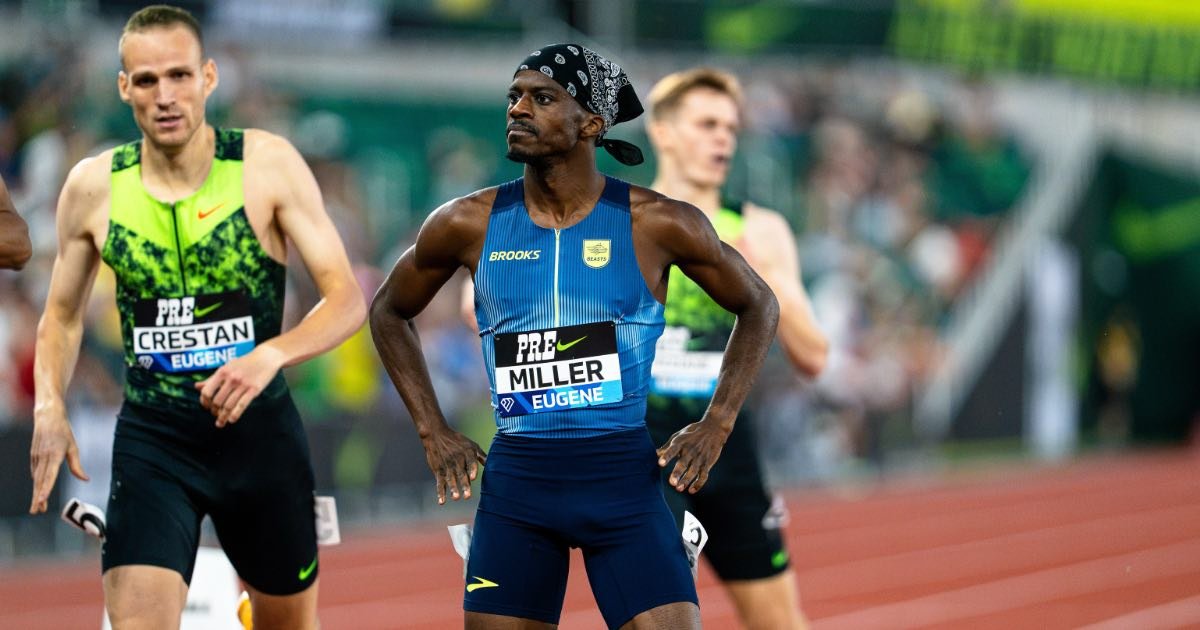
And while some athletes who excel as tweens do develop into stars (Jonathan Simms, Tia Jones, Brandon Miller, and Aleia Hobbs come to mind), it is not obligatory. In fact, many experienced coaches and physiologists would argue against starting a serious training regimen early.
David Epstein, the author of the #1 New York Times best-selling book, Range, contends that when it comes to developing athletes, the best approach is to encourage broad exposure to many sports so as to not specialize in anything early on. He praises the Norwegian model for youth sports, which is one focused on participation. Giving every kid a trophy and not keeping score until they are 13 years old is not some gentle parenting agenda—it’s an effective developmental strategy! By minimizing pressure and maximizing fun, kids stay involved and it allows them much needed time and space to advance their skills and overall athleticism.
For American running fans, the goal should be to start scooping up the talent left behind by other sports. When they zig, we need to zag. As the fastest kids are being priced out of travel soccer or AAU basketball or Little League or whatever other endeavor costs as much as a car, that’s when track coaches ought to swoop in.
It sounds nice in concept, but what does that mean in practice?
It means professional teams like the Atlanta Track Club or Oregon Track Club having youth divisions that are affordable yet well-resourced. It means having the New York Road Runners or USATF going into schools to host clinics. It means the Armory making its track accessible for the neighborhood. It means having a free kids’ fun runs at the local 5K, and all-comers meets that cost a few bucks. It means Recovered Running donating equipment and gear to schools that don’t have any. It means the USATF Foundation giving grants to youth clubs. It means Girls on the Run implementing after school programs for grades 3-8 with volunteer coaches.
But most importantly, it means that the current culture of inclusivity that the sport has cultivated must continue. Track and field is not soccer. It’s impossible to know if a seven-year-old may one day break world records. For that reason—among countless others!—we shouldn’t create barriers to entry just because their parents can’t afford to find out.

Kyle Merber
Kyle Merber is a former professional miler turned media multi-hyphenate. While he’s not above dropping a quick “back in my day,” he’s far more focused on the present. Since 2021, he has brought his signature analysis and commentary to track fans across the CITIUS MAG network. When he’s not writing The Lap Count or hopping on podcasts, Kyle manages partnerships and pitches a relentless stream of ideas for Chris to consider. He might not be running a 3:52 mile anymore, but he keeps himself in just good enough shape to ensure the athletes still respect him.