By David Melly
March 25, 2026
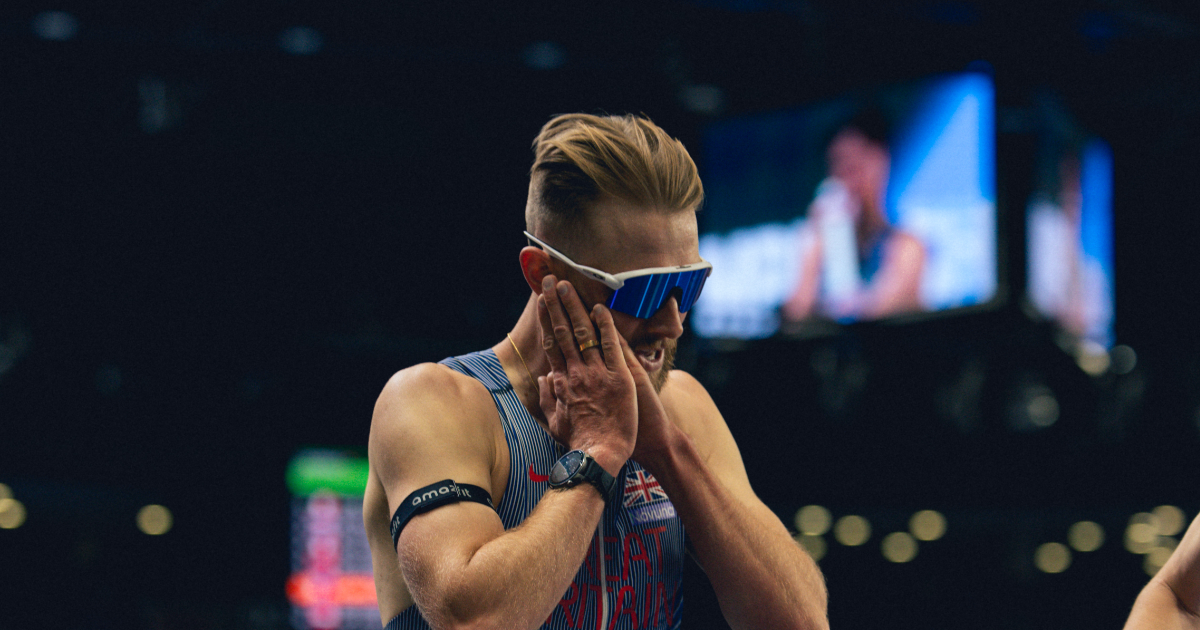
It’s understandable if after watching the final day of this year’s World Indoor Championship in Torun, Poland, you couldn’t get “God Save the King” out of your head. Team Great Britain went on quite the tear Sunday evening, winning the women’s pole vault, 800m, and 1500m, all in the span of about half an hour. The day before, Josh Kerr finished his race with the Sleep Heard ‘Round the World as—like the Redcoats marching through Lexington and Concord—he mercilessly dispatched American Cole Hocker and gave him a taste of his own celebratory medicine.
When the championship wrapped up, athletes from Great Britain and Northern Ireland, a federation representing a country with about one-fifth the population of the United States, had just one fewer gold medal than Team USA. (Though to be fair, U.S. athletes brought home 18 medals total, more than three times as many as the next nation.)
After years of frustrations over UK Athletics not fielding complete rosters at international championships, the oft-maligned governing body seems to have figured out a radical new strategy of “send all your best people.” Of the seven British athletes who medaled in open events at either 2025 Worlds or the 2024 Olympics, four of them made the trip to Torun, and that’s not counting 9x medalist Dina Asher-Smith or two-time World Indoor champ Molly Caudery. Over that same two-championship stretch, 31 Americans (not counting certain throwers who couldn’t compete indoors, even if they wanted to) medaled in open events. Just six of those were in Poland.
One could argue that it’s easier for multi-athletes and shot putters to prioritize World Indoors since their disciplines aren’t being contested at the World Ultimate Championship on the other end of the 2026 season. So extra kudos to Cole Hocker, Yared Nuguse, and Jasmine Moore for showing up and showing out when so many of their compatriots simply didn’t care to circle World Indoors on their calendar.
This isn’t just a U.S. vs. U.K. thing, and it’s certainly an oversimplification. Noah Lyles, for example, put together a strong indoor campaign and simply didn’t get top-two at USAs. Jake Wightman regularly struggles to string together stretches healthy running, so it’s entirely possible that skipping World Indoors wasn’t his choice. There are plenty of perfectly-valid reasons why big names would be justified in skipping, ranging from pregnancy to marathon prep and everything in between. And then there are those for whom it simply… wasn’t worth it.
A World Championship being “not worth it” is one of those things that we’ve sadly come to expect, but it sounds crazy to anyone else who isn’t a diehard track and field fan. And to be clear, the burden isn’t on the athletes to make an irrational decision for the sake of the greater good. It’s on the folks in charge of incentive structures—namely, World Athletics, national governing bodies, meet organizers, and sponsors—to make World Indoors “worth it.”
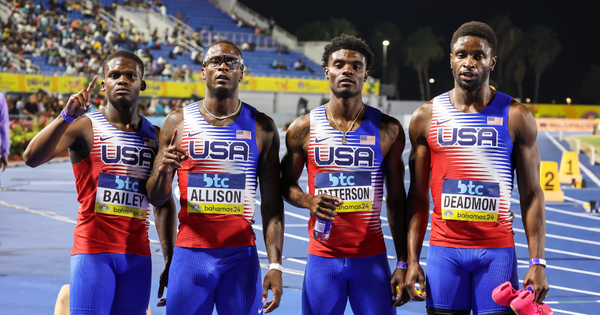
Take the world’s best 400-meter runners, for example. Letsile Tebogo, Vernon Norwood, and others have been chirping back and forth about the various races Botswana and the U.S. are or aren’t contesting. And yet Botswana wasn’t on the start line at World Indoors when the U.S. team took gold in a championship-record 3:01.52. They’ve decided to prioritize World Relays, which is kinda-sorta-but-not-really-this-year a global championship, two months from now because it’s hosted in Gaborone, the nation’s capital. That makes total sense for them! They’ll have a packed crowd of adoring fans, can still win a gold medal of a sort, and are likely financially incentivized to show up by various national stakeholders.
If your primary interest is seeing top-quality racing and exciting rivalries, however, it’s a bummer. World Ultimate decided men’s and women’s 4x400ms weren’t “ultimate” enough, so barring any sort of lucrative exhibition effort, we won’t see the two best relays in the World, who relish talking trash to each other, race head-to-head for another 18 months. If we’d gotten this whole championship thing right, it could’ve happened twice in six weeks!
When we do get the stars to literally align (i.e., stand next to each other on a starting line), the results are electric. The men’s middle distances provide a perfect template. Cole Hocker, Josh Kerr, and their respective egos showed up in New York City at the 2026 Millrose Games, raced one another in a two mile that was hyped months in advance, and the American got the better of the Scot. At the finish line, he did the Steph Curry bedtime celebration (which Hocker seems to think he invented…?). Then Kerr gets the better of Hocker at Worlds in the 3000m and caps off his gold-medal run with a sleepytime moment of his own. That’s theater. You couldn’t script it any better, short of Kerr fielding questions in the mixed zone wearing a sleeping cap and nightgown.
The women’s 60m final saw another great clash. Julien Alfred returned to reclaim her World Indoor title after dominating the field in 2024, only to get beat by American Jacious Sears and surprise winner Zaynab Dosso of Italy. Coming out of the semifinal, the top seven qualifiers had all run between 7.00 and 7.05. But where were the Star Athletics sprinters? Or the Clayton sisters? Credit is due to the Jamaican men for making the trip—Bryan Levell, Kishane Thompson, and Ackeem Blake all contested the 60m. Their presence helped validate the arrival of Jordan Anthony, who capped off a breakout indoor season that saw him beat Thompson, Lyles, and Trayvon Bromell one after another.
That’s perhaps the most frustrating part of World Indoors. It is worth it for some, just not all. And with the next championship slated for March 2028 in Odisha, India, things could go one of two ways. With LA28 looming and a lesser championship located halfway around the world, Odisha could be the most-skipped World Indoors in the history of Americans skipping World Indoors. OR… it could be a global preview of all the world’s best runners, jumpers, and throwers, serving as the perfect opening act for a banner year of track and field.
Which way it goes is entirely up to the folks at the helm. The event has incredible potential, and with a little rejiggering of outside factors, it could be a much shinier jewel in the track and field crown.

David Melly
Since David began contributing to CITIUS in 2018, he's done a little bit of everything, from podcast hosting to newsletter writing to race commentary. Currently, he coordinates the social media team and manages both the CITIUS MAG newsletter and The Lap Count, supplying hot takes and thoughtful analysis in both short- and long-form. Based on Boston, David breaks up his excessive screen time by training for marathons, crewing trail races, baking sweet desserts, and mixing strong cocktails.