October 12, 2026
Listen
“If I could teleport back a thousand times over, I’d probably make the same decision without the knowledge I have today. But going forward into every race, I’ll have that knowledge.”
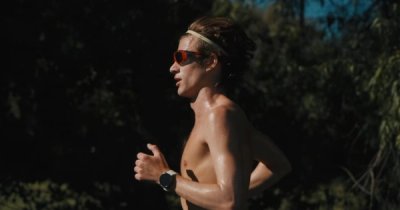
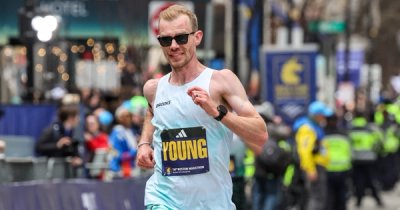
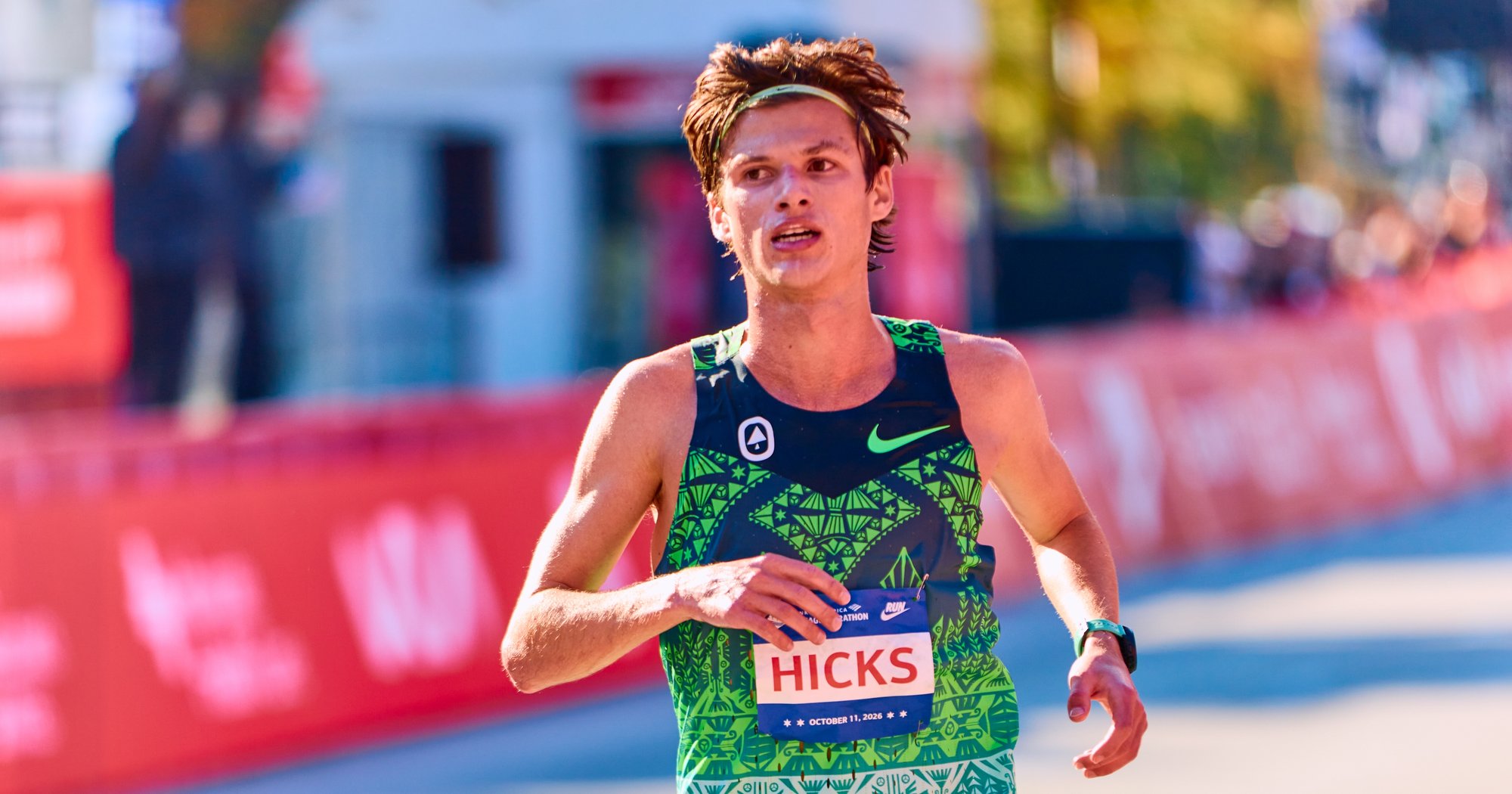
Twelve months ago, Charles Hicks had never run a marathon. Since then he’s raced three of them: sixth in New York, seventh in Boston, and yesterday in Chicago, eighth in 2:05:35. That’s the third-fastest time ever by an American on a record-eligible course. He was the second American in all of them. He’s 25 years old and still technically in his rookie year at the distance.
Chicago was a strange, thrilling race. It was the warmest marathon Charles has run. Vinny Mauri broke away at Mile 9 and went chasing the American record or something bigger. When the pacers stepped off at 30K, Charles and Clayton Young had to decide whether to sit in the pack and settle for second American, or roll the dice and try to go get him. He went. He caught Vinny.
Then, with three miles to go, Clayton dropped a 4:38 mile and it was enough to seal Charles’ fate for another runner-up American finish.
What I love about this conversation is that Charles doesn’t hide from any of it.
He explains the tactical mistakes made but why he’d probably make the same call again. He puts us inside his shoes for the first 60 minutes of the men’s American race that we never got to see on TV. We talk about the lessons taken from this one and more.
You can listen to the full interview with Charles on the CITIUS MAG Podcast. The following highlights have been transcribed and edited lightly for clarity. Stream, download and listen to the show on Apple Podcasts, Spotify or YouTube.
CITIUS MAG: All right, Charles, it's been about twenty-four hours since you crossed the finish line at Chicago. First off, congrats. Third marathon under your belt. What are the feelings now that you've had a little time to let it settle?
CHARLES: It's a great question. I'd say it's a little complicated. I'm extremely proud of a lot of how that race went. The thing I'm most excited about taking away is just the quality of running I was capable of. That's been a big question mark for me, especially given how long marathons are — even after my first two. I spent a lot of time in those early races watching what other people were doing, sitting back, essentially running other people's races. In this one, I was able to run aggressively from the front, and the paces I held while doing that are what's giving me real confidence going forward.
It's only complicated because I really wanted that first American. You can't always get what you want, but that's also just adding fuel to the fire heading into the next training block.
CITIUS MAG: As we unpack the day — you wake up, you look at the weather, and everyone had been obsessing over the forecast for seven or ten days. That's marathoners. The low temperature when you walk out of the hotel is higher than any marathon you've run. At that point, what are the calculated decisions you're making about pacing and race plan before the gun even goes off?
CHARLES: Honestly, when I saw the forecast, I actually relished it in a way. Because I'm still such a new marathoner, I really don't want to approach the Trials without a wide range of experiences. St. Louis could be hot in March. LA could be hot. So my No. 1 thought when I saw the conditions was, ‘You've been very blessed with your first two marathons. Maybe it's time for one with a little resistance.’
In college and in high school cross country, one of the best things I was able to do was always evaluate performances in context. That's how you bridge training blocks together while taking the right lessons from them. So looking back at yesterday, I'll see a time that I think is still incredible — and I'll add the context that it wasn't a perfect day for running fast, and I still ran really, really fast. If we keep progressing on the trajectory we're on, I think we're headed somewhere exciting.
CITIUS MAG: The broadcast took almost an hour to find you guys since there were camera issues on the American coverage. So when we finally did get a shot, it was Vinny Mauri making a break for it. What was happening in those early miles that we missed, in terms of everyone settling into pace?
CHARLES: I actually didn't see any splits until Mile 13, so I had no idea what we were running. This was my first marathon with pacers, so I kind of just turned my brain off and sat behind them for as long as I could. Mostly I was watching how other athletes looked. It was pretty uneventful all the way until Mile 9 and then everything got crazy. I think the conditions, combined with the move Vinny made, created a completely unique marathon experience. More novel than anything in my first two races. And that's really the most important thing I can take away from a day like this — completely novel experiences that I can now think through: if this happens again, or some version of it, how would I play it? How do I wish I'd played it? That's why we run these races.
CITIUS MAG: When he made the move, walk me through the calculation to not go with him.
CHARLES: It speaks to what Vinny does incredibly well. He trains in a way that's so unique you genuinely can't predict what he's capable of. So it wasn't just the move itself; it was who was making it. We all have a pretty good glimpse into each other's training, and the honest answer was: We don't know what this guy can do.
I didn't want to go with him because I thought it was very early. And if I'd known he was going for AR pace, I might have thought differently. But I assumed he was actually going for something faster since I thought the pacers were already on AR pace — so my read was that he might be going out too hot.
For a while I wasn't that worried. Then he just kept getting smaller and smaller, which is a strange thing to gauge when you're running 4:40s. Eventually I realized we were going to have to chase him. My goal going in was to be first American, and I felt caught between a rock and a hard place: Vinny way out in front, Clayton Young behind me. The way I saw it, I could either settle into the pack, which almost guaranteed me second or third American if Vinny just held on, or I could try to reel him in. I'd been in a similar situation at the USATF Half Marathon Championships before Boston, where two guys went early and we couldn't catch them. So I decided to do something I hadn't really done before: Go after the guy.
My thinking was simple: If I catch Vinny, I have a chance at first American. If I let him go, there's no chance. And if I could teleport back a thousand times over, I'd probably make the same decision without the knowledge I have now. But going forward into every race, I'll have that knowledge. I'll be able to map the game theory differently.
CITIUS MAG: I love that you have no regrets over it, because it is another lesson to carry with you. Then when you guys finally reeled Vinny back in, you'd done all the work to close the gap and then he'd stopped to stretch. A lot was going on. At one point you thought he was showboating. Was he asking for help? What was actually happening in that stretch where the pack's right next to him and then he's clearly struggling?
CHARLES: It was novel — I keep using that word, but that's really what it was. I'd never experienced anything like it. I'd describe it like: you're reeling in a fish and halfway through it jumps into the boat. I've never seen that before.
The reason I thought he was taunting us is because he was so far ahead — and then he starts stretching his hamstring, and then he sprints even faster afterward. I genuinely could not figure out what was happening until we got a lot closer and he did it again. The second time I thought, ‘Okay, I think this guy might be in a little bit of trouble.’ But he stayed with us after that second time. And then a third time something cramped on him and he literally said to us, "You guys go on without me." I have never had an experience like that at this level of competition.
I talked to Vinny after the race and I told him honestly, ‘I think you've got a lot of performance left in that tank.’ He mentioned maybe coming out to Park City, running some workouts together. I said, sure — but we're going to practice tangents on Jeremy Ranch. I think he's incredibly talented. And it's genuinely fun to have someone who not only trains in a completely unique way, but races in a completely unique way too. It's my job now to learn how to react on the fly, because I've gotten really good at racing in predictable environments. They're not always going to be that way.
CITIUS MAG: Then it's you and Clayton. He throws down a 4:38 mile with three to go. You reach for it, it's not there. What are you telling your body to try and hang on and still close out a fast time?
CHARLES: That's the real tricky thing about the marathon: you either have it or you don't. The honest problem was I'd spent a lot of what I could have used in those final miles to chase Vinny earlier. Sometimes you reach for the gear and you're out of ammo.
About three miles out, I reached for it and my body said, ‘You should have saved up.’ But at that point the only thing I'm thinking about is: how do I close this out? The best mental framing I've found in the marathon is just that crazy things happen in the last mile. So I never want to remove myself from contention. I locked on Clayton and told myself: just use whatever you've got left, because you have a chance all the way until one of you crosses the line.
I think I reeled him in just a little but not enough to cover that 4:38. He ran a phenomenal race, and you've got to hand it to him. I think Clayton, Vinny, and I represented an interesting spectrum of experience and racing styles yesterday. And honestly, experience won. I find it incredibly inspiring how Clayton dropped that bomb because as I become a more experienced marathoner, that's exactly the kind of racing intelligence I want to develop.

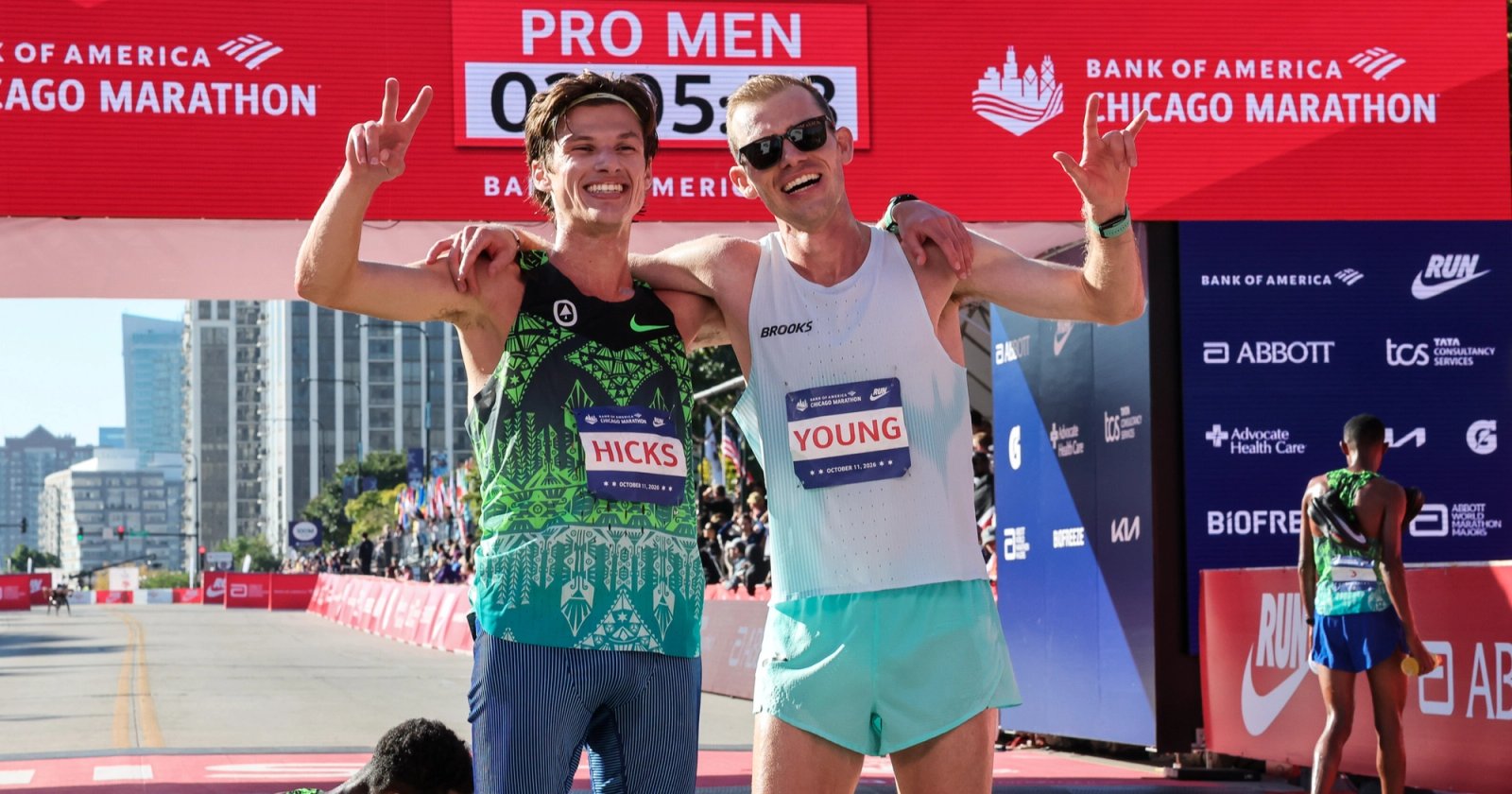
Charles Hicks & Clayton Young | Photo by Kevin Morris / @kevmofoto
CITIUS MAG: One thing you mentioned last time we talked was that you wanted experiences across a variety of courses. Right after the finish, you were clutching your hamstrings. What did Chicago teach you about how your body breaks down in the late stages that you didn't get from New York or Boston?
CHARLES: It's just a more sustained form of hurt. On a rolling course, you roughly run a third uphill, a third downhill, a third flat — so you're cycling through different muscle groups. In Chicago, you run a hundred percent of the race over essentially the same stimulus. More accumulated wear on the same parts of your musculature. And I think that on the younger side, that might actually be a little harder to overcome, because we haven't had as many years of accumulated mileage. I've run a lot for my age, but the goal in the marathon is to come in with as many lifetime miles as possible. That durability comes with time and repetition.
Peak mileage this block was 125 to 130, and that felt really good. So in similar conditions, I think I could probably push to 135, 140. And beyond volume, I have ideas swimming around about how to increase the quality of workouts throughout the full training block — not just getting to the key sessions at the same time, but sustaining a higher level of working out across the whole thing.
The last thing I'll say is this: Chicago felt like the shortest marathon I've run so far. New York literally felt like it went on and on, and it was objectively slower. But in Chicago, mile twenty came out of nowhere. That's really exciting to me — not just physically, but mentally. The volume I'm running is actually compressing how long a marathon feels in my head.
CITIUS MAG: How much of that was also the shoe situation? At Boston you were in a prototype of the Apex, and this time around you were in another prototype. What's the feedback from yesterday in terms of footwear — because everyone points to that as a big unlock for running economy in the late stages?
CHARLES: So I raced Boston in a prototype of the Alphafly 4, I believe that's right. And what I raced in yesterday was an offshoot of the Apex. I think it's going to be a really interesting conversation with Nike's footwear team going forward. The way I see it, there are two schools of thought: weight versus explosiveness. And I'm really interested in continuing to experiment and figure out what puts you in the best position to run 26 miles.
It's more difficult than I expected to test shoes properly in training. You can run a 24-mile long run with seven to nine miles at marathon pace — but that feels very different from running 26 full miles at marathon pace. I noticed that yesterday. The workout exposure just doesn't fully replicate it. So I'm excited to keep collaborating with Nike on that. They're pushing that frontier aggressively right now and I think there's a big unlock still ahead.
CITIUS MAG: We've talked before about how one race feeds into the next. Boston gave you confidence for Chicago. You have the in-race experience of covering moves, holding it together. What else are you excited to take from this Chicago build into your next one?
CHARLES: A couple of things, and some of them are a little ironic. I'm excited about the fact that I'm not all that excited about yesterday — and I mean that in the best possible way. If you'd told me less than a year ago that I'd run the third-fastest American marathon course-legal and feel just so-so about it, I probably wouldn't have believed you. That hunger and drive are what make me so grateful to be a professional runner.
I'm already excited about the next training block because there's so much I want to do better. I'll have to manage that energy. I almost have too much of it right now because the thing I also have to remember is what's working really well. Jerry always says: Don't throw out the baby with the bathwater. I didn't run a perfect race, but I ran a great race. And with experience, time, more training, and more discipline, I think we're heading into a really exciting frontier — not just for me, but for all the athletes who were up there yesterday.
If you told me we'd have an American stretching his calves mid-race and still running a 2:06, that's remarkable. Things are moving in an incredible direction. The final jump for me is getting into that front pack and seeing if I can hold on. I don't know what that timeline looks like, but it's rumbling around in the back of my mind. Our job is to do the training and put in the work to make that not just a thought — to make it justifiable. That's where I'm looking.
CITIUS MAG: Last question: Give me a grade on the full calendar year. Three marathons, take the whole thing together.
CHARLES: S-tier year. Easily. The New York block was held together by bubblegum and duct tape in a lot of ways, and that's exactly why we were so excited about it. Boston was incredible. And then yesterday. When I called Jerry after the race, I said, ‘Man, I think I blundered a couple of times out there.’ And he said: ‘Dude, you're three for three. In the marathon, you're almost supposed to scratch the first one, two, maybe three, before you even know if it's what you should be doing.’
I need to remind myself sometimes that it wasn't that long ago that I was asking whether I'd even be good at this period. So yeah — graded as highly as possible, based on being realistic.
I said at a press conference with Nike afterward: one of the best mentalities you can have is a little bit of arrogance, backed up by evidence. That's what I'm trying to balance. Despite all the positive evidence that's piling up, you want to stay competitive, keep your goals high. And if you add up these first three marathons, it puts me in a really good position to do exactly that.
CITIUS MAG: And finally — is there a moment from this block, maybe off the course or after a workout, that's going to stay with you? A turning point you'll look back on?
CHARLES: Vinny moving at mile nine. That one's going to stay with me for a while. Just in terms of thinking through all the different ways competition can play out — our number-one goal is the Trials, and I'm going to be fixating on that situation for a lot of races going forward. How do I manage that more carefully? That was a really unique opportunity for me as a racer.
But the number-one positive turning point from the training block — we got cut off for a second there — the real turning point was making the decision to start running really high volume at altitude every single day. I'd been doing simulated altitude at sea level, so switching to actual altitude running was a lot more stimulus, a lot harder. And having taken all these incremental jumps throughout the block, I was aware: this is a bigger jump than it looks on paper. But my body handled it really well. That made me feel like I've finally fully asserted myself into the training environment that the best of the best come from. I feel like everything is going my way now.
The one thing missing was a sauna — that would have helped yesterday. I'm getting on that this block. But overall, I'm just really excited about what my body was able to handle. The fact that I'm extremely healthy and training extremely continuously — I honestly don't think there's anything you can value more as a runner.
Support The Sponsor


OLIPOP
OLIPOP: Like sparkling apple juice and gummy apple rings blending into one, Olipop's Crisp Apple is so tantalizingly sweet and refreshing it makes every day feel like a celebration. If you haven't had tried Olipop yet, grab a can and see what the hype is all about! Head to DrinkOlipop.com and use code CITIUS25 at checkout to get 25% off your orders.


KAIZEN
KAIZEN: kaizen is a training app that starts with your running history to set the baseline and then updates around the training you do. kaizen looks at the bigger picture of your training to know your current fitness. The app translates your last few months of training into an accurate view of how your current fitness, taking a big picture view that quiets the noise of individual workouts. Download today in the App Store or Google Play and get two weeks free with code CITIUS within the app.


SUUNTO
SUUNTO: The Suunto Run 2 is their new flagship watch built specifically for road running and the marathon. You get around 10 days of battery with daily use and 24 hours in performance mode with dual frequency GPS. The watch also tracks your sleep, HRV, and training balance, so you know when to push and when to back off in your workouts. If you're in the market for a new watch, check out the Suunto Run 2.
Chris Chavez
Chris Chavez launched CITIUS MAG in 2016 as a passion project while working full-time for Sports Illustrated. He covered the 2016 Olympics in Rio de Janeiro and grew his humble blog into a multi-pronged media company. He completed all six World Marathon Majors and on Feb. 15th, 2025 finally broke five minutes for the mile.