February 24, 2026
Listen
“I wouldn’t let past races define your whole running career... I don’t think there has to be a defined pathway of: run this 10K, run this half marathon, run this marathon time.”
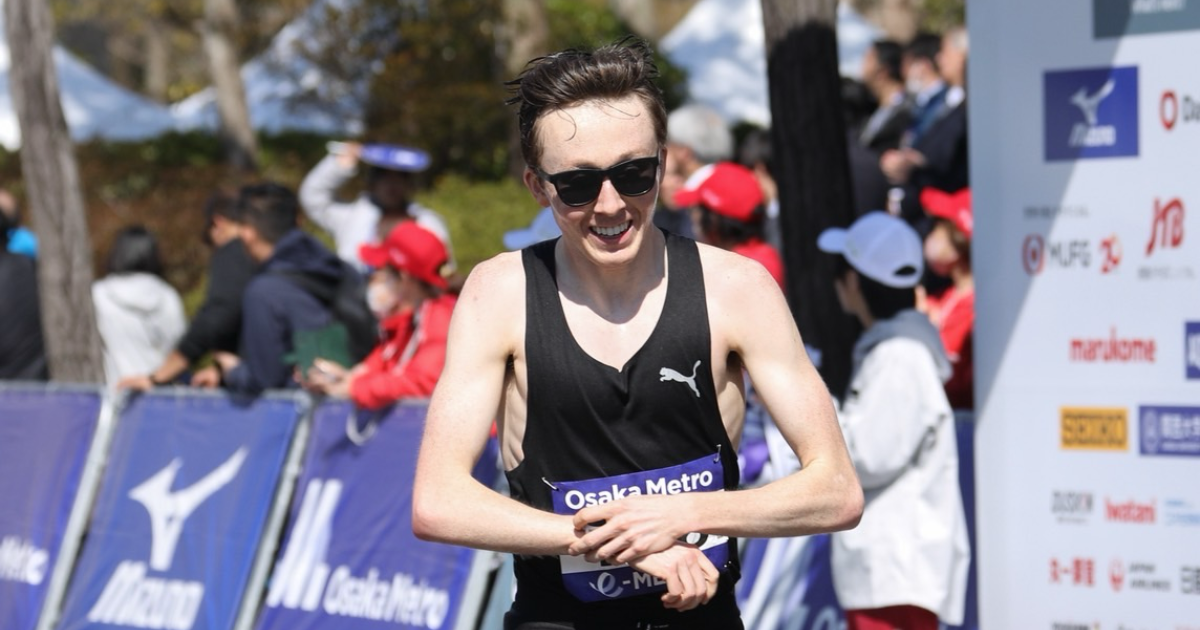
My latest guest on The CITIUS MAG Podcast is Ethan Shuley and if you didn’t know his name as of a few weeks ago, you weren’t alone. But after what he just did in Japan, more people are paying attention. Shuley just ran 2:07:14 at the Osaka Marathon, becoming the 7th-fastest American ever on a record-eligible course.
His 2:07:14 slots him behind only Conner Mantz, Khalid Khannouchi, Zouhair Talbi, Galen Rupp, Ryan Hall and Biya Simbassa on the U.S. all-time list.
Shuley’s name is familiar to a few people as a high school standout in Kentucky (4:13 for the 1600m/9:07 for 3200m) but never developed into a collegiate star. Before attending BYU, he served a Mormon mission in Ukraine. Upon returning to the United States, he learned he had a spot on the team but injuries limited him to just one race in a BYU uniform before he made the decision to leave the team and competitive running altogether.
He relocated to Tokyo in 2023 for work and film school and with no plans of running seriously. He initially targeted trail races and ultramarathons after being inspired by the likes of David Goggins and Courtney Dauwalter. He dropped out of a 100-mile attempt. His gradual mileage build and strength work unexpectedly led to rapid improvement.
From there, the progression was steady and stunning: a sub-15:00 5K for the first time in his life, a 2:20 marathon in Nara, then 2:18, then 2:11, a 63-minute half, a 1:01 in Osaka and finally, the breakthrough that changed everything.
What began as an unsponsored, self-coached experiment has become one of the most unlikely rises in American marathoning. Shuley went from unknown to the all-time list overnight and suddenly finds himself very much in the conversation heading into the 2028 U.S. Olympic Marathon Trials.
You can listen to our full conversation on the latest episode of The CITIUS MAG Podcast. Available to stream, download and listen to on Apple Podcasts, Spotify or wherever you get your shows.
The following interview has been transcribed lightly for clarity:
Chris Chavez: Ethan, I'll admit, before this past weekend, I wasn't paying enough attention. I had no idea who you were. Now you're sitting here with a 2:07:14 marathon personal best—the seventh-fastest American of all time. Even a couple of months ago, or a year or two ago, you didn't have any ideas of running professionally. Who was Ethan Shuley before Osaka?
Ethan Shuley: Well, it depends how far you go back. It's evolved a lot over the last year. If you had asked me when I came to Japan, I didn't really have any aspirations of going pro. I did have an interest in ultra running, but it was more just about being competitive.
Chris Chavez: We'll touch on so many different elements of your setup in Japan and how you got there, but I guess we have to start with the fact that for a lot of people, your name is familiar because you were a high school standout out of Kentucky and raced Yared Nuguse way back in the day. What are your memories of high school running, and where did you want to take the sport?
Ethan Shuley: I started taking track and cross country seriously around the middle of my freshman year. I was doing it to stay fit for soccer. I think that's a lot of runners' origin stories. I did well at regionals and state my freshman year, so I was like, if I take this seriously, I can progress. My sophomore and junior year I competed really well at the state level and even had some opportunities beyond that. I battled injuries constantly throughout high school, but I wanted to compete collegiately and race against the best. Unfortunately, I wasn't able to race my senior track season, so I wasn't really sure what was going to happen going into college.
Chris Chavez: You had a strong cross country season senior year, and then no track. What was the injury that knocked you out?
Ethan Shuley: It was kind of a mix of two things. After state cross country, I was burnt out from injuries, so I decided not to run Foot Locker. My parents were like, "Why are you doing this? You could easily make it." But I was just done. Then I decided to do track senior year in December, and I had Achilles tendonitis that took me out the whole season. I wasn't able to improve my track times. I did actually visit BYU. Coach Eyestone wanted me to run roughly under 4:10 for the mile. I was close my junior year but wasn't able to race. So it's a "what if," you know.
Chris Chavez: So you did decide to go to BYU, but at that point still with no plans of running for the actual team, right?
Ethan Shuley: Right. I grew up Mormon, so I wanted to be in that environment with people who shared my values. I also wanted to go on a mission, and BYU facilitates that very easily. And the tuition is very cheap, so me not being on scholarship, it was kind of a no-brainer.
Chris Chavez: You decided to go on your mission between high school and the start of your freshman year and ended up in Ukraine. Tell me about that experience.
Ethan Shuley: For those who don't know, you don't get to pick where you're sent. It's like a lottery: You open a letter and they tell you where you're going. I had no idea where Ukraine was on a map. At the time, obviously everyone knows about Ukraine now, but it was a very different situation. There was some unrest in Kyiv with the protests. My first memory is my uncle sending me a picture of a tank driving through Ukraine, like, "This is where you're going, man." But it was a good experience. I love the Ukrainian people. I was on the west side, away from Donetsk, closer to Poland.
Chris Chavez: From hearing Connor's and Clayton's stories about their missions. Connor was in Ghana. Clayton in North Carolina. You really can't focus on running. The Wall Street Journal did a whole article where Connor and Clayton mention that they came back like 30 pounds heavier. Was running just totally gone from your mind in those two years?
Ethan Shuley: For the most part, yes. Because you're always with a companion, it really depends on that person. I had one companion who absolutely hated working out, so I didn't work out. I wasn't going to force him every day to go outside. It would have just ruined our relationship. I'd do core work inside, but it's just really difficult. It just isn't really a focus, so you kind of don't think about it.
Chris Chavez: When you came back, someone told you they'd been holding your spot on the team. What did you think?
Ethan Shuley: I was shocked. I'd been back a couple of days and was actually getting into cycling, low impact, just trying to get back into shape after not working out for two years. Then I got a text from Danny Carney on Instagram: "Hey, we have camp pretty soon, just want to make sure you're coming." I was like, what are you guys talking about? All I had done in between was send an email to Coach Eyestone saying I was going on my mission to Ukraine and I'd be back and would probably try running again. That was it. When I came back, apparently they'd saved the spot. I was really shocked.
Chris Chavez: Did you go to the camp?
Ethan Shuley: Yeah, I went. As you can imagine, for return missionaries there's a different protocol for getting back into shape. You can't just run with the top guys. Honestly, I never really got back into the mojo at BYU, because I'd come back from injury and just get pounded into the ground, running hard all the time.
Chris Chavez: More injuries started to pile up at BYU. Were they Achilles-related again?
Ethan Shuley: Yeah. My freshman year I was training for roughly three or four months, got Achilles tendonitis again, and was out for maybe five months. Then I got into decent shape that summer. I did a lot of cross-training, even did a triathlon. I came back and worked with the farm team. Isaac Wood told me I was good enough to get back on the team. So that fall—roughly August, right around when they had cross country camp—I got back on the team and trained through that whole cross country season. It went relatively well. I was finally getting relatively fit without any injuries. Then we entered indoor track season. I did one race, and literally a week later, I got injured. That was my only race in a BYU uniform. I had another Achilles injury, was out for four months, and I just couldn't take it anymore. I decided to quit the team.
Chris Chavez: How hard was that decision?
Ethan Shuley: It was very hard. Up until then, running was a big part of my life and it was almost like an identity crisis. I didn't know what to do with all my free time. That's actually how I stumbled into language learning and studying Japanese. It was just a big transition period.
Chris Chavez: After you quit the team, you still graduated from BYU. When does the film school component enter the picture?
Ethan Shuley: I've only been in film school for a little under a year. Before switching my major to Japanese, I was actually in the BYU film program. I got accepted into the major but quit and switched to Japanese. I didn't start film school until last April. I quit my job in Japan at the end of March and moved. But I came to Japan originally through the Japan Exchange and Teaching (JET) Program. I was working in Kobe as a Coordinator of International Relations at one of the major government offices.
Chris Chavez: When you made the switch to major in Japanese at BYU, what was the career focus you had in mind?
Ethan Shuley: Honestly, I wasn't really thinking about that. I was just doing something I enjoyed, which I was concerned about as I neared graduation. It really was just something I could put a lot of time into and enjoy. When I quit running, I tried a lot of different things to find an interest, and nothing really worked. Japanese was the first thing I actually enjoyed.
Chris Chavez: You graduated in 2023. When did you board a plane to Japan?
Ethan Shuley: After graduation, I did a two-month homestay in Tokyo, kind of right after graduating—though actually my first ever trip to Japan was in 2016. The homestay was to get a feel for the country before actually living there, since I'd already been accepted into the JET Program. After two months, I came back briefly to the States and then moved out in August 2023.

Chris Chavez: I was there for Worlds for about two and a half weeks. The overwhelming feeling was that I could live there for a year and feel like I hadn't scratched 1% of what Tokyo has to offer. In your first year living there, what were the biggest differences between visiting and actually having it as your day-to-day life?
Ethan Shuley: Everyone tells you this, but living there versus visiting is a world of difference. There are things I love about Japan, but also things I don't like: like finding an apartment or the banking system. All the tedious things are harder when you're also doing them in a foreign language. And working there was my first full-time job ever, period. I'd never experienced working full-time in the States, so it was really hard to figure out what was normal and what was just cultural differences. It was a bizarre experience.
Chris Chavez: You went there by yourself. How did you do socially?
Ethan Shuley: The first six months were very difficult. Most of the people I interacted with at work were a lot older. What I realized is that you have to be very proactive about it. Not just in Japan, but anywhere you're a foreigner in a new place. You just have to be proactive about making friendships.
Chris Chavez: Here in the States, with the post-pandemic running boom, a 20-year-old can move to New York and just go to a run club to make friends. How much of that exists in Japan?
Ethan Shuley: In Tokyo, it's probably no different since there are lots of run clubs. I lived in Kobe, which is a bit different, fewer clubs. But even in Osaka there are plenty. If I could redo my whole Japan experience, I would have made a point to do that way sooner.
Chris Chavez: But at that point when you got to Japan, running still hadn't fully come back to the forefront, right?
Ethan Shuley: Yeah. I was running, but not at the same level at all. My goals were different.
Chris Chavez: You initially pivoted toward trail and ultras. Why?
Ethan Shuley: I think the biggest reason was influences like David Goggins and Courtney Dauwalter. I saw a lot of content on social media and thought it looked really cool. The other big reason was that I thought maybe the reason I kept getting injured wasn't the distance but the intensity of my training. I figured if I could do 80 to 100 miles a week at an easy pace, I'd be fine. That was my rationale going into ultras.
Chris Chavez: In those years without high intensity, how much did more time in the gym and strength training help prepare your body for tackling the ultra scene and eventually the marathon?
Ethan Shuley: One of the biggest questions people ask me now is what I've done to improve, and honestly, it's a whole world of difference between what I do now and what I did in high school and college. Back then, I think there were so many things I did completely wrong that contributed to my injuries, like not fueling properly before and during long runs and doing intense static stretching before runs. Looking back, why did I do that? Now, when I approach strength training, the question is always: how does this benefit my marathon training?
Chris Chavez: You attempted a 100-miler and dropped out around 60 miles, right?
Ethan Shuley: Yeah, that was a bit embarrassing. It was roughly 60 miles. The problem wasn't so much the distance but it was the elevation gain. You're literally ascending and descending mountains, and the damage on my legs was just insane. It was demoralizing getting passed by all these 60-year-old Japanese women on the trail, just looking so fresh while my feet were destroyed.
Chris Chavez: Did that signal to you to start pointing back toward road racing and the marathon?
Ethan Shuley: Not initially. After the race, I was mad I couldn't finish and knew what I'd been doing wasn't enough. Even going into that race, I had injuries, so I knew I wasn't in perfect form. I got back into training that winter and started increasing my mileage. Then I had a curiosity about speed workouts. As I started implementing more intensity, I got a lot faster—pretty close to my college times. I was like, wow, I haven't trained that hard and I'm already near where I was in college. That spring I signed up for the Hakodate Marathon, a summer marathon in Japan. I also broke 15 minutes in the 5K for the first time. That was huge for me. I knew I could get a lot faster if I kept going.
Chris Chavez: It's funny because you'd actually already run a marathon at that point. In 2021 Provo, your dad wanted to break three hours. You ran 2:46.
Ethan Shuley: Yeah, I wasn't doing much running at all, but my dad was going to do that race. He got injured halfway through his build, but he told me I was still training for it, so I might as well still do it. So I ran a 2:46 and it's a pretty downhill course. I only ran three times a week, but I knew that if I ever did marathons in the future, I'd probably be decent.
Chris Chavez: But the next one I see on your record is 2024 Nara Marathon. Did the spring race happen?
Ethan Shuley: No, I got injured and wasn't able to do it. I was really depressed about it because I'd worked really hard to get in shape. A lot of people now say, "He's doing all this high mileage, how is he not injured?" The real story is I still have dealt with injury the whole time, I've just gotten better at coming back from it.
Chris Chavez: So that was spring 2024. That's the same time two of your former BYU teammates went one-two at the US Olympic Marathon Trials. Were you watching?
Ethan Shuley: I was definitely watching Clayton and Connor. I'd just gotten back into marathon training and saw them run really well. I even remember buying a ASICS Metaspeed shoe for the first time because I saw Clayton race so well in them at the Trials. I was definitely inspired by them.
Chris Chavez: But the thought of being at the next Trials hadn't crossed your mind yet?
Ethan Shuley: No, no. I thought maybe it'd be really cool to compete someday, but my goals were shifting every race.
Chris Chavez: That sets us up to discuss the next couple of marathons. 2024 Nara Marathon, hilly course, fast day. What gave you the belief that you could run a fast marathon? You ended up running 2:20.
Ethan Shuley: Coming into that race, I'd been dealing with lots of injuries and I was telling myself, this is my last real attempt. I was going to give it 100% and just see how good I could do. I trained to what I thought was my max limit which was about 100 miles a week with workouts. I did as much recovery as I could, including a lot of sauna training. Every tune-up race before the marathon, my times kept getting faster. I trained in Kobe, which is a very hilly area, so I knew I was ready for the course. The question was just whether I could hang with those guys in the race.
Chris Chavez: Are you doing most of this training by yourself or did you find people to work with?
Ethan Shuley: For the Nara build specifically, I did most of the training by myself, but I did get a few workouts with a team and some guys at roughly my fitness level at the time.
Chris Chavez: What have you made of Japanese running culture? The marathon is held in such high regard there.
Ethan Shuley: The biggest thing I can tell you is they're just so hardcore. We'd wake up at 4:45 in the morning on Saturday for a training run (my only day off) and these guys would just grind it out. It's very relaxed before and after, but once it's go time, they go hard.
Chris Chavez: So you ran 2:20. What did that tell you?
Ethan Shuley: That was a huge turning point. After Nara, I realized that if I keep training, I could definitely improve my time and maybe win a race. Nara was a very hilly course and I wasn't expecting to run 2:20. I thought I'd be more like 2:22/2:23. For me, it was an indication that I could do a lot better with more quality training and consistency.
Chris Chavez: Once you're in Japan, going for the win in any of these races seems like an enormous goal given the depth.
Ethan Shuley: You have to pick your races. I tried to get into the Kobe Marathon the year I did Nara, but I didn't get in because I had no times to prove myself. I did Nara because it was a little less competitive and it was the perfect level for me. But yeah, the depth here is absolutely insane. Even now, I'm getting destroyed by Japanese runners. It's just so hard.
Chris Chavez: So then the 2025 Nagano Marathon: What was the goal going into that one?
Ethan Shuley: Initially, the goal was to podium and go for the win. But in January, I had an injury…Achilles again, out for a whole month. When I came back there were only about two months left in the build, and I was taking it week by week. I wanted to run with the top group on race day. But it was very hot and they announced they were going out at 2:09 pace, which felt a bit aggressive given the heat. I decided to run my own race, and it unfortunately didn't go well.
Chris Chavez: There's nothing like a 2:15 or 2:18 pace group to slot into, right?
Ethan Shuley: No. That's the crazy thing. I knew they were going to go out hard and probably all hit the wall midway. But because they're all pros, they're still good runners. They didn't hit the wall until mile 23 or 24. So I was passing people like crazy in the last couple of miles, but for the whole race, I ran solo. It was a miserable experience.
Chris Chavez: The result looks nice though: 2:18:13, fifth overall.
Ethan Shuley: After Nara, I was motivated to work harder. I knew it looked good and I was happy to PR, but I knew I was fitter than the result showed. I think poor race tactics were the bigger issue.
I had more injuries that summer (shin splints) but I came back to Utah to visit family during spring break. I joined the BYU guys on their long runs and trained with the OTQ group. I trained with Adam Wood and Michael Ottesen a few times. About two weeks into training in Utah, Isaac Wood reached out and said, "Hey, you're doing really well. If you want to ease the burden of creating your own workouts each week, I can help you out." I said, sure.
Chris Chavez: Where were you pulling workouts from before?
Ethan Shuley: I just looked at what the top guys were doing on Strava, adjusted it for my level, and created my own workouts.
Chris Chavez: You left Utah and went back to Japan. Where was your headspace when it came to the next goal?
Ethan Shuley: After training in Utah, I felt very fit. I wanted to try to win the Kobe Marathon. That was my goal. I didn't have a time goal, just that I'd need to be roughly in 2:10 shape to do it, based on historical times and the fact that they'd changed to a faster, flatter course. The other key thing was that for the first time in any build, I had total consistency. No injuries during the entire preparation.
Chris Chavez: People are trying to make sense of your performance. I guess we can chalk it up to staying healthy and fueling better. Shoes? Was there a change there?
Ethan Shuley: I did switch from the Nike AlphaFlys to the PUMA Fast-R 3s, which I think made a difference. Also, I used to run in the Nike Pegasus and I'll be honest, I don't like those shoes. I only run on concrete in Japan and a stiff midsole is just too rough on my legs at higher mileage.
Chris Chavez: What were your fueling adjustments?
Ethan Shuley: I used to run with GU gels, which are really thick and make you dehydrated. I also didn't have access to bottles, so I'd carry all my gels in a back pocket. My first two races I'd just stuff them all back there and it feels like you're wearing a diaper. You have to pull them out, eat them, and throw them. It's a lot of wasted energy.
Going into Kobe, I switched to gels that are easier to get down, and also switched to a format that's easier to carry without having to dig around in my back pocket. It's slowly improved, to be honest.
Chris Chavez: Has it been difficult being an American and trying to get into these Japanese elite fields?
Ethan Shuley: Yeah. Jake Barraclough (@RanToJapan) is probably the only other foreigner I ever see competing at a high level here, unless you count the foreign Jitsugyodan (corporate team) guys—and those are usually Kenyans running 60-minute half marathons or 2:05 marathons. It was really hard to get into elite fields, especially when they can only take your word for it. Going into the Tokyo Legacy Half, I told them I was capable of the elite field and could run a 63:00 on a good day. They said, "Sorry, you don't have the time." The same thing happened in Kobe. I had to earn my stripes.
Chris Chavez: At the 2025 Kobe Marathon, you end up finishing second in 2:11:30—28 seconds behind Elisha Rotich from Kenya, and you weren't even starting in the first wave. Take me through that race.
Ethan Shuley: I knew they were going to go out at 2:08 pace. I had flashbacks of Nagano and being solo the whole race, and I did not want to experience that again. The first mile I had to really go out hard. I think it was a 4:40 mile. I finally caught up to the lead group's pace. We went through the half in 63:30, which for the lead group was maybe eight seconds slower than that.
From about 21K to 30K, it was just me and two Kenyan runners plus the pacemakers, who were also Kenyan corporate team guys. At around 30K, cramping started to kick in and I was fighting for my life. But interestingly, that happened to Rotich and the other Kenyan, who actually dropped out around 33 to 35K. I moved up to second at that point and just tried to hold on. I knew I couldn't catch Rotich. My legs were just too wrecked but I held on.

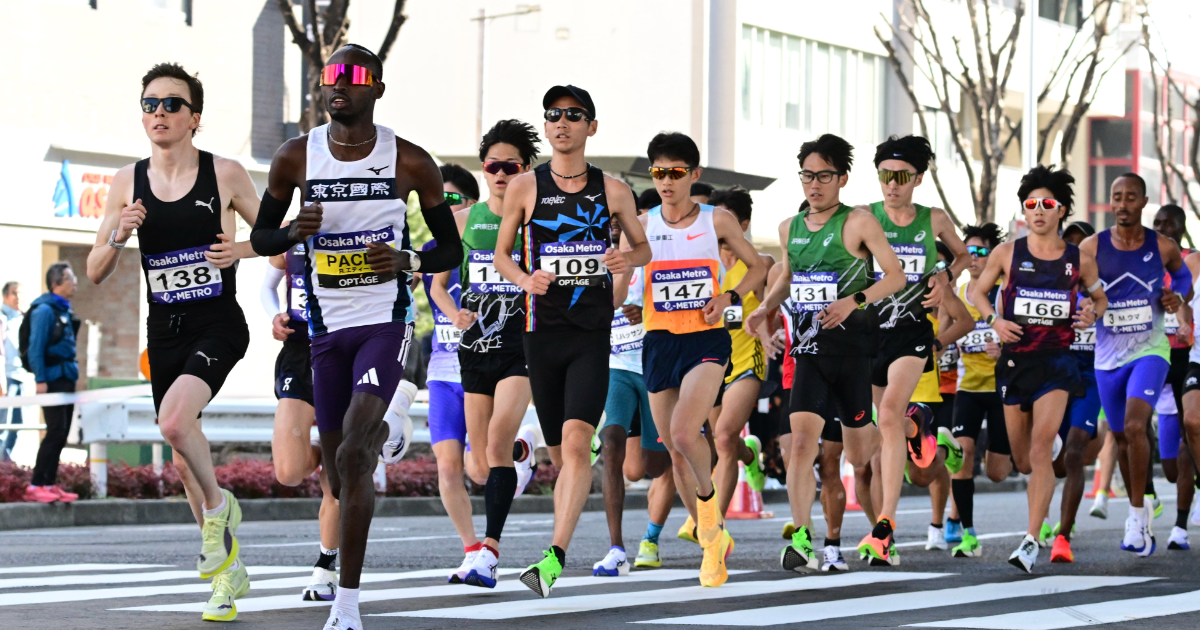
Chris Chavez: The Japanese crowds during Ekiden are insane. But during a marathon, it seems more composed than something like New York or Boston. Do they root for you?
Ethan Shuley: Oh yeah. Pretty much at any Japanese marathon, there are two phrases you're going to hear 100% of the time: "Faito," which is basically "Fight, go!" and "Gambatte," which is "Do your best." Everyone is basically screaming those words the whole time. I've never actually raced a major US marathon, so I can't compare. But Osaka was pretty crazy. Very lively.
Chris Chavez: What does Isaac say about that performance?
Ethan Shuley: I think he was very impressed. I wasn't too shocked based off my half marathon performance, because the half was incredibly hot and quite hilly toward the end. He was impressed and ready to help me for the next race.
Chris Chavez: With Kobe as your base, what goals were you throwing out for the next one?
Ethan Shuley: Even though I ran 2:11, I thought I was way fitter than the time reflected. We went through 30K at roughly 2:07:30 pace, so it was really just a matter of not cramping, improving race nutrition, and fixing strength. I hadn't done any training in the Puma Fast-R shoes. I'd raced in them but still trained in AlphaFlys. My approach for Osaka was really to keep the mileage similar but focus on intensity, get more training done in the Fast-Rs, and improve race nutrition.
Chris Chavez: Mileage-wise, did the build for Kobe and Osaka look fairly similar? You were touching 140- and 150-mile weeks this time around.
Ethan Shuley: Slightly more mileage this time, but not drastically different. I'd hit 146-mile weeks before; I got to 150 for this build. Mileage wasn't too different, but the intensity was definitely harder this time around.
Chris Chavez: Am I seeing correctly that all of this mileage is off six days a week?
Ethan Shuley: Yeah, I take Mondays off since it works with the race schedule here. I tried seven days a week, but it doesn't really work well for me.
Chris Chavez: When talking to Connor about Chicago, he was doing doubles where the second run was six or seven miles. You love a nine-mile double run. How did you land on nine miles?
Ethan Shuley: I don't love it, but it's become my staple. Once you get to 10 miles on a double, it's pretty hard on recovery. That mix is what I can handle without completely breaking. All the mileage I do is what I feel is my limit without sacrificing quality. I could do more mileage if I slowed down the pace, but I don't think that would help me as much.
Chris Chavez: Looking at your Strava in the lead-up to the marathon, someone in the comments asked what your goal was (about three weeks out) and you still hadn't nailed it down. When did you get some clarity?
Ethan Shuley: The big thing for me is I don't really like racing for time, because conditions can change so much. I had met with (Japan Running News’) Brett Larner and he asked how fast I could run, and I told him I thought if everything went well, I could run a 2:06 based on my training. But a lot of people use half marathon conversions for marathon predictions. Based on how my half went—it was a sit-and-kick race, not a time trial—and the fact that I hadn't really done a real taper going in, with a 150-mile week, then a 130, then 100 the week of, I thought I was capable of running a lot faster for the marathon.
Chris Chavez: How healthy was this block? Did anything pop up?
Ethan Shuley: It was a constant battle with nagging injuries the whole time, but fortunately nothing that required me to take time off. My hip was in a lot of pain the first month of December. You can even look at my Strava. There's a week where some people apparently thought I did 160 miles, but it was 50 miles of elliptical because I just couldn't do doubles with how bad my hip was. I also had some ankle issues and arch problems, probably from running in shoes that are too soft all the time. I just try to manage it as best I can with strength training. I had to do a lot of it this build.
Chris Chavez: From a motivational standpoint, I get how a professional signs a contract for Boston and pours everything in, even when they’re injured. But when you're not a pro and this is Osaka and not a World Marathon Major, what's driving you in those cross-training sessions? Why not just push the timeline back to a healthier cycle?
Ethan Shuley: For me, the Osaka Marathon was my world major. I'm not a pro, so this is my time to do a good race. I knew I was very fit after Kobe and wanted to reflect that in a race. Looking back, if I'd taken two or three weeks off, the race wouldn't have been the same. I just really wanted it. Pretty simply.
Chris Chavez: Going into Osaka, when you looked at the list of other guys in the race, what kind of race did you expect?
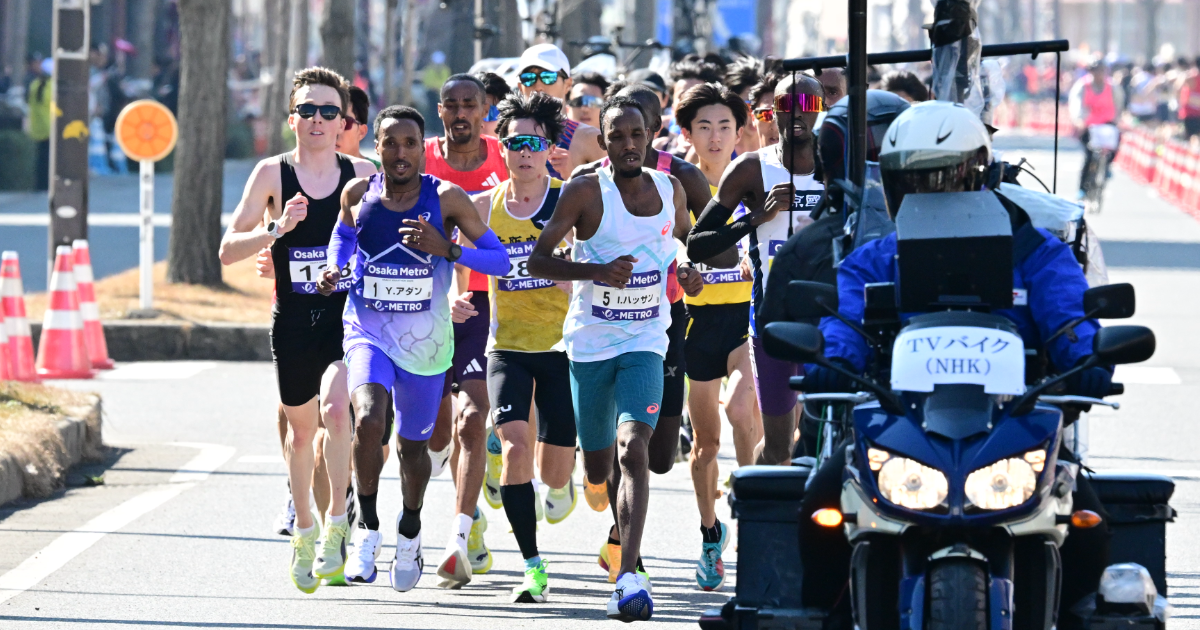
Ethan Shuley: I looked at how the Osaka Marathon has historically gone. Last year, it went out roughly the same, actually even faster. It usually goes out around 1:02:30 to 1:02:40, which is exactly what happened this year. I knew I'd have to be in that shape to hang with the top guys. Regardless of whether I could make it to the finish, I needed to at least be able to comfortably get through the half at that pace if I wanted to be competitive, otherwise you're just with the chase packs.
Chris Chavez: In Brett Larner's recap, he said this was maybe the most entertaining marathon in years, much of it due to Hibiki Yoshida just hammering it after 8K. As you're sitting back watching this guy hammer from the front, what are you thinking? He was on 2:03 pace at one point!
Ethan Shuley: He had been talking before the race about going for the national record. They asked him about the weather, because it was pretty warm, Osaka doesn't usually get up to the mid-60s in February. He just said, "Perfect weather, I'm looking forward to these warm conditions." He hyped it up. Mid-race, he surged. The thing with Japanese Ekiden athletes is that they don't always directly translate to the marathon. I thought he could have won if he'd stayed with the pacers the whole way. But the marathon is very different from a half marathon. I was fairly confident he would bonk hard. Apparently, in the Ekiden he ran the equivalent of a 58-minute half, but it's really hard to know what that translates to in a real race. There are a lot of guys who seemingly come out of nowhere and run 2:05 or 2:06. But if he'd stayed with the lead group, I think he would have won.
Chris Chavez: You ended up finishing 14th, but everyone around you ran a PB. Tons of guys in 2:06/2:07. What felt difficult and what felt easy about this race?
Ethan Shuley: The first 30K went exactly how I expected. The pace felt a bit hot, but aerobically I felt fine. It was just about making sure I took all my gels and got every water bottle. Fortunately, I had my bottles at the front of the tables so I got every one. Once we hit the hill at 30K to 31K, the whole pack kind of exploded. I felt really good on the uphill. I got dropped on the flat but caught a bunch of people going up. On the downhill and flat afterward, I started getting dropped again. That last 35 to 40K stretch is basically a flat road to the finish. It was just about hanging on. It reminded me a lot of Kobe, though fortunately not as bad—just try to survive and limit the cramping.
Chris Chavez: How was your mental math in those final kilometers to project what you’d run?
Ethan Shuley: Once I hit 40K and looked at my watch, I saw it was in the low 2:00 range and knew I was going to hit around 2:07. Before that, when things were getting really hard around 22 miles in, I couldn't hold 4:50 pace—I was just trying to hold as close to sub-5:00 as I could. But once I got to 38 or 39K, I knew I had enough strength left to finish strong and run a good time.
Chris Chavez: What kind of emotions did 2:07:14 bring?
Ethan Shuley: I was happy. I was happy that I basically did what I expected. I don't think I could have done any better given the conditions, race nutrition, everything. Even though I would have liked less cramping toward the end, I don't think I could have avoided it. It was an amazing feeling.
Chris Chavez: After the race, people reacted all over social media, including Rory Linkletter: who tweeted something pretty pointed. He said: “If you put the top 50 Americans in one race and made them go out at 2:05 pace a lot would run very fast. Problem is a lot of people don’t want to put it all on the line. You have to train like a maniac, race like you don’t fear consequences. That’s the Japanese way. Too soft here.” Do you agree?
Ethan Shuley: That's funny. Racing here is kind of like how he described it. People do not fear blowing up. The guys who run 2:06 here and their half marathon times don't follow the calculator that people use to predict marathon pace. They'll run a 61-minute half and then suddenly run 2:05:30. I would agree that Japanese runners don't fear the consequences. We saw that with Yoshida. He went out for the national record even though he had never run a marathon. There is some truth to that.
Chris Chavez: James McKirdy on Twitter said: “I’m not saying the USA has loads of 2:03 guys who haven’t run 2:03 yet… But I AM saying we have loads of men who can run 2:05-2:07 who haven’t run it yet. Men who are sitting at 2:12-2:20 who just need the right environment and opportunity.” Your thoughts?
Ethan Shuley: I don't disagree. Track running has really exploded recently in America. Everyone's running super fast times. A lot of guys have dipped under 60 in the half marathon this year. I think the same thing could happen in the marathon. I don't know if it's training, mentality, or what, but I certainly think American marathoners can be competitive on a global stage.
Chris Chavez: Your whole story disrupts the idea that to be great at the marathon, you need a fixed timeline of run college track, get really good at the 10K, and then the roads come calling. What do you think your story teach people about patience and late development?
Ethan Shuley: I wouldn't let past races define your whole running career. They can indicate something about your next race, but you don't want to rely on that too much. There are many people here in Japan who have done very similar things or even more. The guy who beat me in Osaka by two seconds (Taisei Kato)—his marathon debut was a 2:13, and he just ran a 2:07. I don't think there has to be some defined pathway of: run this 10K, run this half marathon, run this marathon time.
Chris Chavez: If you could find the Ethan who had just quit the BYU team and tell him, "Hey, you're going to run 2:07 for the marathon someday." What would he say?
Ethan Shuley: I wouldn't believe you. At that point in my running career, I didn't even believe I was capable of consistent training. It wasn't even about results. It was that I didn't believe I could string together a healthy block. Now I know that's possible. I think super shoes have helped, better nutrition, better training—there are lots of variables. But yeah, I definitely wouldn't have believed it.
Chris Chavez: You seem pretty even-keeled about the performance. It's up to us pundits to throw out the 2028 US Olympic Marathon Trials conversation. A time like this puts you in it. Have you allowed yourself to start thinking about that yet, or does it still feel far off?
Ethan Shuley: I've thought about it occasionally. My approach is really just to take it race by race. Being in Japan and not racing on the global stage with the big marathons, it humbles you a lot. Even though I ran 2:07, there are a lot of guys younger than me here in Japan and among the foreign runners who have absolutely destroyed me. In terms of future goals, I'd like to continue to be more competitive place-wise in future races and hopefully one day get some wins.
Chris Chavez: Does the Olympics feel like a goal?
Ethan Shuley: I mean, yeah. I think it's a goal for anyone competing at a high level in the marathon. It's definitely a goal to do the Trials and compete there, and then the Olympics as well.
Chris Chavez: I'm sure a time like this opens new doors for you.
Ethan Shuley: This has been a crazy week. My Instagram has tons of comments. My Strava blew up. I figured if I ran the time I had in mind, something like this would happen, but it's just weird to actually experience it.
Chris Chavez: Is there interest in hitting the majors now, or will you mostly stay running Japanese races?
Ethan Shuley: I still have a desire to run Japanese races, but I definitely do have a desire to do some majors as well.
Chris Chavez: Where's film school at?
Ethan Shuley: It's funny you ask, because I was actually at a point where I wasn't enjoying the curriculum. I was thinking I probably need to quit, but I wasn't sure what would happen with my visa situation. This is actually very good timing. I think I'll take a break from school, and maybe go back to it in the future.
Chris Chavez: Your YouTube channel has started to veer toward running content, but the very first videos were social life and dating in Japan. Where are you taking the channel now?
Ethan Shuley: Those early videos are almost two years old. That was 2024 when I was still working full time and hadn't even started film school. I enjoyed making videos. I've made most of the others private because I want the channel to be mostly running now, but I left those up because a lot of people shared similar experiences. For the channel going forward, I want to keep making running content. I like filmmaking, and I feel like I can still do something interesting. YouTube is very different from other social media but it's something I enjoy, so I hope to keep sharing my journey.
You can listen to our full conversation on the latest episode of The CITIUS MAG Podcast. Available to stream, download and listen to on Apple Podcasts, Spotify or wherever you get your shows.
____________
Host: Chris Chavez | @chris_j_chavez
Guest: | Ethan Shuley | @ethanshuley
Produced by: Jasmine Fehr | @jasminefehr
Support The Sponsor


OLIPOP
A blast from the past, Olipop’s Shirley Temple combines smooth vanilla flavor with bright lemon and lime, finished with cherry juice for that nostalgic grenadine-like flavor. One sip of this timeless soda proves some flavors never grow old. Try Shirley Temple and more of Olipop’s flavors at DrinkOlipop.com and use code CITIUS25 at checkout to get 25% off your orders.


USATF
The USATF Indoor Track and Field Championships presented by Prevagen are back in New York City from February 28th to March 1st at the Ocean Breeze Athletic Complex in Staten Island. This is where legends don't just race; they punch their ticket to the world stage. The pressure is real, the margins are razor thin, and every athlete is fighting for one thing: a spot on Team USATF at the World Indoor Championships. Grab your tickets now at USATF.org/tickets and experience track and field at its absolute loudest.
Chris Chavez
Chris Chavez launched CITIUS MAG in 2016 as a passion project while working full-time for Sports Illustrated. He covered the 2016 Olympics in Rio de Janeiro and grew his humble blog into a multi-pronged media company. He completed all six World Marathon Majors and on Feb. 15th, 2025 finally broke five minutes for the mile.