By Paul Hof-Mahoney
January 21, 2026
The “trackflation” discourse isn’t going anywhere this season, and with no major championship on the calendar, the temptation to make everything about time will only grow stronger this year. But here’s the weird part: record-breaking isn’t actually a great measure of how much the sport has changed. One or two extraordinary individuals can redefine an event single-handedly, like Yulimar Rojas in the triple jump or Mondo Duplantis in the pole vault. To truly understand how much we’ve progressed collectively, it’s more important to look at depth.
To get to the bottom of this, we cracked open the World Athletics databases, started double-chugging Olipops and Beekeeper coffee, and went to work. In order to truly understand where each event stands, we compared the result score of the 100th-best performer in every single event in 2015 and 2025 – not just to itself, but to all the other events using the WA scoring tables. Here’s what we found:
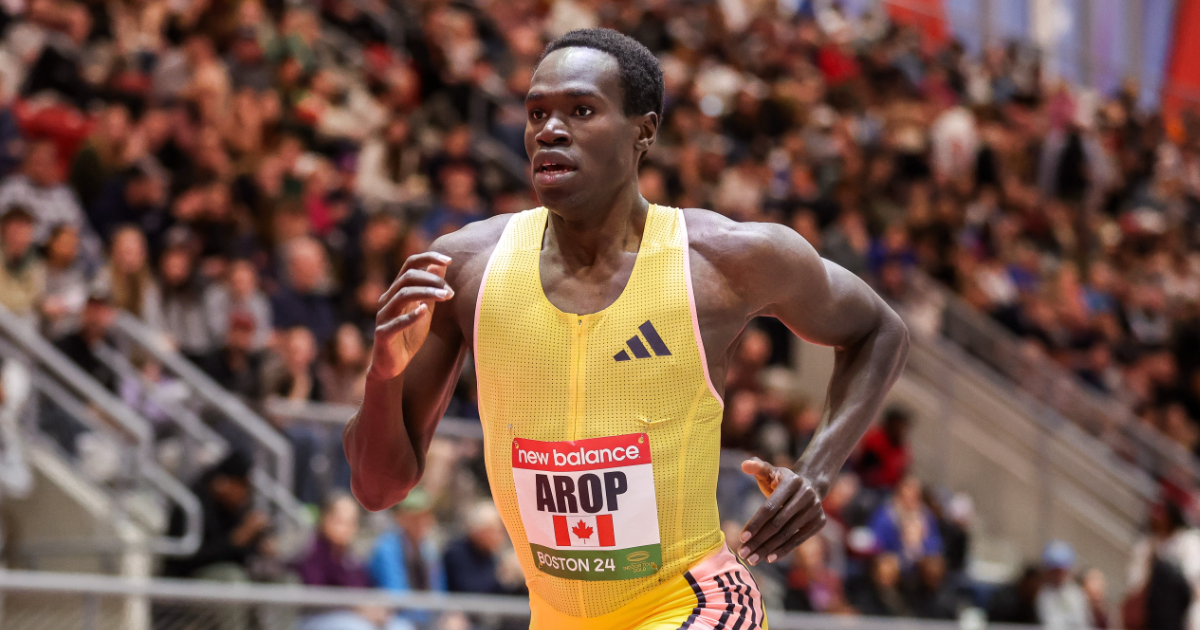
The men’s 800m has actually been as insane as it has seems. No event has been as symbolic of absurd progression as the men’s 800m. After seeing only three sub-1:43 performances from 2020-2023, there have been 67 over the last two years, including 17 sub-1:42 runs. The rising tide of the best guys in the world has also lifted the metaphorical boats of their companions at the back of the pack. The 100th-fastest man of 2015 ran 1:46.70, versus 1:44.92 in 2025. That gap of nearly two seconds is worth 54 points in the rankings tables, the biggest improvement out of any event.
When evaluating the increase in points, it is worth noting that the men’s 800m wasn’t particularly strong in 2015, as the 1122 points one would get from running 1:46.70 was very middle-of-the-pack. However, the half-mile ranked sixth in 2025, up 10 spots and only 13 points off the high-water mark put up by the men’s marathon. Speaking of…
The marathon (and distance as a whole, really) reigns supreme. This makes sense, because these are the events most aided and influenced by the various advancements outlined in the intro, but it’s still impressive to see it put to paper. The men’s marathon was already in good shape, comparatively, with a 2:09:14 performance from 2015 racking up 1144 points, statistically the second-most competitive event that year. In the decade since, nearly two-and-a-half minutes got taken off that time, with 100 men running 2:06:48 (worth 1189 points) or faster last year. By 2025, the marathon has now leapfrogged the men’s 100m for the honor of “deepest event.”
The seven events that saw larger improvements than the men’s marathon are all middle- or long-distance events, which makes sense when you consider the purported performance impacts of carbon shoes and sodium bicarbonate:
- Men’s 800m: 1:46.70 to 1:44.92 (54 points)
- Men’s 1500m: 3:38.17 to 3:34.33 (53 points)
- Men’s 20K race walk: 1:23:29 to 1:20:57 (53 points)
- Women’s 5000m: 15:33.15 to 15:05.05 (53 points)
- Men’s 5000m: 13:27.44 to 13:13.11 (51 points)
- Women’s 800m: 2:02.07 to 2:00.14 (48 points)
- Women’s marathon: 2:28:35 to 2:23:43 (46 points)
The only non-distance event in the Top 10 is the women’s 100m, where the 100th-best time dropped from 11.31 to 11.16 (32 points).
High jump hate was not hyperbole last year. In the wake of nearly every Diamond League or Continental Tour meet last summer, you could probably find a tweet bashing men’s high jump. That’s because, for a large part of the season, it was boring! An awesome battle between Hamish Kerr and Sanghyeok Woo in Tokyo was a nice cap to the season, but we saw DL competitions won in an uninspiring 2.26m and 2.25m on two separate occasions. Unsurprisingly, the down year stretched all the way to the bottom of the top lists, as 2.21m was 3cm and 27 points lower than the 100th-best mark of a decade ago. It was one of only three events (along with men’s triple jump and, surprisingly, men’s shot put) to get worse, depth-wise, and its dropoff was the most extreme by a significant margin.
It’s worth pointing out that in an event like high jump, where the marks are limited to bar progressions and whole centimeters, there could be some weirdness in this data that doesn’t translate easily. But then again, at least 100 men cleared 2.24m every year from 2012 to 2018, a standard that hasn’t been hit in the seven years since. So maybe it’s simply a matter of high jump exiting a golden era and inflated expectations on the fan’s part. Regardless, the numbers say that we’re headed in the wrong direction.
Have the field events plateaued? Across the board, field events have seen the least drastic improvements over the last 10 years. Most of the field events have still improved, just not as much as their outfield counterparts. In fact, only three track events—the women’s 400m hurdles, 10,000m and steeplechase — break up the solid run of field event futility at the bottom of the rankings.
In field events, it’s far less likely for shoe tech to play such a drastic role, or something akin to double threshold to come along and change the workout game. There’s no benefits to altitude training for jumpers and throwers. It’s difficult to see massive breakthroughs for events that are more reliant upon technique that feels somewhat finite as opposed to reaping the benefits of an expanding aerobic engine. That’s not to say that there’s no hope for the field events. From Mondo Duplantis and his pole vault pals to Camryn Rogers and her rivals in the hammer, the high-end performances we’re seeing are better and more exciting than ever in so many events. It’s simply less likely that we’d see a sea change from top to bottom like we have on the track.
The numbers don’t lie: trackflation is real. But the outliers don’t tell the whole truth, either. We tend to think of barrier-breaking performances as redefining the realm of the possible, a rising tide that lifts all boats. Statistically, however, Sydney McLaughlin-Levrone taking nearly two seconds off the 400H world record actually did very little to move the needle for the 100th best long hurdler in the last decade.
We’re all getting faster, but in more of a process-y, training- and technology-driven way than a Marty Supreme “dream big” manifestation. Which is probably a good thing! Because it means that parity comes with performance, and though the bar may be higher (not literally, sorry again high jumpers), everyone is just as capable of clearing it.

Paul Hof-Mahoney
Believe it or not, his last name isn't actually “Throws”! Paul is CITIUS’s throws analyst and is currently a student at the University of Florida. When he's not posting his Fact of the Day just before midnight, Paul is trying his darnedest to become a runner (5K PB currently sitting at 26:29) and probably complaining about living in Florida. He'd like to thank his girlfriend and CITIUS digital producer Audrey Allen giving him free photos and videos of throwers and YouTube thumbnails to help build a facade of professionalism around Paulie Throws.