By David Melly
January 14, 2026
It’s become an annual tradition. Amidst the last gasps of cross country and the first indoor races, sandwiched squarely between the final major marathons of one year and the first of the next, every distance runner with a free weekend and a dream heads to Houston.
The Houston Half Marathon (sorry, Houston Full Marathon, you get outshone every time) has always been a good place to run fast, but in the past five or so years, its large fields and ability to produce record-setting performances has taken the event to another level.
Last year, Conner Mantz and Weini Kelati broke the men’s and women’s American records in the race, and this year, two new faces came very close: Alex Maier ran 59:23, and Taylor Roe ran 66:20, both fourth-place finishes good for #2 on the U.S. all-time list.
Six of the top seven women on said list set their PBs at Houston, and so did five of the top nine on the men’s side.
Put it this way: before last weekend, just five American men in history had run sub-60 in the half; on Sunday, four did it in one race. With the exception of Ryan Hall’s 59:43 from 2007 and Molly Huddle’s 67:25 from 2018, both American records at the time, all those performances have been run in the last four years.
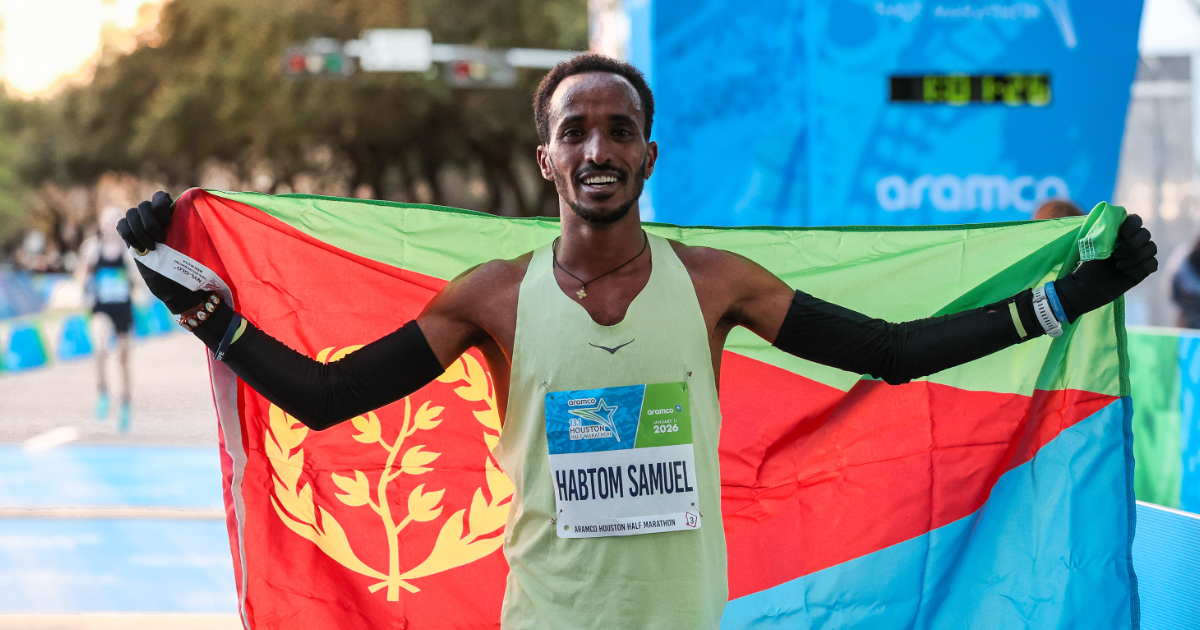
It’s not just an American thing, either. Habtom Samuel took a break from the NCAA circuit, where he ran 13:05 in the 5000m for New Mexico just last month, to claim the win in 59:01, an incredible debut for the 22-year-old Eritrean. A few ticks behind him, Rory Linkletter became the first Canadian to break the one-hour barrier. And the women’s race was won by Ethiopian Fantaye Balayneh in 64:49, the fastest half marathon run by a woman on U.S. soil. Everyone wants to run Houston—even 39-year-old Galen Rupp, who finished 27th in 62:01.
High demand is a precious resource in any sector, and road running is no different. Winning the Houston Half will net you less prize money than finishing second at World XC, and yet plenty of international talent still opted for a non-championship, non-major road race in a distance that doesn’t offer any sort of automatic qualifier. That’s all too rare in professional running in 2026… so how do we use it to our advantage?
Remember the World Road Running Championships? It used to be called the World Half Championships, and it used to be annual. Now it’s biennial, includes multiple distances, and the San Diego edition got canceled last year. There’s still one slated for 2026, scheduled for Copenhagen in September. If you didn’t know that, that’s probably because this particular championship gets even less attention than World Indoor or World XC—and that’s saying something.
If we’re going to rebrand and retool these nominally championship races every few years in hopes of finding a format that sticks, why not try to harness the benefits of races where the half marathon has already found a niche? The current iteration of the College Football Playoffs is only a decade old, but it’s proven way more exciting to have a bracket-style qualification system than simply picking contenders by secret committee. It wouldn’t be hard to create a similar system using popular, existing half marathons like Houston, New York City, Valencia, and the Great North Run in the UK.
Suppose that in order to qualify for the World Half Champs, you have to finish top 10 at one of those races, and then those 40 athletes go head to head for the gold. Given that the world’s top half runners already want to race one or more of these each year, it wouldn’t be hard to attract talent, and it could even have the converse effect of enticing a Houston runner to actually go to Copenhagen.
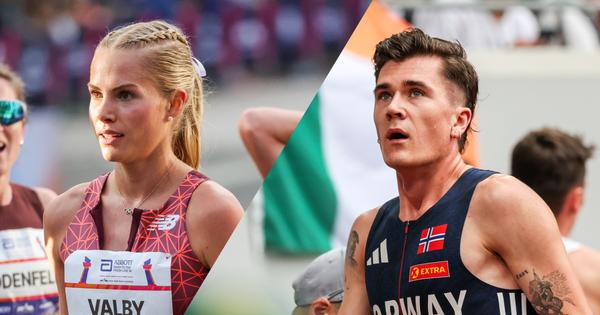
You could limit participation to three athletes per country per race to ensure that there isn’t too much double dipping, while still allowing for the best road runners to face off. A field featuring up to 12 Kenyans and Ethiopians would look more like a World Marathon Major than a 10,000m final, but that’s okay: it’s a different kind of race! And a cross country team’s worth of Americans could help draw some more eyeballs to an event that’s largely overlooked in the U.S. Maybe you cycle in rotating qualifying races each year while keeping two or three stalwarts in the mix. Maybe you offer wild-card entries to anyone with a global title on the track or grass to entice the Jakob Ingebrigtsens and Beatrice Chebets of the world to double-dip. The possibilities are endless!
Ultimately, we know two things to be true: people don’t care that much about World Road Running Champs, but they do care about Houston. Instead of finding that confusing, or frustrating, let’s use that to our collective advantage and see if we can get the half marathon happenin’ all year ‘round.
David Melly
Since David began contributing to CITIUS in 2018, he's done a little bit of everything, from podcast hosting to newsletter writing to race commentary. Currently, he coordinates the social media team and manages both the CITIUS MAG newsletter and The Lap Count, supplying hot takes and thoughtful analysis in both short- and long-form. Based on Boston, David breaks up his excessive screen time by training for marathons, crewing trail races, baking sweet desserts, and mixing strong cocktails.