By Jordan Chervin
January 8, 2026
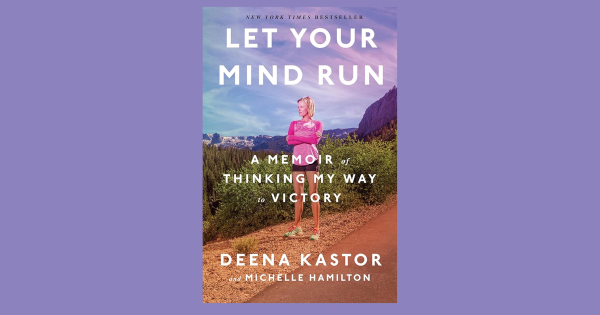
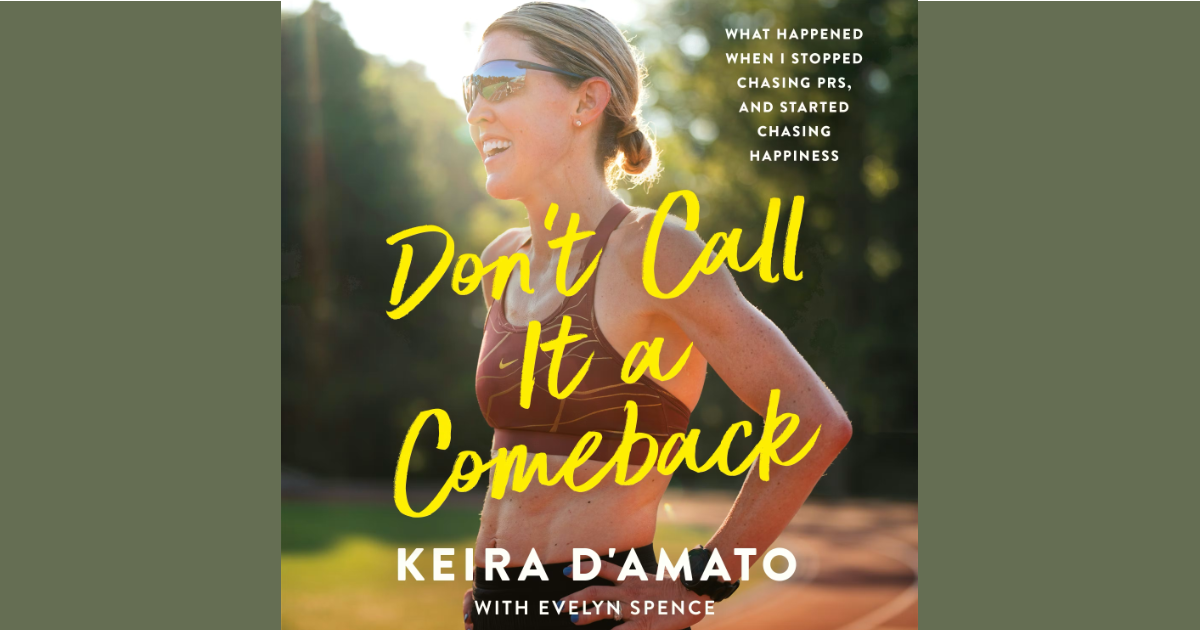
I started reading Don’t Call it a Comeback on a Thursday during my lunch break at work and was so immediately hooked that I was late to return to my desk (which is a big deal because I am nothing if not punctual).
Keira opens her book with a declaration in the prologue: “this is not a book about running”—and I rolled my eyes. Obviously this is a book about running! But attempting to take her at her word, I took a deep breath and concluded:
- Keira is setting the tone for the rest of her memoir. Running is a part of her identity, but not all of it. As she does describe later on, running’s just a very dynamic slice of her pie.
- The reader can substitute “running” with almost anything he or she is personally passionate about, and in this way the book is relevant to everyone, not just runners.
Of course, had I merely continued reading, I would have seen that Keira proceeds to say just that: “running is a metaphor”. Keira-1, Jordan-0.
Like any running(ish) memoir, the story is punctuated by key races and major life events, with lots of engaging anecdotes in between. In no particular order, my three favorites are:
- Keira begins chapter six with a quote passed down to her by Jacob, a senior on the cross country team, when she was a freshman in high school: “No matter if you win or lose, you’re going to go home, take off your shorts, and go to bed.” Perspective is a major theme, and this quote really exemplifies that.
- Before the 2021 Chicago Marathon, Keira left a note on the dashboard of her car in the Richmond Airport parking lot, the contents of which were not revealed to the reader until after she described returning from the race: “You did good, Keira. Proud of you. XOXO.” – I’m definitely stealing this before my next marathon.
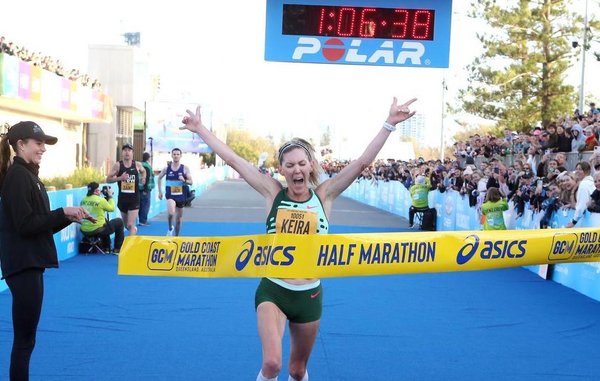
- While in Australia for the Gold Coast Half Marathon, Keira really pressed her father-in-law about his motives for accompanying her to so many races. He held firm that “someone needs to be here to hold your stuff.” It’s so sweetly simple, yet so powerful. I might make it my new Hinge prompt: “I’m looking for …” someone to hold my stuff.
There were times when I found the writing to be a little disorganized, but every chapter ends with a “punch line”, a summary that helpfully tethers all of the tangents back to the central topic. Other times, it was laugh-out-loud funny, true to Keira’s nature. Like when she points out that it took longer to finish her first marathon than it did to give birth to her first child, or in chapter nine when she equates the amount of time it takes her to return to training post-marathon with the amount of time it takes for sports bra chafing to go away. Pros, they’re just like us!
Despite the obvious differences between Keira and me, I saw a lot of myself in her (besides just the sports bra chafing). We were both math majors in the Patriot League. In 2021 she declared she was never racing a track 10,000m ever again (spoiler, she did)—my training partners have heard me retire from the half marathon several times (I’m currently training for one). The urgency she felt to race Grandma’s Marathon in 2018 reminded me of when my college cross country coach sat me down my sophomore year and pointed out my own tendency to race with urgency.
Before I ran my first marathon, lots of people told me that anything can happen, which they usually meant in a negative way. But if anything (negative) could happen, then I had to believe the equal and opposite could be true, right? Well, Keira had the same thought before Worlds in 2022: “What if I bonk?” she thought. “Well … what if I win?” I’m not saying all this to suggest that I’m going to be an American record holder in the marathon a decade from now, but to underscore how relatable Keira is. No matter what, any reader can find something with which to identify.
By chronicling her non-traditional trajectory and injecting so much humanity into her memoir, Keira demonstrates that surrounding yourself with a village and prioritizing fun after getting a second chance in the sport—a “Round Two,” as she calls it—is not just a possibility. It’s an imperative, and does translate to success. This is true even if you’re in your Round One.
Overall, the tone was natural and earnest. With each page, I felt like Keira was in conversation with me. I’m not an audiobook person, but I have no doubt that hearing this memoir in Keira’s actual voice is an exceptional experience—print just doesn’t do some of those puns justice! In the venn diagram of “pro runners I’d like to run with” and “pro runners I’d like to have a drink with,” Keira falls squarely in the middle—a testament to what happens when you pursue your big goals in a joy-driven way. I hope one day I get the chance to do either (or both?)!
Next in the Queue:
- The Running Ground, Nicholas Thompson
- Inside a Marathon, Scott Fauble

Jordan Chervin
Self-proclaimed CITIUS Reading Correspondent, Jordan once brought her copy of “Talking to Strangers” by Malcolm Gladwell to a low-key meet at the Armory where they were both racing a 3k, hoping for an autograph. Her friends yelled at her to be cool and put it away! She did not get the autograph. You can follow her on Goodreads and Instagram (@jordanchervin).