By Jordan Chervin
July 3, 2026
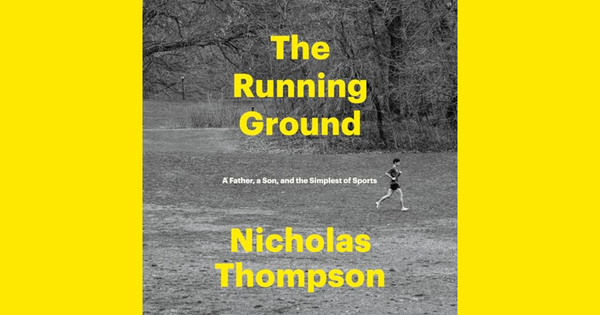
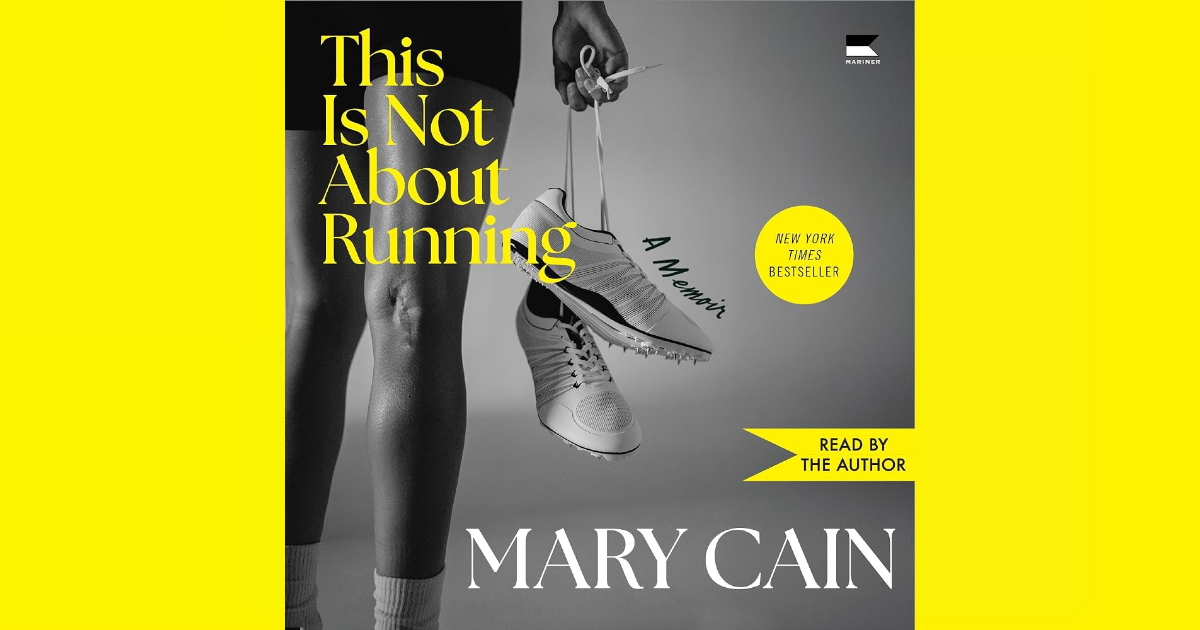
A few Wednesdays ago, my college bestie and I went to free bingo in Bryant Park. I got there early to snag seats, and when Lindsay finally arrived she found me reading (no sentence has better described my essence). She laughed at the irony of the cover: a book claiming to not be about running yet so obviously depicting a runner. I hated to burst her bubble, but this was not a humorous book.
I grew up in the Mary Cain era. I was only one year ahead of her in school, and in fact I was the second leg of my high school’s 4x400 that beat Bronxville’s at the 2013 Penn Relays. At the time I was in high school, the Nike Oregon Project was the premier professional training group, and Mary Cain was an undeniable teenage phenom. There was no blueprint for her.
Cain’s memoir deviates from the usual framework employed by most other pro female runners. Their stories are often about overcoming adversity, and culminate in some sort of objective success like a national record, a World Major win, or an Olympic team berth. Unfortunately, Mary’s career trajectory did not rise toward anything like that, including the 2016 Olympic team that so many thought she was destined for (she came in 11th in the 1500 meter final). Instead This Is Not About Running is more of an expansion on her November 2019 New York Times op-ed, which sent shockwaves through the running world.
Another difference between this memoir and others is the unique stylistic choice Mary made to tell the story in the present tense. Mary transports herself and the reader back to the time these events were happening. As a result, the book reads like a diary without actually being written in diary format, therefore coming across as slightly choppy and disjointed. In my opinion, this stylistic choice would have been more effective if Mary fully embraced a diary structure, only imbued with more retrospection or reflective commentary to transition between memories and better connect the sequence of events. Do not be daunted by the over one hundred chapters though; because each is so short, the reader stays engaged.
To be frank, I did not like this book. It was brave of Mary to write it, but it is not a particularly enjoyable read (an audiobook listen, I imagine, would be worse). It is upsetting and uncomfortable to read about abuse and trauma. No one likes discovering that one of their other running heroes was an alleged bystander. No one takes pleasure learning just how badly a coach and prominent shoe brand ruined a generational talent by squandering her potential. It is a shame that Mary had to endure what she did, and while there is always more progress to be made, what a long way the sport has come in the last decade.
To end on a positive note, it was cute to learn that Mary had a brief crush on Matthew Centrowitz in her early Nike Oregon Project days (c’mon, who hasn’t?!). The anecdote she shares from 2013 Worlds was so endearing: “After his medal ceremony, he threw me the stuffed mascot toy all the medalists receive. He knew I really wanted one. While standing on that podium he was thinking of his teammate. He was thinking of me… medals are amazing, but they only mean something if you have people to share them with.”
Next in the Queue:
Inside a Marathon, Scott Fauble
Duel in the Sun, John Brant
Jordan Chervin
Self-proclaimed CITIUS Reading Correspondent, Jordan once brought her copy of “Talking to Strangers” by Malcolm Gladwell to a low-key meet at the Armory where they were both racing a 3k, hoping for an autograph. Her friends yelled at her to be cool and put it away! She did not get the autograph. You can follow her on Goodreads and Instagram (@jordanchervin).