By Kyle Merber
March 18, 2026
People should be celebrating in the streets, newsies screaming “EXTRA, EXTRA, READ ALL ABOUT IT” while brandishing extremely specific papers emblazoned with THE WORLD RECORD HAS FALLEN headlines!
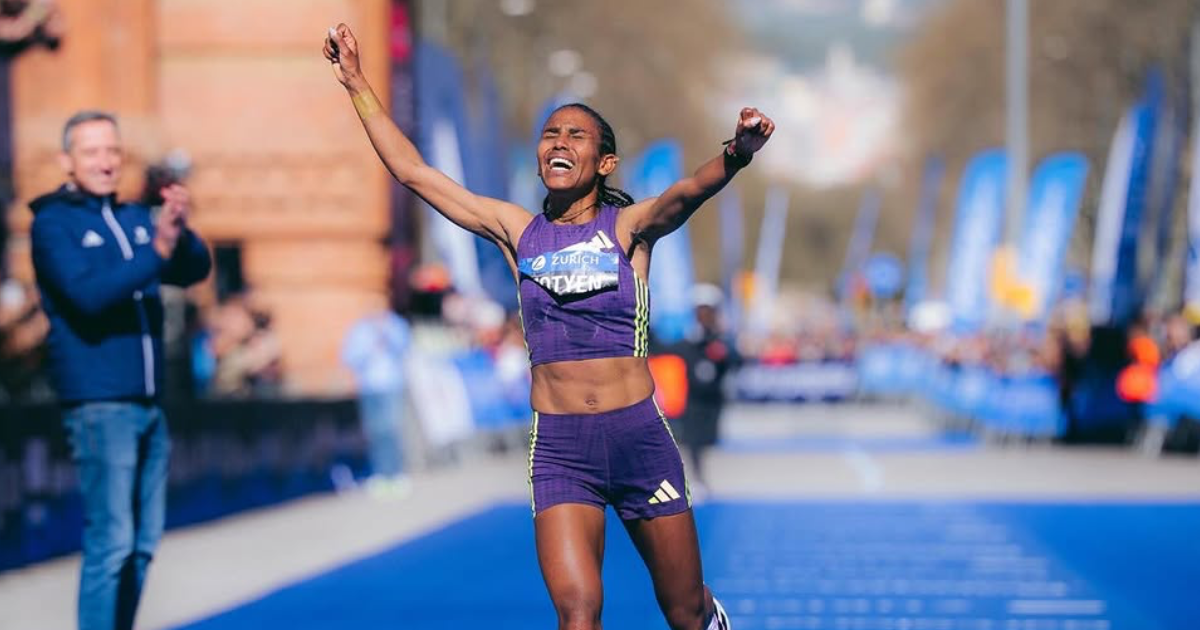
Instead, the report of Fotyen Tesfay’s incredible run at the Barcelona Marathon has been overshadowed by a radioactive performance that was never formally removed from the books, and as a sport, we’re forced to reckon with this new, stellar performance from a sort of purgatory. Among other things, this is what doping takes from us: moments of jubilation and inspiration.
Even if World Athletics’s race report fails to mention the context surrounding Ruth Chepngetich’s mark of 2:09:56 from October 2024, here is a very brief refresher: six months later she was caught taking hydrochlorothiazide.
Because of that, we can choose to not let “them” win by refusing to pretend that dirty records count and lean into some good old fashioned revisionist history. So join us in shouting it from the rooftops: 2:10:51 is the fastest marathon in history and the world record is back with Ethiopia.
At the same time, let’s acknowledge the reality. Plenty of critics will react to Tesfay’s performance with their eyes rolling to the back of their head. These skeptics will likely—perhaps even rightly—feel justified in any accusations because they have been burned before.
Some will talk about how this performance is too good to be true, how it came out of nowhere. Few of us went to sleep the night before Barcelona on record watch, except perhaps for Tesfay, who came through the half in 1:05:05.
It’s worth noting that while Tesfay’s marathon debut pops off the page, it’s hardly the first time she’s done something spectacular, and she’s no stranger to the magic of Spanish asphalt. Her 1:03:21 half marathon at Valencia in 2024 is the third fastest time ever. The 2:10:51 was hardly a performance from a rookie that has come out of nowhere. Since 2016, the Ethiopian has consistently competed at World Athletics global championships, Diamond Leagues, the Olympics, and other events hosted by NYRR and the BAA. There has been no hiding.
Tesfay finished eighth in the 10,000m at Worlds last year and seventh in Tokyo the year before. The list of women who beat her in both those races has three names on it: Beatrice Chebet, Nadia Battocletti, and Gudaf Tsegay. She’s one of only two women to break 64 minutes in the half on multiple occasions; the other is Agnes Ngetich, the 10km world record holder. Based on the company she keeps, it’s not crazy to suggest she’s one of the best pure distance runners in the world who simply hadn’t gotten around to a full marathon before Sunday.
If an Ethiopian breaking records in her marathon debut sounds familiar, it’s because her teammate Tigst Assefa did exactly that at the Berlin Marathon in 2023 when she ran 2:11:53. The resume of their coach, Gemedu Dedefo, continues to grow and the list of athletes under his tutelage includes Chicago winner Hawi Feysa, Boston winner Sisay Lemma, World Champion Amane Beriso, and Olympic champion Tamirat Tola. And as far as internationally competitive professional training groups go, this one doesn’t have a complicated history with the AIU.
So yes, 2:10:51 is fast. And it’s admittedly eyebrow-raising. But be mad at the proven cheaters, not the athletes who didn’t let off the gas in order to run a time that makes us more comfortable.

Kyle Merber
Kyle Merber is a former professional miler turned media multi-hyphenate. While he’s not above dropping a quick “back in my day,” he’s far more focused on the present. Since 2021, he has brought his signature analysis and commentary to track fans across the CITIUS MAG network. When he’s not writing The Lap Count or hopping on podcasts, Kyle manages partnerships and pitches a relentless stream of ideas for Chris to consider. He might not be running a 3:52 mile anymore, but he keeps himself in just good enough shape to ensure the athletes still respect him.