By David Melly
September 23, 2026
2026 was supposed to be an off year.
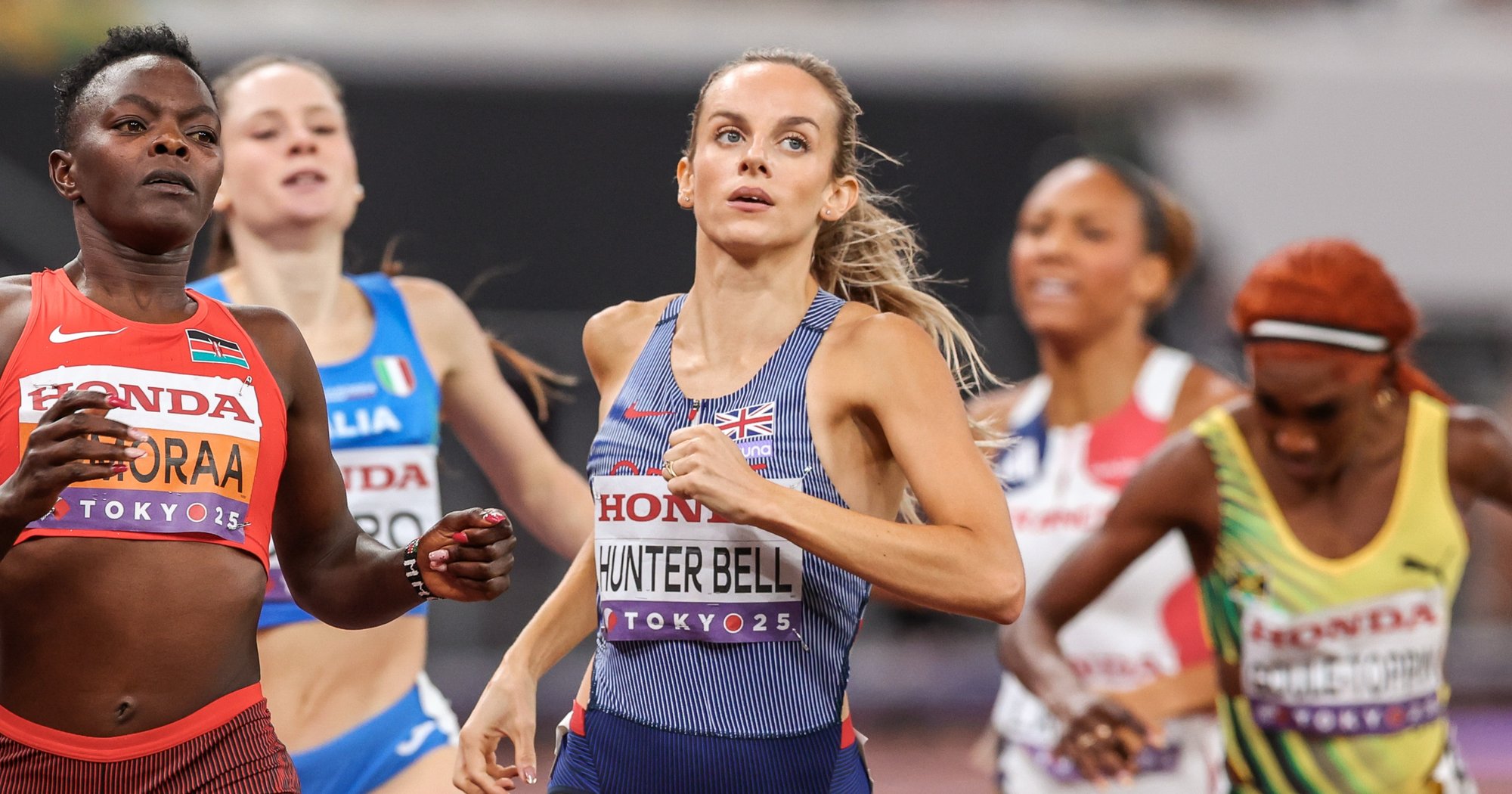
Try telling that to someone like Georgia Hunter Bell, who competed and medaled at World Indoors, Europeans, The Commonwealth Games, or World Ultimate Championships. Entering this past season expectations were mild. We had planned absences from Sydney McLaughlin-Levrone and Beatrice Chebet, it was known Grant Holloway and Jakob Ingebrigtsen were battling injuries, and Yomif Kejelcha looked towards the roads.
If, at the start of the year, you had a very selective crystal ball that revealed to you Noah Lyles, Kishane Thompson, Faith Kipyegon, and Shericka Jackson would all be sidelined for the biggest meets of the year, you’d have naturally assumed things looked apocalyptic for the sport.
But here’s the thing about track and field: it’s bigger than any one athlete.
With certain stars missing, others stepped up. It was the year of Masai Russell, rebounding from the disappointment of the 2025 World Championships to go on an unprecedented undefeated streak, capped by a world record of 12.09 in the 100m hurdles. The big three turned into the big one, with Alison dos Santos dominating the 400m hurdles and clocking a surprise world record of his own, at 45.80. Ja’Kobe Tharp validated the prelim magic of Hayward Field by backing up his record run of 12.75 with an Ultimate Championship. Audrey Werro dipped below 1:54 on three occasions to show fans something they have not seen since 1983. And Collen Kebinatshipi demonstrated remarkable patience and consistency on his way to six sub-44 second clocks in the 400.
Without an Olympic or World Championships on the line, athletes were free to build schedules around their own motivations. That meant we only saw Josh Kerr infrequently, but when we did, it was special. Meanwhile Jamal Britt raced 44 times, contesting 31 meets across 11 different countries. And Jess Hull demonstrated her strength by doubling at World Indoors, Australian Nationals, Commonwealth, and at World Ultimate Championships.
The lack of a traditional global championship didn’t mean performances faltered. If you scored the fastest times of the year from 2025 vs. 2026 as a track-only dual meet, the latter only loses out 7 to 11 (with the removal of the 10,000m).
But when looking at the competition scores of how the best invitationals stacked up in comparison to the prior year, it gives a clear picture of just how good this year was. In a head-to-head comparison of the best meets in 2026 vs. the best meets in 2025, this year was far and away more competitive. That’s reflective of the fact that the best athletes were showing up to race each other more frequently.
Unfortunately the depth of performances scaled back marginally, which is not unexpected. Athletes were not chasing standards and with a top-heavy qualification system for the World Ultimate Championships there was less incentive for the second or third tier of athletes.
Nevertheless, here’s a breakdown of some of the relevant numbers:
- Men’s 100m sub-10.00 (35 in 2026 vs. 45 in 2025)
- Men’s 800m sub-1:43 (10 in 2026 vs. 17 in 2025)
- Men’s 1500m sub-3:30 (5 in 2026 vs. 17 in 2025)
- Women’s 800m sub-2:00 (88 in 2026 vs. 100 in 2025)
- Women’s 1500m sub-4:00 (25 in 2026 vs. 36 in 2025)
The women’s 100m was one of the few exceptions to the rule as exactly 38 women dipped below 11 seconds in both years. Only 25 were under that barrier in 2024, so don’t be surprised if there is a significant jump in that event come 2027, especially with a standard of 10.96.
On the horizon, 2027 features a less congested calendar that will give athletes fewer restrictions to participate on the circuit, and no major championships to focus on except for Worlds in Beijing in September. Aside from a European Indoor meet in March and a European Team Championships in June, there is really nothing going on—not even a World Relays or World Cross Country Championships. Instead, expect athletes to test out the chops on the roads or fly down under to enjoy the Australian “summer” circuit.
If anything, next year might feel more like an off-year… but there will still be unexpected twists, legendary head-to-head battles, and maybe even some fast times are all in our future. Because after all, it’s going to be another year of track and field.

David Melly
Since David began contributing to CITIUS in 2018, he's done a little bit of everything, from podcast hosting to newsletter writing to race commentary. Currently, he coordinates the social media team and manages both the CITIUS MAG newsletter and The Lap Count, supplying hot takes and thoughtful analysis in both short- and long-form. Based on Boston, David breaks up his excessive screen time by training for marathons, crewing trail races, baking sweet desserts, and mixing strong cocktails.