By Chris Chavez
September 15, 2026
As I sat on the plane back to New York, I figured it was time to gather and collect my thoughts on this new experiment, where World Athletics spent millions to find out what happens when you put every Olympic champion, World champion, and world record holder on the same start line and give them 72 hours to sort it out.
Kyle Merber and I recorded a podcast every night once we hustled back home from the stadium—Day 1, Day 2 and Day 3 are all up on The CITIUS MAG Podcast feed and on YouTube, along with the mixed-zone interviews that Preet Majithia grinded out all weekend.
Here’s our 50 parting thoughts from the 2026 World Ultimate Championships in no particular order and more of a stream of consciousness trying to recall as much of the fun from the past few days.
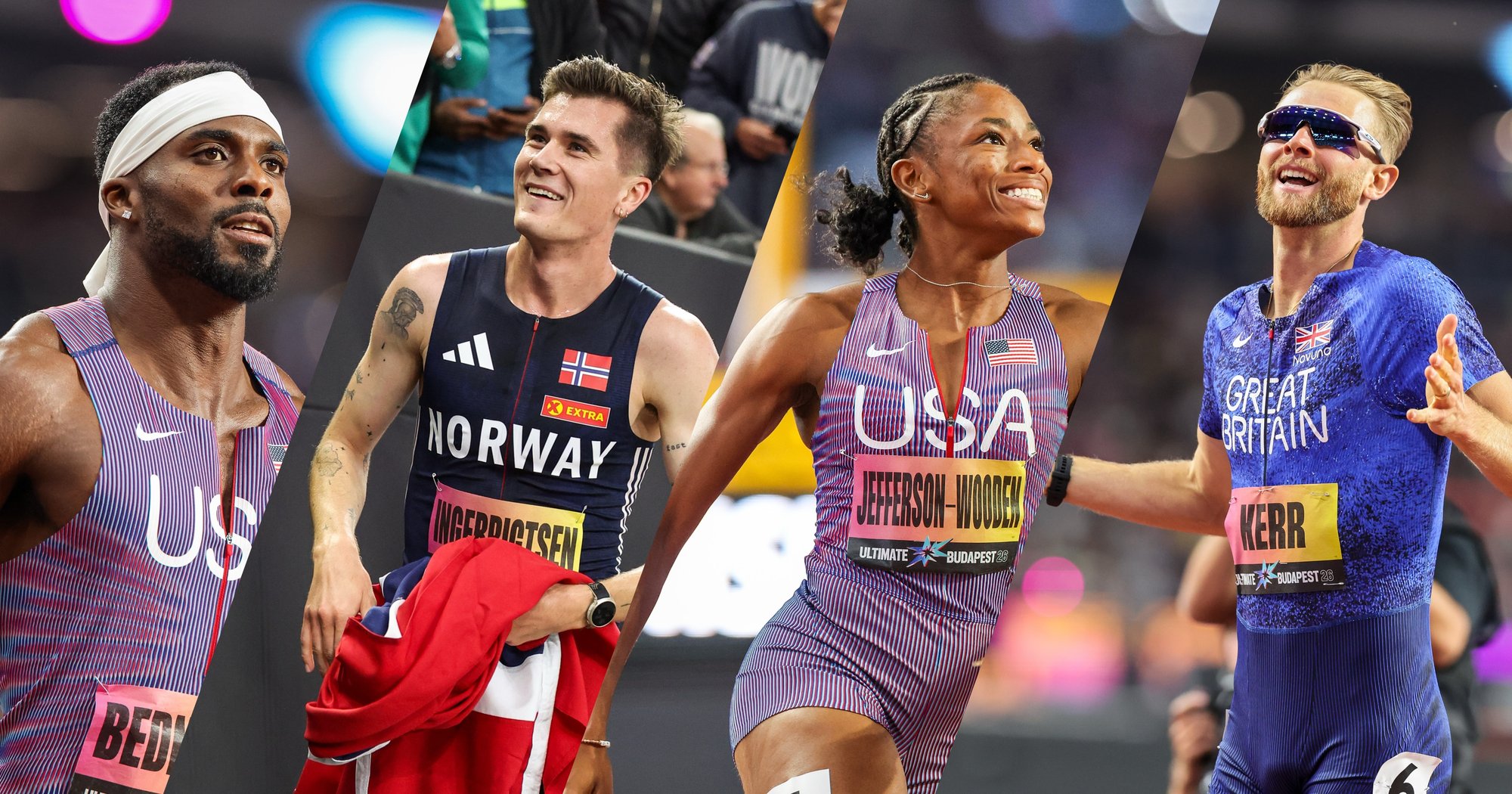
1. Melissa Jefferson-Wooden made history as the first World Ultimate double champion and, if we’re being honest, the MVP of the meet. She ran 10.62 in the 100m on Saturday—the second-fastest time of her life, just a hundredth off her Tokyo mark—and beat Olympic champion Julien Alfred and Sha’Carri Richardson to do it. Then she came back on Sunday and ran 21.47 in the 200m into a 0.6 m/s headwind, the fourth-fastest performance in history, which moves her to No. 3 all-time behind only Florence Griffith Joyner (21.34) and Shericka Jackson (21.41). She did not dip at the line. Her shoelace, it looks like, was untied. She left hundredths on the table but added $300,000 in her pocket.
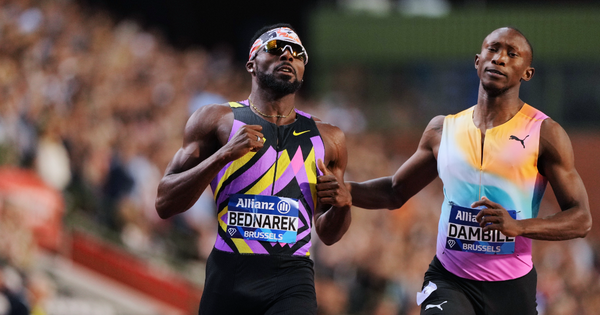
2. Kenny Bednarek won the 100 meters on Saturday and finally has a global title. It came in the event few would have predicted him as a favorite for. He told Kyle and me at media day, almost as an aside, “Watch the 100m.” We watched. What we saw was a great start, sharpened over a year of block work next to Christian Coleman, holding up against reigning World champion Oblique Seville, and a 9.85 finish was enough. Then on Sunday he ran 19.52 in the 200m for a personal best, a world lead, and moved up to seventh on the all-time list. Two titles and $300,000… not bad for just two days of work!
3. Josh Kerr won the 1500 meters in 3:29.35 in what was—shockingly—his only 1500m of the entire season. We will never forget that World Athletics’ win-probability graphic that gave him the 13th best shot to win—in a field of 12. He sat in sixth through the first 1000m, boxed but unbothered, moved to second place by the bell, took the lead with about 200m to go and simply outran everybody. You can be mad that he raced sparingly this year… but it’s hard to be when the performances he gave were so dominant.
4. Jakob Ingebrigtsen rose from the dead to win the 5000m on Friday night. Seven months ago (arguably until the end of the 5000m at the European Championships) few thought he’d be a factor in Budapest, let alone winning. The East Africans did what we didn’t expect and actually pushed from the front, through 3000m in 7:59, and then, one by one, they fell away. Jakob hurdled a fallen Addisu Yihune mid-race like a man remembering he was once a steeplechaser. But the defining image from this race was him bursting past a wall of Americans in the homestretch to win by a half-second over Cole Hocker. (World Athletics had Ingebrigtsen ranked 12th in the field beforehand. He found that very funny.)
Kudos to the only person on our prediction panel who picked him: Preet.
5. Collen Kebinatshipi is the best 400-meter runner in the world right now and it isn’t close. He ran 43.39 on Saturday, went through 200 in 20.67—nearly seven-tenths faster than his split at the Brussels Diamond League final. In doing so, he made everyone in the media tribune think, for about 150 meters, that the 43.03 world record by Wade van Niekerk was going down. Things cooled off somewhere between 200m and 300m, but he still won by 0.76 over Rai Benjamin. That’s six sub-44s in one season, the most ever by one man. He’s also 22 years old. Somebody check the NCAA clearinghouse for eligibility and get this guy in a Georgia singlet so he can get a crack at the collegiate record.
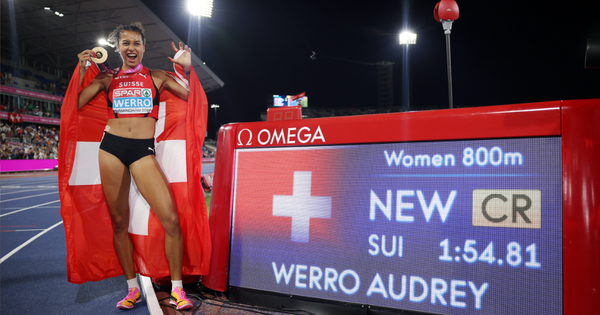
6. Audrey Werro closed an undefeated outdoor season with the Ultimate 800 title, and she did it the way she’s done everything this year: from the front. After a 27.3 opening 200m, Femke Broeders-Bol was glued to her outside shoulder. Olympic champion Keely Hodgkinson was the most patient we’ve ever seen her this season but then Werro simply shifted and nobody came with her. We learned afterward that Hodgkinson tore a hamstring at Europeans and still found a way to finish second. The women’s 800m was, in my opinion, the event of the year in track and field yet the world record survives 2026.
7. Masai Russell won the 100m hurdles in 12.22, drawn next to training partner Devynne Charlton, who is one of the best starters of all time and who was, for six hurdles, neck-and-neck for the lead. Then it was Russell, who was not so much kicking as not slowing down, went past. 2022 World champion Tobi Amusan took second; Nadine Visser third. It was the perfect season for Russell, who has made one of the strongest cases for World Athletics Athlete of the Year with her world record, undefeated streak, Diamond League and Ultimates titles. Most importantly, I’ll do my best to ensure she gets the No. 1 spot on the CITIUS MAG Power Rankings for the best track athlete.
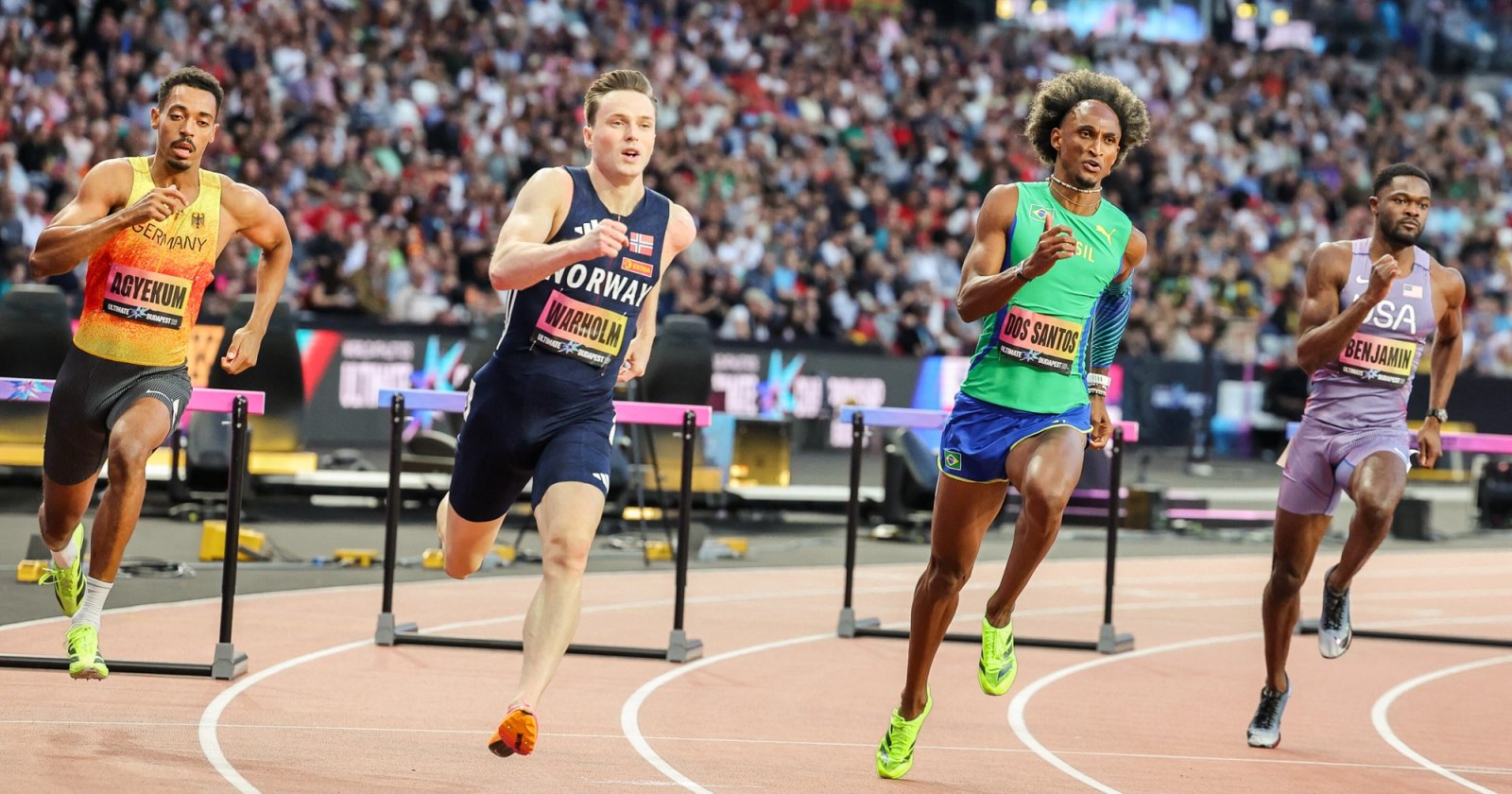
8. Alison dos Santos ran 45.98 in the 400 hurdles. Got under 46 again. The clearest improvement in his race pattern the past month is the back straight. He just eats it up now. With a flat-400 PB earlier this year, he finally has the speed to hold off Rai Benjamin (46.40, and briefly wondering if he’d broken his own American record) coming off hurdle nine. It’s his first global title since 2022. The big three are still the big three.

Men’s 400m Hurdles Final | Photo by Kevin Morris / @kevmofoto
9. Run through the line, kids. Reigning World champion Cordell Tinch crossed the line arms up, fully celebrating, the No. 1 finger already extended, having beaten everyone within eyeshot. However, five lanes over was world record holder Ja’Kobe Tharp, who stuck his neck out far to lean. The results board flashed Tharp, 12.94. Tinch, 12.95, did not lean at all. That lean was the difference between $150,000 and $75,000. It ranks alongside Emily Infeld and Molly Huddle at the 2015 World Championships 10,000m in Beijing on the all-time list of finish-line heartbreak.
10. While we’re on the 110m hurdles final: That final featured five Americans, plus two Japanese athletes. Six different American men have medaled in the 110m hurdles since the Tokyo Olympics: Holloway (2021, 2022, 2023, 2024), Trey Cunningham (2022), Daniel Roberts (2024), Tinch (2025), Tharp (2025),and one more. This is the event where the three-per-country rule is most obviously a handcuff. Let America out and we will do what we did on Friday night.
11. Klaudia Kazimierska won the women’s 1500m in 3:57.56 over Georgia Hunter Bell (3:57.72), and the margin at the end was exactly the difference between the woman on the rail and the woman in lane two. This was the first global 1500 without Faith Kipyegon in years, and it was good: Nine women got under 4:00. A major part of that was due to Agathe Guillemot making it honest with a 63 opening 400m and 2:11 through 800m.
If you haven’t seen the video of Jerry Schumacher losing his mind in the stands, here it is. Most people have never seen any side of Jerry. In Brussels, Kaźmierska said he’d told her she might be the most talented athlete he’s coached. Keep that in mind as she develops because the Bowerman Track Club of the last decade was super talented.
12. Nikki Hiltz continues to make progress. They were seventh in the Paris Olympic final, fifth in Tokyo, and now third in Budapest. This marked their first outdoor global podium (or, since there are no medals awarded in Budapest, a first outdoor global top three and a $40,000 check).
13. Djamel Sedjati won the men’s 800 running from behind, patiently, while everyone else is fighting. Marco Arop ran it with confidence: 24.0 for the first 200m and 49-high through 400m and then a real surge from 500 to 600 that had the field at 1:15 with 200m to go. A few years ago, a 1:15 at 600m meant David Rudisha was alone with daylight behind him. Now there were at least five men in the picture with a chance of winning. That’s partly the shoes and the bicarb and the era we’re living in now. Sedjati was nearly a full second back at 600m and won. The last three global 800 podiums have been some permutation of Sedjati, Arop and Emmanuel Wanyonyi (third in Budapest).
14. Yaroslava Mahuchikh won the high jump—the only woman over 1.99m. I enjoyed watching as she did it while bundled up and napping on the ground between attempts, which, next to Nicola Olyslagers‘s between-jump journaling, is one of the best style contrasts in the sport. Five minutes between attempts felt a bit long. The pitch clock needs to come down. At one point, Olyslagers was running out of time and there was no one in the building counting down like a shot clock at a basketball game. We tried.
15. I appreciated Japan’s Haruka Kitaguchi stepping out of her comfort zone and doing an in-stadium interview in English to thank the fans.
16. We need to talk about those win-probability graphics. Ingebrigtsen projected for 12th of 12. Kerr 13th of 12.Marileidy Paulino, undefeated all year, given a 37% chance to win the 400m. Alison dos Santos, 57% to qualify from a semifinal in which four of eight advance—i.e., barely above coin-flip. Kebinatshipi was below 99% to make a final. We get that World Athletics has preached about how this was “made for TV” and attracting new fans. A new viewer or casual fan needs to be told “this athlete is expected to win, and if they don’t, that’s a story,” because times mean nothing to them. But when the number is just so wrong, it does the opposite. By the end of the weekend, we still don’t know who’s running the model. It doesn’t take much for whoever was working the broadcast graphics to take a quick glance at the output before hitting publish.
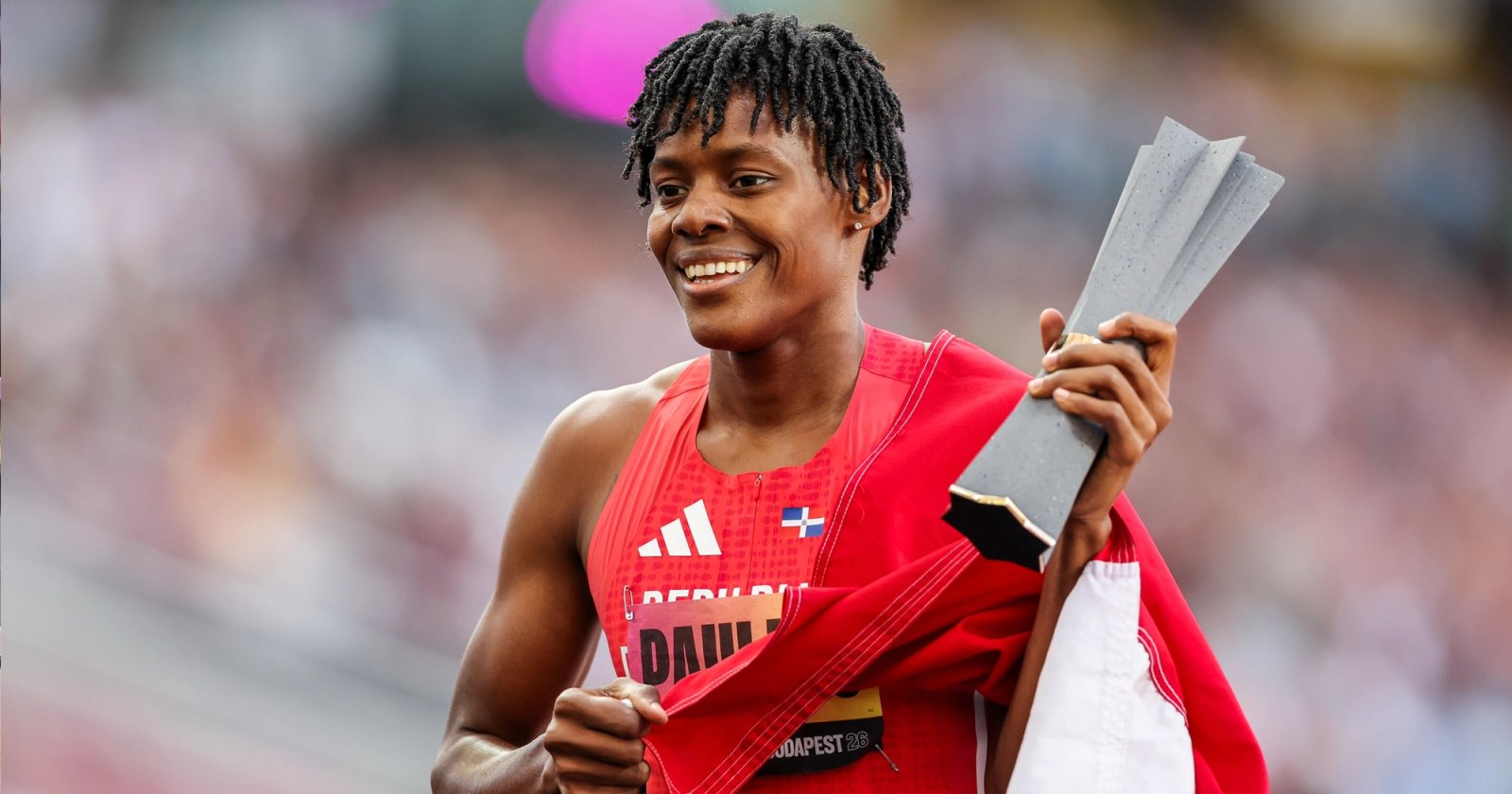
17. Marileidy Paulino, on what was not her best day, was in fifth place with 100m to go and still won the women’s 400m in 49.07. European champion Henriette Jæger, a multi-eventer just a few years ago, was second in 49.28; Nickisha Pryce, coming around at the right time, third in 49.56. Paulino joins the likes of Werro and Russell as finishing 2026 undefeated but is only so much a person can do to impress an Athlete of the Year panel without the world record on their resume and that’s hard when it’s 47.60 seconds by Marita Koch of East Germany in 1985.

Marileidy Paulino | Photo by Kevin Morris / @kevmofoto
18. It’s not too soon to start thinking about how good the women’s 400m will be at the World Championships in Beijing when Sydney McLaughlin-Levrone makes her return in 2027.
19. Jasmine Jones won the 400m hurdles in a season’s best 52.49. Emma Zapletalová capped off a breakout year in second. Anna Cockrell went for it from the gun and paid for it in third. Jones may have the best flat-400m speed in that field, and she hasn’t had a healthy full season in the event yet. By 2028, the public perception catches up and she’s viewed as more of a favorite.
20. Dalilah Muhammad ran 53.11, a season’s best, for fourth. We knew ahead of the final that this would be her final race. There was a nice tribute on the video board before she did an in-stadium interview with Dawn Harper-Nelson that got emotional, and that’s when it settled in that she was actually done. Really done, this time.
21. On our post-race show we did get a prediction from Kyle (albeit a shot in the dark with no inside information): now that Femke Broeders-Bol is an 800m runner, somebody good is going to move into the women’s 400 hurdles. Maybe there’s a tall, athletic 400m runner finishing just outside the top three in her event is going to watch this and think, I can get one of those. Alexis Holmes was his name since she has the best training group for it at Arkansas. Gabby Thomas has said the 400m hurdles is the event she’d like to try but I think she’ll stick to the 200m. Something to monitor.
22. Ronnie Baker is 32 years old and a year ago you’d have understood if he’d retired after not making any team individually since 2021. But! He qualified for World Indoors to take sixth and now just finished third in the men’s 100m at Ultimates. If there’s a comeback athlete of the year in the short sprints, it’s Baker.
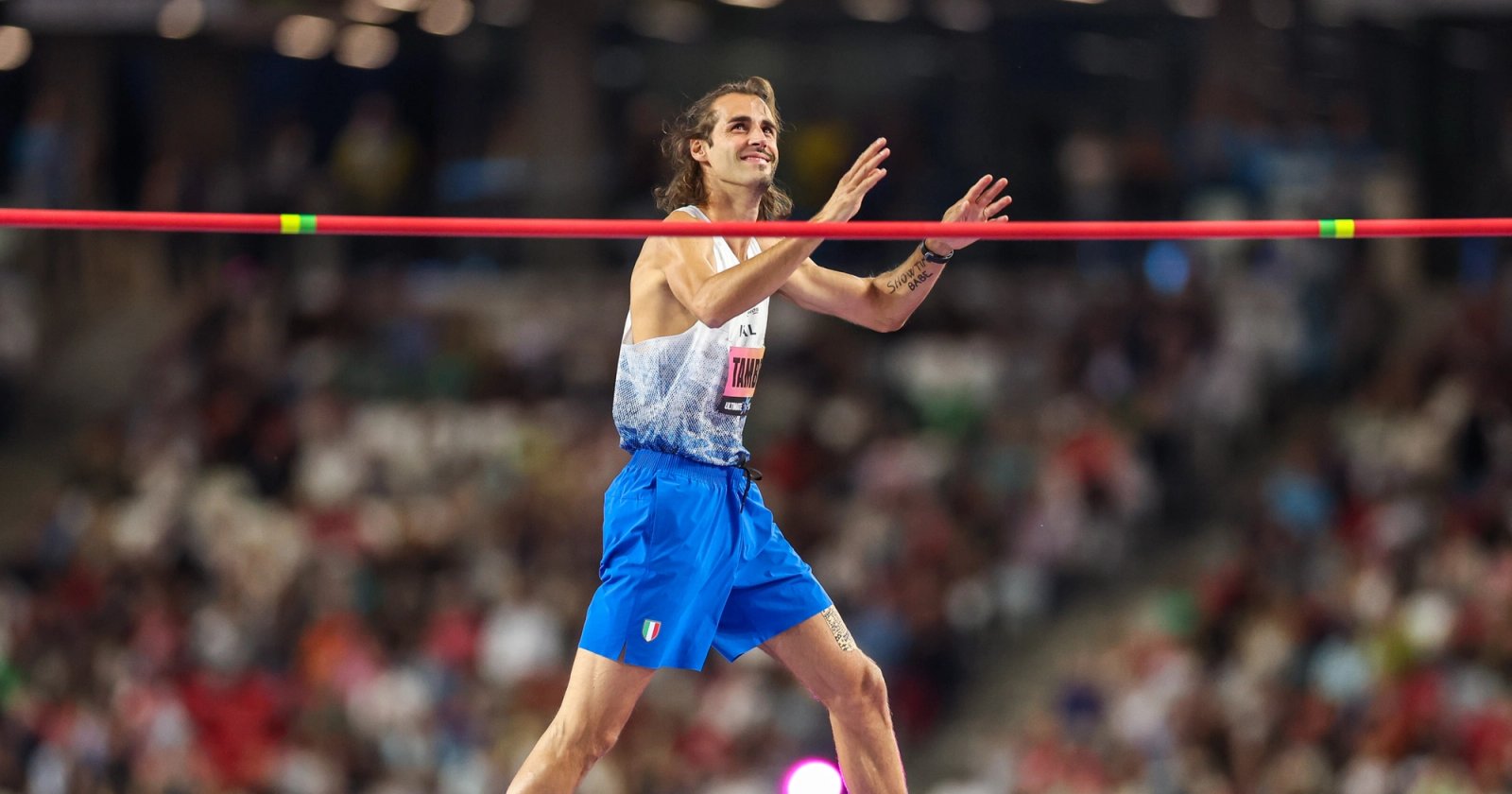
23. Gianmarco Tamberi, who was a World Athletics super invitee into the high jump, won it. (Three super invites were issued. All three won a title. Seb Coe can pick ‘em!) By the time the rankings closed, he’d have qualified anyway, but you wanted the guarantee, because nobody else in the sport can make 20,000+ people go silent on command. He had a section of grown Italian men in matching shirts going absolutely nuts, which is a perfect rebuke to the male loneliness epidemic, and he was mobbed along the concourse afterward by fans. JuVaughn Harrison, the world leader coming in, cleared 2.30m and then passed to 2.37m and 2.39m in an attempt to beat Tamberi, which would’ve required a lifetime best that didn’t come. If there are some field events cut for the 2028 edition of the Ultimate Championships, high jump will not be one of them in 2028.

Gianmarco Tamberi | Photo by Kevin Morris / @kevmofoto
24. Which events don’t stay? Hammer was definitely added for Bence Halász, the Hungarian star, and had the crowd rolling with every throw; had his last one landed, it would have been the loudest moment of the weekend. It didn’t. World champion Ethan Katzberg no-marked. U.S. record holder Rudy Winkler, on a wet ring after rain, fouled twice and was seventh. German Merlin Hummel won with 81.46m. Congratulations to him, but when you think of “Ultimate champion,” he’s maybe one of the only ones who doesn’t have a season’s body of work that reflects that. Paul Hof-Mahoney was, let’s say, vocal about this competition.
25. Judging from comments and posts online, field event athletes and fans are less happy with this meet than the track people, and they have a case. The promise was more attention; the reality was field finals running concurrently with races and not much added storytelling. The triple jump was swallowed whole by the high jump. Kyle presented a half-baked fix: put field finals in their own morning session so everyone in the stadium is 100% locked in, rather than treating them as entertainment between races. Open to any ideas!
26. What storytelling looks like, for reference: Sandi Morris won the pole vault on Saturday—an emotional one after many outdoor championship silver medals—and sat down with us Sunday for an episode of the CITIUS MAG Podcast. In 20 minutes with us, she explained pole stiffness, pole length, why Manolo Karalis goes straight up and falls steep while Mondo Duplantis launches out for depth, and the fact that on her winning jump at 4.90m she moved the standards something like 30-plus centimeters, the riskiest move of her career, because going straight up means less pole underneath you on the way down. None of that is conveyed to fans on the broadcast. It could be. When she’s done jumping, someone should put her on television.
27. Which brings us to Mondo, who won the pole vault on Friday and then, on Sunday night, closed the championships with a live performance of his song “Gold” in front of 20,000 people. When we walked into the stadium, there was a countdown clock that said: “three hours until Mondo performs.” That’s the type of promo you’d get for fans who just attend ATHLOS for the Megan Thee Stallion set. Unlike Meg, however, he’d never sung live in an arena before. It looked like he couldn’t hear his earpiece or was getting a bunch of feedback. And then, in the middle of the second verse, the stadium team set off fireworks. It wasn’t as bad as Carl Lewis’s national anthem but it wasn’t great. BUT! It’s not his fault!
CBC also managed to get the funniest interview of the meet with Mondo, where he told the world very clearly that he was planning on “going hard on the beers with the boys” the night before. Did Mondo break the world record his first time out in the pole vault? No. So I have confidence that with time, he’ll get better at performing live. Give him until 2028; for all we know he’ll have two albums and a Grammy by then.
28. The best thing that happened during the song was behind Mondo, where they lined up all the Ultimate champions and, by chance or design, Josh Kerr and Jakob Ingebrigtsen ended up side by side, talking the entire time and clapping—on entirely different beats. Kerr, in the mix zone shared: “I told him he’s a great 5K runner.” Ingebrigtsen, on Instagram an hour later, quoting Kerr calling him “so funny and amazing” for his post-race interviews. On top of that, you had Mondo in the comments: “You were supposed to help me sing, bro, not have a heart-to-heart during it.”
29. Ingebrigtsen’s own funniest moment came before that. His post-race interview after the 5000m had many great moments, including being incredulous about World Athletics pre-race prediction and why he won’t stop being his unapologetically honest self in interviews.
30. Cole Hocker, fourth in the 1500m and second in the 5000m, is clearly very fit, and maybe this meet’s results don’t end up reflecting the training. He hadn’t raced a 5K all year. He was too deep with 200m to go in the 1500m. The ability is still there since we’ve seen it before. It just wasn’t there this week.
31. Hobbs Kessler, third in the 1500m, was one of the most excited athletes of the weekend. He’s been experimenting with how he races all year. When we sat down and talked to Nikki Hiltz, they told us on Sunday that the only way to learn new tactics is to race and try things. Hobbs did and this was the payoff. He has a compact upper body and runs unusually well in traffic; he can get out of boxes. Cam Myers (who finished second) is another man we’d circle as being a threat for 2028: same build, same strength, same preference for a long windup over a violent shift. Kerr showed at the Commonwealth Games he can change gears a hair better. By L.A., that one could be tighter.
32. The U.S. Trials in the men’s 1500m and 5000m are going to be a bloodbath, in the best way.
33. Jess Hull, second in the 5,000m in a 14:32 personal best, was just one second off the Australian record and has now made a very good case to spend more time on this event.
34. Kudos to Charlotte Henrich, who took the baton in fourth on the final leg of the mixed 4x400m and ran Great Britain up to second. Really strong anchor.
35. The mixed 4x400m was dropped into the middle of Sunday night—between the 800m and the 200ms—and it worked. It gave semifinalists a longer turnaround and it re-lit the stadium at exactly the moment a nine-final evening usually sags.
36. The mixed 4x100m opened the whole meet, eight minutes into the broadcast. Team USA went Ronnie Baker to Anavia Battle to Courtney Lindsey to Kayla White, and the U.S. beat Jamaica on the strength of one decision. On the third exchange, Lindsey—a 9.8 guy—ran nearly 110 meters and handed off at the end of the zone, effectively shortening the women’s anchor leg. Executed on one day of practice. Jeremy Wariner, one of the relay coaches, told us the whole thing is a data-collection exercise for L.A. 2028, where this is now an Olympic event.
37. The stadium. We were in this building in 2023, and I just love it—the sightlines, the screens, the 20,000 fans who sold out all three nights. What was different from the last one: no upper deck, no mascot, thin merch, less of the citywide fan-festival footprint than 2023. Instead they elevated the in-stadium program with Radzi Chinyanganya and Dawn Harper-Nelson hosting, athlete Q&As, the stop-the-stopwatch-at-your-PB game on the big screen with Usain Bolt. (Kyle invented that game. He would like credit but will never get it.)
38. Public transit in Budapest would make Zohran Mamdani proud, and it’s still a straight shot to the stadium by Lime scooter.
39. A format note, from someone who’s done the ten-day version several times now: three days feels right. Six finals on the “light” night is more than you get on an average day at a normal championship. We left Sunday wanting more track, which is not always a sentence I’ve written at the end of a Worlds when we’re dead tired. The counterpoint though is that there were no semifinals in the 1500m, which meant no chance to see what people looked like and this caliber of athletes to compete one more time without a rabbit or wavelights.
40. The program—and I say this having been in the stadium and planning to re-watch over the coming days—was built for television. Athletes were sometimes held for long stretches before races. Video packages rolled on the favorites. A clock was placed in the center of the frame so clips crop cleanly for social. Based on the texts from the CITIUS team back home, they said it looked crisp and different. In the stadium, that translated to some long waits. I guess a related grievance would be that the the pre-final video package for the 1500m was on Isaac Nader—last year’s World champion, sure, but far from a contender in this year’s race— so my guess is they either wanted to appeal to a global TV audience by highlighting a European or they had to scrap whatever Kerr vs. Ingebrigtsen packaged they had. Think of the presentations at MLB games at times: Give me highlights. Give me pump up songs.
41. There is a difference between celebrating that athletes are finally being paid and centering the match-ups at hand and I think World Athletics did a solid job of getting both across without flaunting how much money was at stake like Grand Slam did.
42. The World Athletics app was good. Clean results, fast, and a photo-finish feature that gave us the Tinch-Tharp finish line image.
43. This is one of the few major event World Athletics owns outright. The Diamond League is separately operated. The Olympics are the IOC’s. The World Championships come with decades of partner contracts. Here they built their own sandbox, and you could see it—there were sponsors present at a Worlds that weren’t here, presentation choices nobody else has been allowed to make. Expect them to walk into their next Diamond League meetings with a list of what worked. The prize money got many of the athletes there, obviously. But so did the calendar, since this is the last thing on the schedule and it’s not competing with any other major moment. You build a season from the end forward, which meant that several people skipped the Diamond League final for this. Nobody plays football after the Super Bowl and we got our grand finale.
44. The hard part is 2028. This event is scheduled for two months after the Olympics so we will have athletes who peaked in July being asked to go up against their top competitors again in September. It’s possible to peak twice. But now after seeing what the Ultimate Championships is about, athletes will have an idea of what their interest will be for a post-Games payday.
45. The 2029 and 2031 World Championship hosts were just announced with Nairobi getting 2029 and Munich awarded 2031. Now I’m curious which cities’ appetite for the 2028 Ultimate just perked up. Kyle’s pitch is Toronto, on the strength of the 2015 Pan Ams and an easy trip for American fans. The tricky part is that the prize purse alone makes this an Olympic-bid-city type of investment, which could point us somewhere in the Persian Gulf due to their ability to toss millions into sports. I do not believe it will be going to the U.S. Let us enjoy the Olympics and how full the stands will be. It has not been that long since we weren’t able to pack the stands for Worlds in 2022.
46. A few recommendations for improvements, offered free of charge: More breathing room between the Diamond League final and this. Before an Olympics, nobody’s raced each other for three weeks, things happen in that window, and you get upsets. Here everyone had just seen everyone, and the results were, for the most part, exactly what the form book said. Great races; few shocks.
47. One more: add a mass-participation 10K road race to the weekend… possibly tie in some of the best road racers in the world for it. There’s a way to loop in this post-pandemic running boom to get more people energized within the city and potentially in the stadium. One day, could World Ultimate and World Road Running Championships, scheduled for next weekend, become one and the same event?
48. Athletes were constantly asked in the mixed zone how Ultimates compared to a traditional World Championships, and mostly landed on some variation of: it’s different, but it’s real, because everyone was here. That’s a big win on World Athletics’s part in setting out to create this.
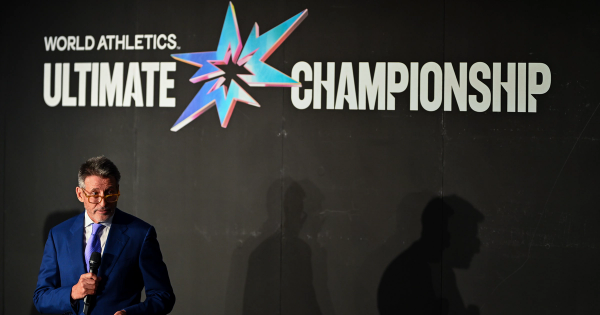
49. The World Ultimate Championship name has grown on us, too. I’d like the commentators nudged toward using it with greater frequency (and consistency) so that we get more touchpoints in fans’ memories about this event and its magnitude and importance. Next year, when there inevitably is a 200m between Tebogo, Lyles, and Bednarek, frame it as the Olympic champion vs. the World champion vs. the Ultimate champion. Say it enough and it sticks. That said, we may still be some time from beating ultimate frisbee in a lot of Google searches and Instagram searches.
50. Our coverage of events like this takes a team. We had countless mixed-zone interviews from Preet Majithia. All our photos by Johnny Zhang and Mac Fleet were fantastic. We’ve got a few more sit-down interviews with the American stars that we worked on in collaboration with USATF, so keep an eye on those on our podcast feed and the CITIUS MAG YouTube channel this week. Thanks to David Melly, Jasmine Fehr, Audrey Allen, and Paul Hof-Mahoney cranking the social channels from home.
We rest for a few days before shifting our focus to the World Road Running Championships. Fall marathon season heats up with Berlin in two weeks. Cross country is already underway at the NCAA level. Before we know it, it’s indoor track season.
WE STILL LOVE TRACK AND FIELD. WE ALWAYS WILL. THANK YOU BUDAPEST.
Keep up with all things track and field by following us across Instagram, X, Threads, and YouTube. Catch the latest episodes of the CITIUS MAG Podcast on Spotify and Apple Podcasts. For more, subscribe to The Lap Count and CITIUS MAG Newsletter for the top running news delivered straight to your inbox.
Chris Chavez
Chris Chavez launched CITIUS MAG in 2016 as a passion project while working full-time for Sports Illustrated. He covered the 2016 Olympics in Rio de Janeiro and grew his humble blog into a multi-pronged media company. He completed all six World Marathon Majors and on Feb. 15th, 2025 finally broke five minutes for the mile.