By Kyle Merber
September 16, 2026
To paraphrase Billy Joel… It’s still track and field to me.
Some fans seem to forget that no matter how it’s dressed up, repackaged, branded, and ultimately presented, if you bring together a bunch of track athletes for any sort of athletic competition, it’s going to be a track meet.
Which is great news for the writers and readers of this dorky newsletters, because we love track and field. For most of us, enjoying a race doesn’t require neon lights, a painted infield, odds-based predictions, video packages, or new camera angles. Hell, the TV can be muted and it’s still fun! Which is why it’s important to remember that you aren’t the target audience for any of these innovations.
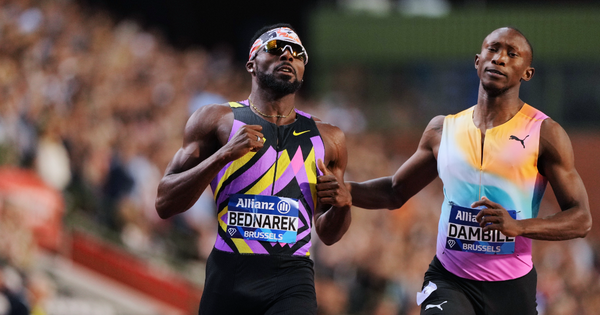
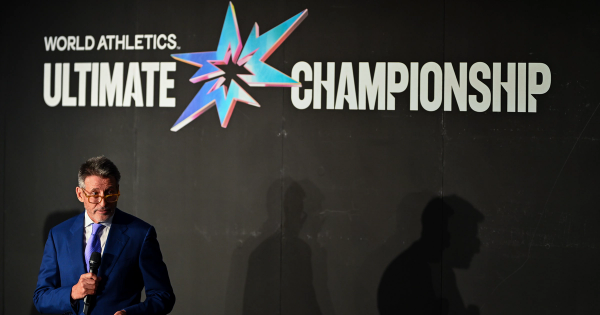
But even if you strip away the flashy visuals and ambitious scheduling, the World Ultimate Championships was simply a fantastic track and field competition. Which was crucial, because the event really needed to live up to the hype!
From when it was first announced, I felt that the novel event slated to be held in Budapest was a must-attend. That’s partially because the 2023 World Championships was an all-time sporting event, and the opportunity to relive that was a no brainer. And it’s also because it was instantly billed by critics as World Athletics’s answer to ATHLOS and Grand Slam Track, critics who asked a handful of very valid questions:
1. Does the sport really need this?
2. How will it be different from a World Championships or Diamond League Final?
3. Why are certain events being excluded?
Not only did World Ultimates need to blow people away, it needed to satisfactorily answer these questions. By Sunday, the general fan sentiment—both those in the stadium and watching at home—was that the meet was a productive step in the right direction. And now with the experience behind us, we are in a better position to answer those three concerns with more qualitative information to guide us.
First, yes, the sport really does need this. And by “this” I mean that it needs the energy and commitment to keep evolving, because the landscape of how sports are consumed has shifted significantly in the last decade.
Athletics has the advantage of being one of a few truly global sports. That was an inherent advantage for a long time because most professional sport leagues were concentrated to certain regions, but that’s no longer the case. While talent in the NBA becomes increasingly more international, the NFL is exploring European-based franchises, and the English Premier League teams are hosting matches in the U.S.
As phones become permanently imprinted in our palms and as attention spans wane, what it means to follow a sport is now condensed to watching highlights on Instagram and following content creators. Few sports are better positioned to capitalize on this trend than the one that only takes ten seconds to begin with.
There will always be the die-hard fans that are happy to sit down for three hours in front of a television to consume an entire meet. But that’s not the entry point for the ones we hope to win over. To succeed on that front, it starts digitally and at some point hopefully transitions into an interest in live events. Fans and athletes have been asking for change for a long time, but have a tendency to resist it when it comes. That’s why World Athletics needed a sandbox environment to test things out and the World Ultimate Championships provided takeaways that can now be applied elsewhere.
And that right there is one of the biggest differences for the World Ultimate Championships—World Athletics fully owns it. The event sits outside of their contract with Dentsu, and the Diamond League Final is 15 independently owned and operated meets. The leadership in this sport knows what direction it needs to go, but you try getting that many stakeholders to agree to follow your lead. Additionally, because the financial health of the organizing body is so dependent on its Olympic stipend, there are limitations to how much Coe and Co. may be willing to depart from the status quo. Remember: it was only a few years ago that mixed relays and repechage heats were being added to the Paris programs because more track equals more tickets.
On to question number two—that’s still a bit murkier. Despite our impulse to expand track, it’s obvious that the World Championships and World Ultimate Championships should not coexist in the same year… and neither should WUC and the Diamond League Final. WUC coming just a week after the DL final made things felt like a rerun at times, and outcomes would have been merely identical had it not been for the few athletes who skipped out on one to focus on the other. Come 2028, it’d be prudent to combine the two. The Diamond League point system is a good idea in theory, however, the athlete selection is riddled with conflicting interests and stars only have to run a couple to qualify. In practice, the World Ranking system is a more inclusive and accurate representation of identifying top athletes and it does a more effective job of establishing a purpose to the regular season.
And now onto perhaps the touchiest topic: the most controversial decision to not include every possible track and field event. It’s been a tactic employed by basically every new venture in our sport. While I enjoyed only having to take a couple days of PTO to attend the three-day event, I would also have found a way to watch every morning and evening session if it went on for three weeks straight. But my willingness to plan my vacation around a track meet isn’t what World Athletics was concerned with. Unfortunately, to fit the entire program into a shorter window and to pay athletes a $10 million prize purse, you have to make cuts. It sometimes feels like the sport as a whole is a sinking ship, and in order to stay afloat a few people are being sacrificed to save the rest.
For all the talk of more storytelling in the field events, it felt like that promise still came up short. Some new graphics, fewer athletes, and slightly different formats made things move quicker. But there still wasn’t undivided attention being placed on early attempts, and as always, there was a focus on the highest or final attempts. As a track guy, I have always found that pole vault and high jump were the easiest to follow because of the natural progression of raising a bar. And if you were building a venue from scratch for the long or triple jump then no one would have ever suggested putting it inside a gigantic oval stadium, which suggests there are opportunities to get creative.
Despite the lack of fan zones, medals, or a mass-participation race, the World Ultimate Championships still felt pretty much like a World Championships, and the athletes certainly enjoyed it. That’s because it was a fan-first event, and when you put the fans first then the athletes get rewarded.
For anyone who has been following this newsletter for the past few years, you know I have long supported creative change and finding new ways to progress the sport. When I was approached by Grand Slam Track in 2024 to join the venture, those intentions were something I could rally behind. Although that didn’t work out for reasons that were well outside my control, it is good to see that so many of those original ideas are now in action. Hopefully they can be sustainably executed for many years to come because this track and field thing is pretty great, and deserves the world’s attention more than once every four years.

Kyle Merber
Kyle Merber is a former professional miler turned media multi-hyphenate. While he’s not above dropping a quick “back in my day,” he’s far more focused on the present. Since 2021, he has brought his signature analysis and commentary to track fans across the CITIUS MAG network. When he’s not writing The Lap Count or hopping on podcasts, Kyle manages partnerships and pitches a relentless stream of ideas for Chris to consider. He might not be running a 3:52 mile anymore, but he keeps himself in just good enough shape to ensure the athletes still respect him.