By Kyle Merber
September 2, 2026
When it comes to naming the best NBA player of all time, there are two possible correct answers: Michael Jordan or LeBron James. Which one you personally favor may be heavily influenced by your relation to the city of Chicago, or whether or not you were born prior to 1990. But for those interested in removing as much nostalgic bias as possible when selecting your men’s basketball G.O.A.T., it’s worth assessing what you value most in greatness.
Let’s pivot (Ha! Get it?) away from basketball for a moment toward track and field. There are plenty of ways to measure greatness for our sport as well, but our more-numerically-focused one is broken down neatly into events—both factors make the task of answering “who’s the best?” a lot simpler, but not necessarily easier.
It would be simple to say the greatest ever track and field athlete in any given event is that event’s world record holder. Of course that’s reductive—as context is everything. Running fast one time may make an athlete the fastest ever, but we are looking to debate greatness. Josh Kerr is the fastest miler ever, but not many would argue he is the greatest… yet. But still. It’s an argument one could make.
Michael Jordan led the Bulls to six NBA Finals, where they won all six. Lebron James only has four rings. Therefore he is worse than Jordan, right? Well, not exactly. Lebron was in six other NBA finals, although he lost those. Depending on your perspective that either helps or hurts an argument for his greatness.
An athlete winning one race or a gold medal on a perfect day alone is not generally enough for most fans to assign somebody with the “greatest ever” superlative. No. We like to look at individual accolades, team accomplishments, height of an athlete’s ceiling as well as its duration—how long were they truly great?—before making a call.
So it’s worth noting, for holistic evaluation purposes, that LeBron basically wrote the book on long-lasting consistency. Across 23 seasons and counting, his regular season point tally currently sits at 43,440—that’s ten thousand more points than Michael Jordan scored in his career.
Nothing this running newsletter will write about an ongoing and unwinnable basketball debate will change your mind. But it does highlight an underappreciated aspect in running: longevity.
Staying healthy and consistent is difficult as a 20-year-old Olympic-level track athlete. Once you’re north of 30, it can feel genuinely impossible. And as the sport progresses forward, an athlete’s personal best is no longer going to be representative of how great they were because times are evolving. Referring to Jim Ryun as merely a 3:51 miler in 2026 does not accurately depict how much faster he was than everyone else in 1966. Just like focusing on how Michael Jordan at sixth on the all-time point leaders list doesn’t do justice to his dominance.
As this track season heads toward its conclusion, the majority of attention and glory will be focused on the winners of the Diamond League and World Ultimate Championships. But the athletes who have continued to be competitive deep into their careers are well-deserving of adoration.
At a quick glance, here are the oldest athletes in each running event that dipped below the 2027 World Championship standard (which is not yet open):
- M100m: Emmanuel Eseme (33)
- W100m: Elaine Thompson-Herah (34)
- M200m: Aaron Brown (34)
- W200m: Shaunae Miller-Uibo (32)
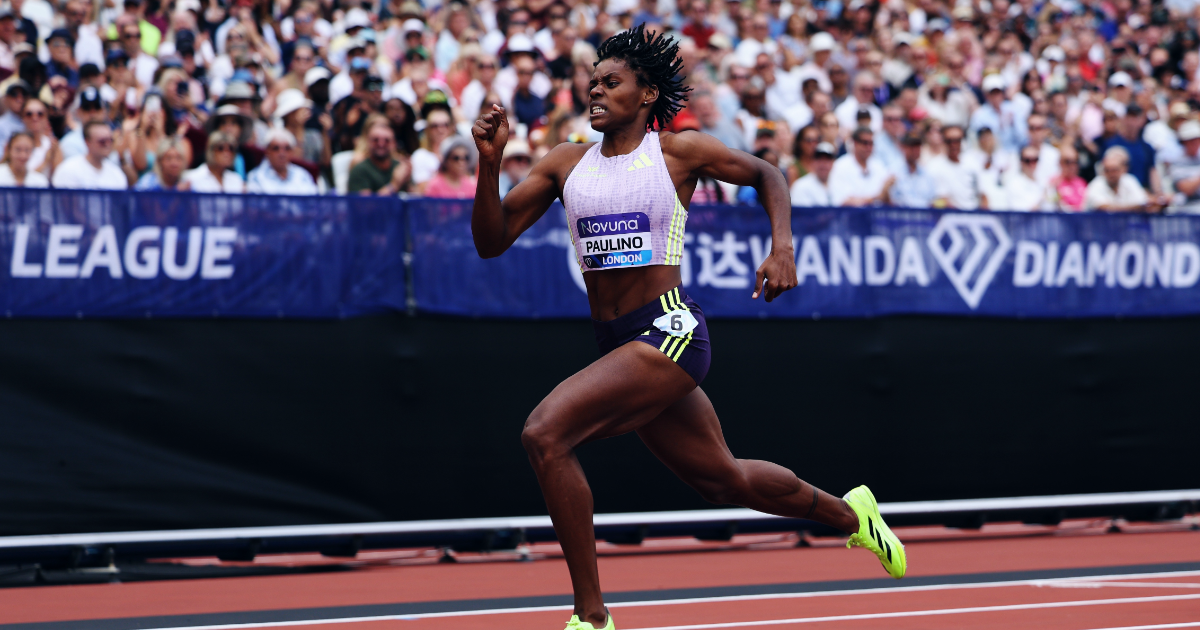
- W400m: Marileidy Paulino (29)
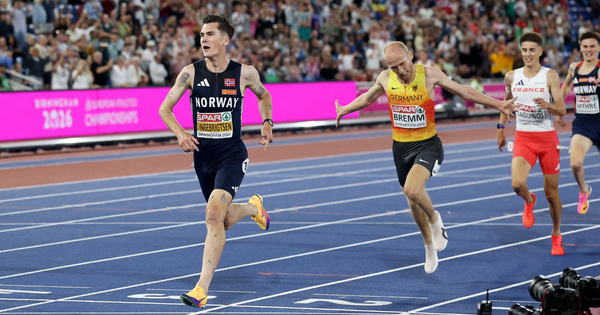
- M800m: Mark English (33)
- W800m: Renelle Lamote (32)
- M1500m: Azeddine Habz (33)
- W1500m: Nelly Jepkosgei (35)
- MSC: Soufiane El Bakkali (30)
- WSC: Marwa Bouzayani (29)
- M5000m: Andreas Almgren (31)
- W5000: Maureen Koster (34)
- M110H: Antonio Alkana (36)
- W100H: Danielle Williams, Keni Harrison (both 34, with birthdays four days apart)
- M400H: Abderrahaman Samba (30)
- W400H: Dalilah Muhammad (36)
2026 will be remembered for the many world records that have been broken.
But let’s also pause to recognize that Dalilah Muhammad has the fifth fastest time in the world this year, long after first medaling at Worlds all the way back in 2013. Is it not incredible that Mark English is winning his first European title and running personal bests 14 years after first running 1:45? How cool is it that Emmanuel Eseme won his first Commonwealth Games at 33? Imagine being Antonio Alkana and still somehow being flexible enough to touch your toes at 36, let alone to run 13.18 over hurdles. Will we finally learn to never doubt Shaunae Miller-Uibo as she returns to the top after becoming a mother of two? And just when Elaine Thompson-Herah appears to be human after all, she dips back under 11 seconds!
The kids may be getting faster, but plenty of the greats have found a way to stay fast. While it’s exciting to see so many prodigies coming of age and moving into the upper echelon of the sport, let’s also pour one out for those who aren’t just old enough to drink, but old enough to appreciate a non-alcoholic beer with a sensible 5:30pm dinner, too.

Kyle Merber
Kyle Merber is a former professional miler turned media multi-hyphenate. While he’s not above dropping a quick “back in my day,” he’s far more focused on the present. Since 2021, he has brought his signature analysis and commentary to track fans across the CITIUS MAG network. When he’s not writing The Lap Count or hopping on podcasts, Kyle manages partnerships and pitches a relentless stream of ideas for Chris to consider. He might not be running a 3:52 mile anymore, but he keeps himself in just good enough shape to ensure the athletes still respect him.