By Paul Snyder
August 5, 2026
Of the five women who have run under 1:56 in the 800m this season, you’d probably only consider one to be a true 800m/1500m-type: that’d be Georgia Hunter Bell, who is an Olympic bronze medalist and the British record holder over 1500m.
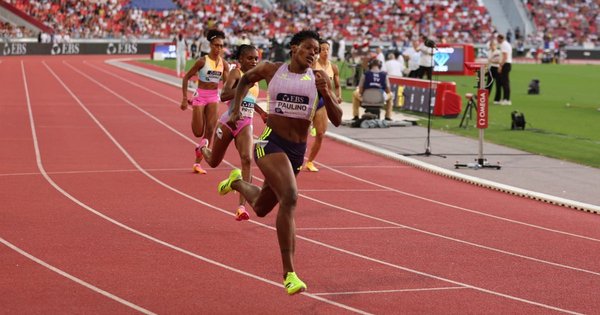
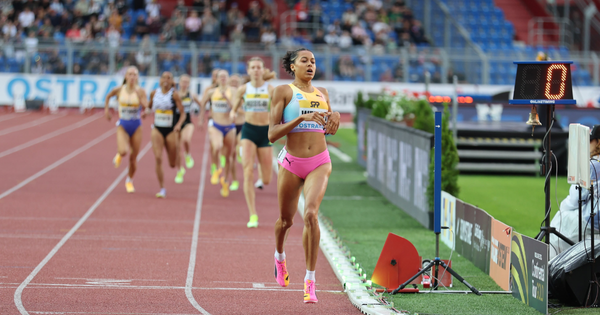
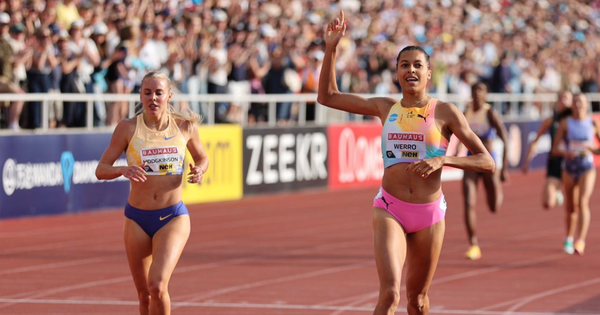
Audrey Werro’s gone 50.80 and is the European record holder in the 600m. Keely Hodgkinson split ~50.1 on her 4x400m leg at World Indoors this March. Femke Broeders-Bol… well, you know what she’s capable of over a single lap, hurdling or not. Anaïs Bourgoin hasn’t clocked a 1500m result in the World Athletics database since 2022, but raced distances as short as 200m during the early stages of her 2026 indoor campaign. If she more naturally fits the mold of an 800m/1500m runner, she’s actively working against it, it would seem.
Aside from Broeders-Bol—the indoor world record holder over 400m—none of these athletes are globally relevant at 400m. Capable of delivering a more than respectable leg on a high-stakes relay? Sure. But a medal threat? Not quite.
Still, if you want to divide the event into 800m runners whose prowess in the distance is the result of their natural speed and their innate strength, these are your speedsters: the sort for whom an opening lap of 56 seconds isn’t particularly daunting. They obviously work on their strength in order to withstand the cruelty of the second lap, but most 400m/800m-types are going to be looking to minimize attrition rather than keeping an ace up their sleeve for the homestretch.
Very generally speaking, the current state of the women’s 800m is defined by speed-based stars. For the men, however, that’s increasingly not the case. Let’s take a look at the five fastest men over 800m in 2026.
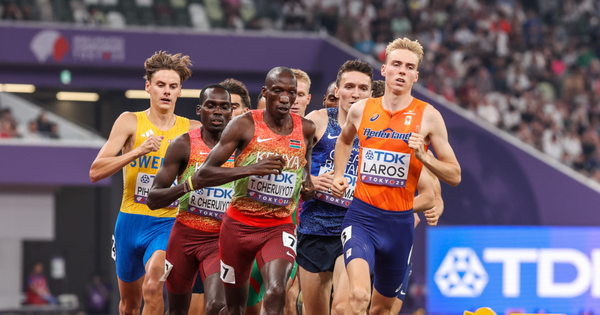
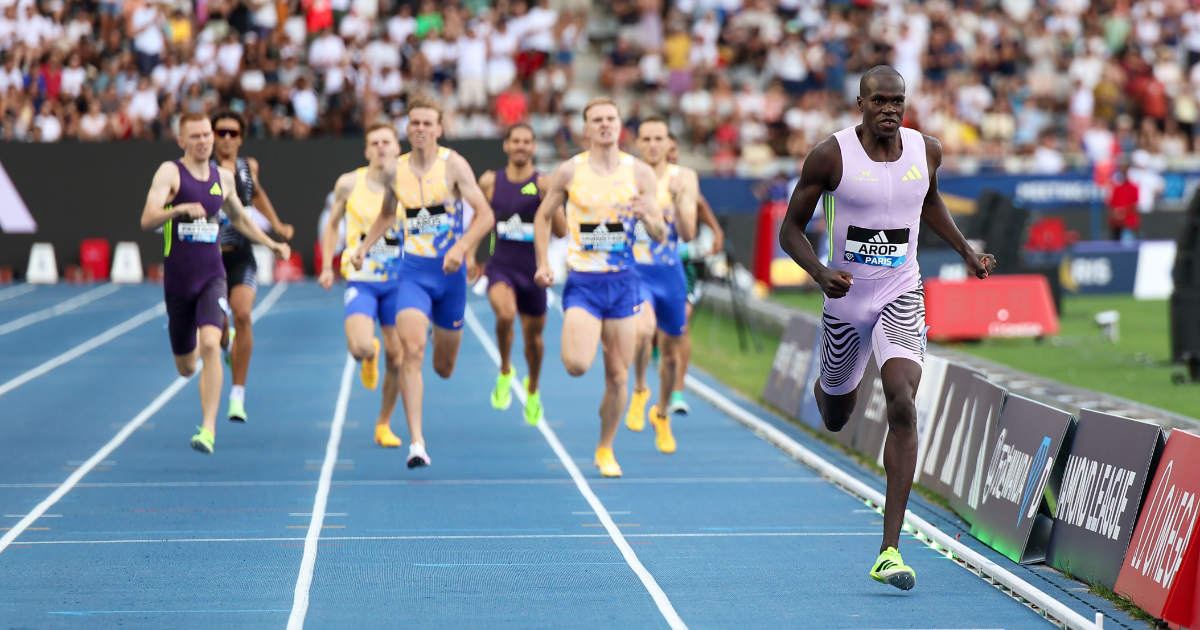
Marco Arop has spent the past few years mixing it up in the 1500m, and has the North American record in the 1000m. Cooper Lutkenhaus—a bit of an outlier in many ways—raced 12 800ms this year, a 600m, one 1500m, and no 400ms. Emmanuel Wanyonyi set the 1000m world record, and though he still possesses a modest 1500m PB, a case could be made that he is actually more of a miler with great 800m speed. Brandon Miller’s first two races of the year were a mile and a 1500m. And if we go back to Josh Hoey’s 2025—his last complete season of racing—yes, he ran the North American indoor 600m record, but he ran way more 1500m/mile races than under-distance ones, and even broke 3:30 in Ostrava.
But it’s more complicated than these guys all being naturally aerobically-inclined.
While competing at Mississippi State, and even for a stretch after going pro, Arop regularly raced the 400m and lined up for 4x400m relay duty. Per World Athletics, he last clocked a 400m in 2022, going 46.10. Coincidentally—or not!—that season he also began to dabble in the 1500m. Just last year as a sophomore, Lutkenhaus placed second in the largest division of the Texas state high school track championships in the 400m, going 46.30. That was one of seven 400m races he recorded during his final year of high school competition. And while at Texas A&M, Miller routinely raced the 400m and slotted into the school’s 4x400m relay squads. His PB is 46.30 as well, which he ran in 2022.
At least in the case of these three fellas, they weren’t born as 800m/1500m guys—they made a conscious decision to become them. But why the disparity at the top of the men’s and women’s 800ms when it comes to choosing a path?
The answer might come from the competition itself, especially those who dominated the event in the recent seasons before this one.
Despite efforts to turn her into a miler, it’s hard to deny that Athing Mu-Nikolayev was—at the height of her powers between 2021 and 2023—a prototypical 400m/800m runner. (She still holds the North American U20 record in the 400m along with the U.S. record in the 800m, after all.) Her customary sparring partner during her most competitive stretch was Hodgkinson, who comes by her 400m/800m bonafides honestly, having last raced a 1500m in 2017. And the only other woman to beat Mu-Nikolayev at a global championship in that time frame, Mary Moraa, is absolutely a 400m/800m runner. With personnel like that at the top of the heap so recently, it could be a tactical move to push your chips toward developing speed just to not wind up 15m behind the leaders at the bell.
That theory holds a bit more water when you consider that 2023—the tip of the iceberg for guys running wicked fast again after a less fallow period for the event—was also the start of the Wanyonyi Era. Is it fair to assign that much weight to the emergence of one man, who happens to have beat the best milers in the world at their own game?
Perhaps! He’s the reigning Olympic and World champ! His lowest finish at a global championship since he burst onto the scene was fourth! Guys know that in order to get on the podium, he’s a major obstacle, and because of his strength, he can race the 800m just about any way he wants to. That’s probably enough for speed-based 800m guys to at least entertain upping the ol’ mileage and for Coach to toss them in a B-heat of an invitational 1500m, early enough in the season to chalk up a lousy result to rust.
Then there’s the fact that for 800m specialists, there really isn’t a group dedicated to training 400m/800m guys. If you want the logistical and financial support of a group, you’re gonna likely have to suck it up and dip your toes into the threshold waters with some world class 1500m guys.
This isn’t to say the 400m/800m male archetype no longer exists; it’s just that he’s been squished through a 1500m-shaped mold over years of strength-building sessions, like a glob of fast-twitchy Play-Doh. One day you’re pulling double duty on the 4x400m at your college conference meet… the next you’re getting your lactate levels read mid-workout, because you know as well as any other world class 800m guy that you need something left in the tank on the homestretch to do anything of note in a race of consequence.
Of course, our current state of strength-focused 800m men won’t last forever. Families Training systems are always rising and falling in America this sport. And “all” it’ll take is a world beater with sub-45-second 400m chops to burst onto the scene for the rest of the top dogs and coaches to reassess their approach.
Plus, there’s the lingering fact that the current world record holders in the 800m—David Rudisha at 1:40.91 and Jarmila Kratochvílová at 1:53.28—were both indisputably 400m/800m runners. Rudisha clocked a hand-time, at-altitude 45.2 400m a year after setting the world record in the 800m, and ran an asterisk-free 45.50 400m in 2010. Kratochvílová’s 400m PB (47.99) is the fourth fastest time ever, and actually has a higher WA score than her 800m WR. No amount of bicarb or 1500m versatility can change the fact that being the best 800m runner in the world requires you to be really, really fast.
In this regard, and this regard only, Broeders-Bol is perhaps best positioned to break an 800m world record in the next 12 months, assuming her experimentation in the distance continues to progress, even at a more modest pace than it has thus far. A relatively blank and prodigious slate like Lutkenhaus could very conceivably lower his 400m speed into 45-mid territory, and likely improve his prospects of running in the 1:40s before his 20th birthday.
It’s conventional wisdom that strength is easier to develop than speed. So if you were picking an athlete who you’d rather coach with the goal of winning an Olympic gold medal in the 800m or even breaking the world record, surely you’d prefer the guy who ran 22.12 for 200m as a 15-year-old who was decidedly not training like a short sprinter… or the woman who has proven herself to be one of the best and also most versatile 400m hurdlers ever.
The 400m/800m archetype isn’t necessarily in vogue right now for men, but if somebody is gonna supplant Rudisha from G.O.A.T. status, they’ll likely have to stay at least a little acquainted with the 400m.

Paul Snyder
Paul Snyder is the 2009 UIL District 26-5A boys 1600m runner-up. You can follow him on Bluesky @snuder.bsky.social.