By David Melly
November 18, 2026
Last week, the qualifying standards for the 2028 Olympics officially dropped.
In the eight days since, the sticker shock of seemingly absurd marks like 3:30.00 in the men’s 1500m, 1:57.00 in the women’s 800m, and 2:05:00 in the men’s marathon hasn’t worn off much, but we’ve had some time to sit and digest what the standards actually mean for the state of the sport and how the next two years might play out.
Two major factors stuck out beyond the numbers themselves. First, World Athletics has said that the goal is to fill just 40% of the field with standard-qualified athletes—compared with 50% in 2024—and to round out the majority of the field through world rankings. So even if no one gets any better in the entire sport over the next two years, the standards needed to become more selective to push one-fifth of the auto qualifiers out.
In 2024, there was a big divide between track and field in success rate: just two track events, the women’s 100m and 200m, saw less than half the Olympic field hit the standard, but just two field events, the men’s pole vault and discus, saw more than half auto-qualify.
The marathons in particular were oversubscribed, with 70 men and 88 women hitting the auto-qualifiers in a target field of 80. The softest standards on the track were the men’s 400m hurdles and women’s 100m hurdles, where 37 and 33 of the 40 respective spots were filled before the rankings list was dusted off. So it wasn’t entirely surprising to see big jumps in the auto standards on the track, particularly given the general trends toward faster, higher, farther.
The other intriguing piece we already knew, but it took on a greater significance when paired with the numbers. Marathon runners could also qualify with a top-five finish at a “platinum-label” race, as determined by WA, rather than running sub-2:22 or sub-2:05. World Marathon Majors all fall into this category, but so do many others. For 2026, 14 marathons received platinum-label designation on the World Athletics calendar, but there’s no official cap to how many can receive said certification in any given year. You might be seeing an influx of fast Americans heading to Xiamen, Seoul, or Amsterdam next year as a result. Imagine how much anxiety and complex math we could’ve skipped if Leonard Korir had knocked out a top-five finish in Cape Town before the 2024 Olympic Trials.
Is this new system good? Bad? Better? Worse? Like virtually every debatable subject in the sport, there’s no universal consensus. But a better question might be, what message is World Athletics trying to send?
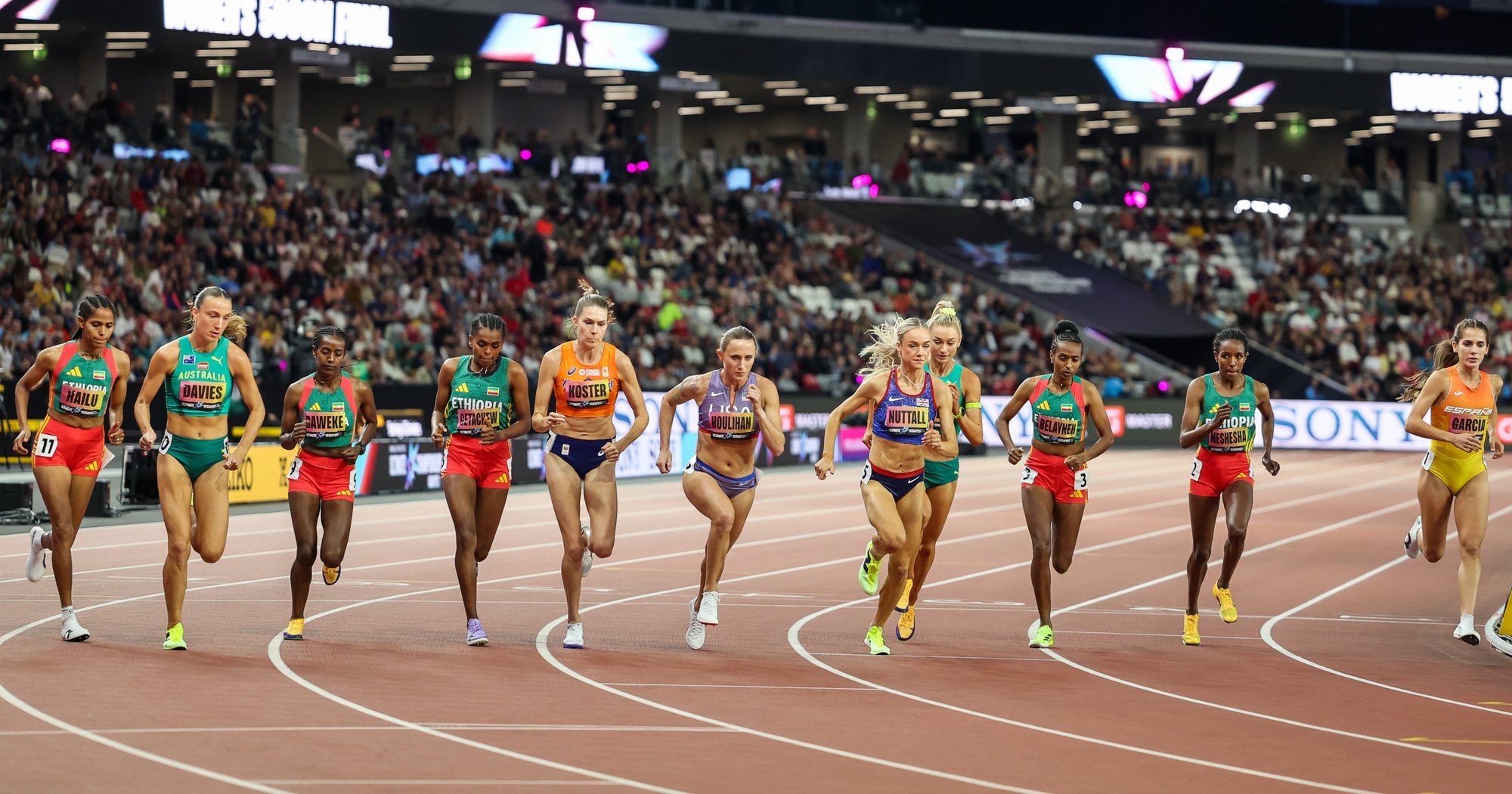
Since the introduction of the current world ranking system in 2019, our governing body has been trying to force athletes, fans, and Chris Chavez’s Twitter followers to pay more attention to the ranking system by making it an increasingly visible and significant feature of the elite end of the sport. This fall, we got a peek at a potential future where world rankings are all that matters, as one of the “innovations” of the World Ultimate Championships was selecting its fields entirely by ranking. At the current rate of increase of 10% per quadrennium, the 2040 Olympics will be selected entirely by ranking—which means that Allyson Felix will probably have to race outside California once or twice to make that 4x400m relay pool.
Would that future really be so awful? It’s not like World Ultimates was hurting for talent this year or that any major name was wrongfully denied a spot on the starting line because they ran fast at the wrong meet. The whole point of rankings is to make top athletes race more often at more significant meets, and if there’s one thing that helps track and field gain visibility in the leadup to LA28, it’s the big names making headlines right as casuals start to lock back in.
Simplicity is one of the sport’s great assets, and critics of a ranking-based qualifications will argue that the rankings formula is too convoluted for easy consumption. But currently, we have the worst of both worlds—we have a complicated ranking system and a complicated qualification system.
The fear that a really talented star will be left on the couch because they couldn’t circumnavigate the globe in search of Diamond Leagues is largely unfounded. The ranking system can be tough for track’s middle class, as they’re forced to travel widely and race often to stay on the right side of the bubble, but in terms of the television product, it’s a non-factor. Look at World U20 champ Tate Taylor: per WA, he was the 12th-ranked 200m runner in the world this year, despite three of his five qualifying performances coming from category C, D, and F meets
Conversely, look at the other end of the spectrum: Sydney McLaughlin-Levrone did not enter the Paris Olympics with a 400H world ranking because she only raced the event once outside the Olympic Trials in the season and a half leading up to the race. If that system had been in place, she would not have qualified. But had she simply run two other races equivalent to her rust-buster at the Edwin Moses Classic that season, she would’ve been ranked top ten and easily qualified with room to spare. Requiring the smallest adjustments in schedule of our superstars would cost them next to nothing in fitness or lifestyle, but it’d deliver a lot more entertainment for their fan bases.
Were we to move toward a primarily rankings-based qualification system, a few key safeguards would need to be added. For starters, closer scrutiny needs to be paid to the meet categorization system, given its role in determining the bonus points attached to performance scores. World Athletics and the NCAA need to move past their he-said, she-said fight over meet standards and classifications to better reflect the quality of performances, and maybe this will force an end to the impasse. The calendar also can’t become entirely pay-to-play, allowing ranking weight to tilt toward the meets with the deepest pockets for prize money and appearance fees. Resources and planning needs to come from the top down to ensure that anyone with the ability can access the competitions needed to get in the mix.
World Ultimates also benefitted from the “Seb Coe wild card” allowing a limited number of high-profile athletes to skip the rigamarole of qualification and book a ticket to Budapest. Is that fair? Absolutely not. Is it occasionally necessary? Absolutely. A thrilling Olympic final shouldn’t be denied to fans on the basis of untimely injuries or stubborn egos. Wild card entries should be rarely offered and, despite frequent newsletter jokes to the contrary, probably should be determined by international selection committee rather than individual fiat, but it’s an important back-pocket option that should remain available.
A world without standards is doable, potentially preferable, and possibly inevitable. Rather than be dragged kicking and screaming into the future, it may be best to embrace the change for all the benefits it brings and get to work on getting the system right. Like many institutional evolutions, the ride won’t always be smooth and some readjustment may be necessary along the way, but maintaining the status quo for the sake of safety is far worse than aiming for something better.
Be brave, World Athletics, and make no standard the new standard.

David Melly
Since David began contributing to CITIUS in 2018, he's done a little bit of everything, from podcast hosting to newsletter writing to race commentary. Currently, he coordinates the social media team and manages both the CITIUS MAG newsletter and The Lap Count, supplying hot takes and thoughtful analysis in both short- and long-form. Based on Boston, David breaks up his excessive screen time by training for marathons, crewing trail races, baking sweet desserts, and mixing strong cocktails.