By David Melly
September 16, 2026
A lot can change in three days— just ask a certain well-known carpenter.
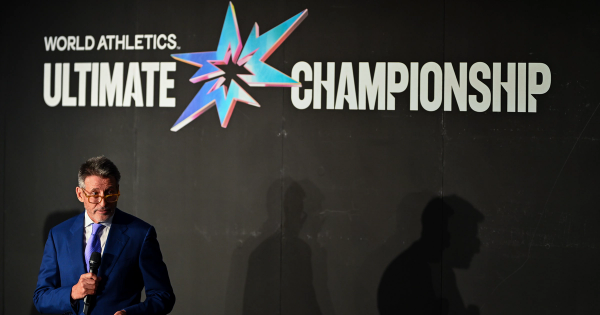
In this case, the biggest change in the track and field landscape between the beginning and end of the three days of competition was that the concept of a World Ultimate Championship became reality. First sold to us by World Athletics in 2024 as an answer to the question “how do we keep athletes invested and fans tuning in during a non-Worlds year?” the pitch deck became a living, breathing, cash-dispensing Hungarian circus last weekend, and the general sentiment thus far is that it was a success.
The inaugural “World Ultimates” had all the key elements of a successful pro track meet: big names, a packed stadium, and a compact, entertaining TV broadcast. It wasn’t perfect by any means, and we’ll get into that later. But no one was expecting it to be. After the fits and starts of Grand Slam, ATHLOS, the TrackTown Summer Series, and any other number of imperfect but well-intentioned efforts to make track cool and popular outside the Olympics, there hasn’t exactly been a long history of new events knocking it out of the park on the first try.
So World Ultimates exceeded (admittedly middling) expectations. How did they do it?
The simplest, and most visible, answer comes down to the athletes themselves. World Athletics recognized that it was worth bending over backwards to get big names in attendance—ideally competing—and took a number of important steps to secure marquee talent, whether it was making Noah Lyles a “creative advisor,” letting Mondo Duplantis perform a pop song, or handing out “exceptional invite” wild cards to the folks who may be inclined to skip otherwise.
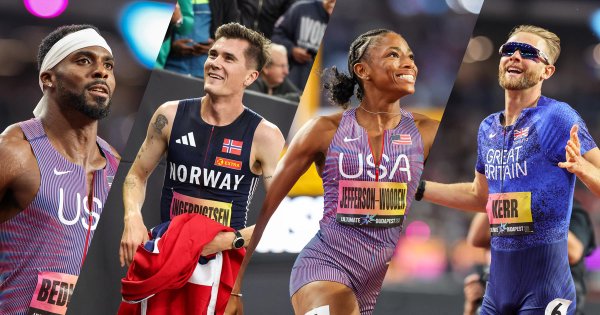
As a result, World Ultimates looked distinctly more like an Olympic championship than a Diamond League final. Athletes with huge followings like Sha’Carri Richardson, Josh Kerr, and Keely Hodgkinson, who aren’t exactly weekly stalwarts on the pre-existing circuit, showed up to Budapest in top form. Given the choice to skip the meet entirely, attempt a Worlds-style double, or do something in between, people like Julien Alfred, Gabby Thomas, and Jakob Ingebrigtsen still felt like it was worth their time to show up in at least one event. As a result, the meet didn’t feature a ton of upsets, but that was largely due to the top-end talent all showing up and dominating.
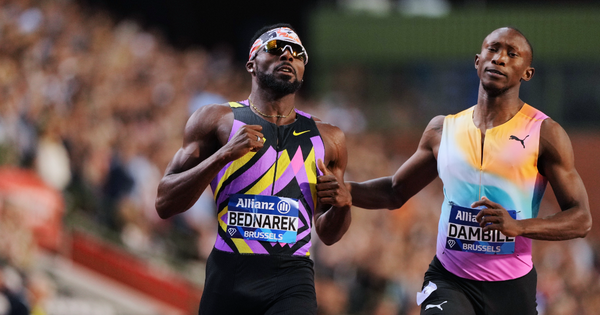
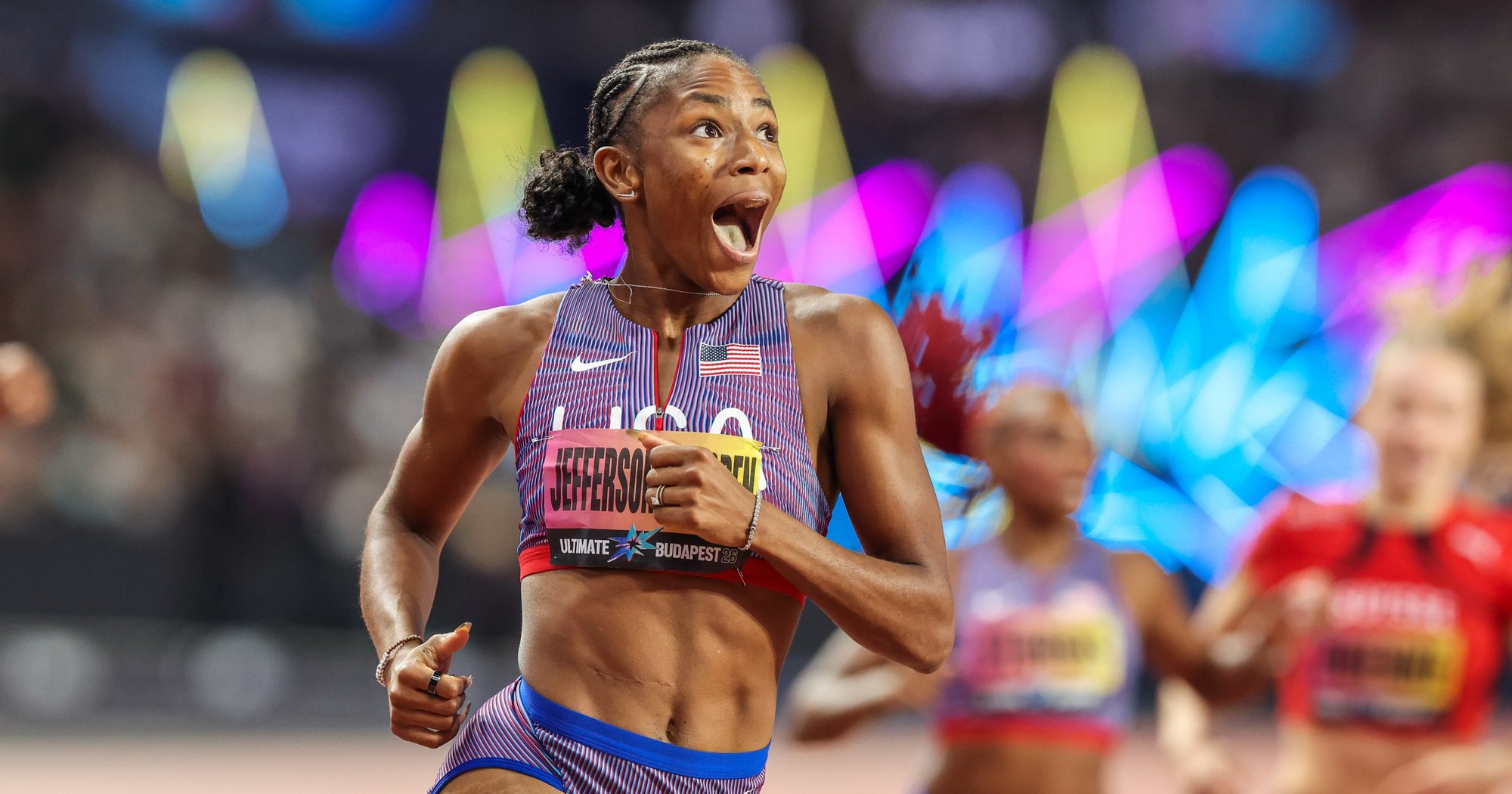
There are two athletes in particular to whom Seb Coe should be sending a gift basket (along with their $300,000 checks): Melissa Jefferson-Wooden and Kenny Bednarek. It’s one thing to have compelling narratives and close races, but track and field is still at its best, spectacle-wise, when the sprints are really fast. (It’s surely rubbed many Diamond League meet directors the wrong way all summer that the world leads in the women’s 100m and men’s 200m were still held by a pair of college kids.)
MJW’s 10.63/21.47 and Kung Fu Kenny’s 9.85/19.52 (plus a dethroning of World champ Oblique Seville) lent as much credibility to the meet as any of the pomp and circumstance. While we all dream of a day when times don’t matter at all, relative times do, and if the results from Budapest had paled in comparison to, say, a run-of-the-mill midsummer Diamond League, that would’ve taken some of the shine off the victories.
Giving fans something fun to watch also comes down to presentation, and here World Ultimates again delivered a mixed, but mostly positive, product. A lot of hay has been made of the “prediction” graphics, whether it’s predicting Josh Kerr to finish 13th in a 12-man 1500m or Marileidy Paulino to have less than a coin-flip chance at a 400m victory during her undefeated season. Did they ask someone’s grandma to drink a bottle of wine and then ask ChatGPT for those graphics? Sure seems that way! But the trial-and-error process does include, well, errors, and it’s highly likely we won’t be seeing those (at least in that form) again.
On the bright side, the broadcast was well-shot and densely packed, with few commercial breaks and the focus largely upon the action on the field. The beauty of a three-day championship is that, in order to get all of the finals into nine hours of television, you need to cram them in. 28 of the 40 items on the schedule were finals, and because the 100m, 200m, and hurdles semis were on the same day as their respective finals, they didn’t feel like nearly as much of a time-filler.
If there’s one nitpicky critique, the U.S. broadcast still focused understandably, but unnecessarily, on the upcoming Los Angeles Olympics and included some NBC hallmarks like an interstitial feature on Sydney McLaughlin-Levrone’s journey to motherhood despite her total absence from the program. (At least Usain Bolt was in the stands, so highlighting his legacy at other parts of the broadcast sorta made sense.) Our nickel’s worth of free advice is that framing the next two years of professional track and field around “here’s what this means relative to LA28” won’t build the desired hype, and will instead make everything else seem small in comparison to the Olympic behemoth.
Speaking of trial and error, the “not everybody gets a trophy” attitude was a bold, and probably necessary, step toward making track and field an exciting TV product. But like the other attempted innovations, it wasn’t perfect. Frankly, it didn’t really feel like anybody missed the 10,000m. But it feels like the steeplechase could’ve easily slotted back in, especially in a straight final, to make the event feel a little more completionist. There’s really not two ten-minute windows across three days that couldn’t be filled with an event where falls are common and both world records are within reach?
The field event schedule and format was ostensibly designed to deliver a more exciting viewing experience, but the field events felt… pretty much the same as always: crammed in between track races and not exactly portrayed in order. The 8-8-4-2 series cutdown in the throws and horizontal jumps didn’t really leave a lasting impression beyond knocking hammer throw world leader Ethan Katzberg out of the competition early. If the goal is to deliver short competitions and save a little on prize purses, the best bet may be to keep the small fields, give everyone three attempts total, and add events like the shot put back into the mix.
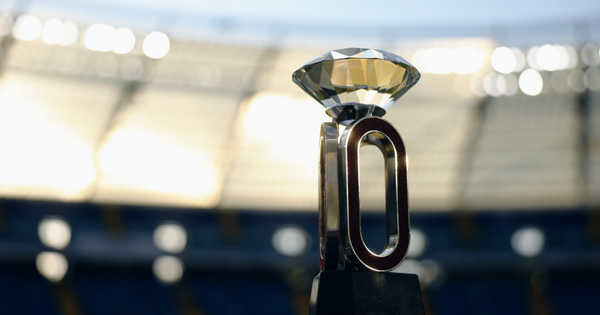
The last, most ineffable component of the World Ultimate’s recipe for success is the act of making meaning. All the money and talent in the world goes for naught if the meet doesn’t feel significant. Budapest and its flashy stadium full of 20,000 fans helped hugely. Recreating the vibes of 2023, which was generally considered a smashing success of a World Championships, made earning the title “Ultimate champion” feel comparably weighty. If there’s one small critique here, WA needs to stop trying to get cute with the trophy/bracelet combo as prizes. No one was complaining about handing out medals before, and the lack of an official podium only created confusion about what a second- or third-place finish signified. Differentiation for its own sake isn’t a winning formula, and in the long term, it’s probably in everyone’s best interest to have World Ultimates hand out gold, silver, and bronze just like any other championship to prioritize legitimacy over novelty.
Here at the Lap Count, we respect effort. It’s better to have tried and failed—and best to have tried and succeeded! A lot of time, money, and energy went into making the first three days of World Ultimates a success; the key now is to keep that same “let’s try something new” attitude toward adapting, evolving, and honing the concept to something that’s truly sustainable over time.
It’ll be a tough needle to thread for the next edition to follow the Olympics in 2028, but it also presents a great opportunity to create genuine momentum for enduring fan interest. If done well, World Ultimates will be where Olympic champs head after LA instead of Dancing With The Stars. World Athletics has something real on their hands, and whether or not we’ll be talking about “Ultimates” decades into the future will depend on what they do with it.
David Melly
Since David began contributing to CITIUS in 2018, he's done a little bit of everything, from podcast hosting to newsletter writing to race commentary. Currently, he coordinates the social media team and manages both the CITIUS MAG newsletter and The Lap Count, supplying hot takes and thoughtful analysis in both short- and long-form. Based on Boston, David breaks up his excessive screen time by training for marathons, crewing trail races, baking sweet desserts, and mixing strong cocktails.