By Citius Mag Staff
August 19, 2026
By David Melly & Paul Snyder
Our summer vacation from the Diamond League circuit comes to an end Friday, when action resumes in Lausanne, Switzerland. The sport’s biggest stars are going back to school after 34 days of rest and relaxation… oh, wait, that’s not true at all.
Track and field’s summer break wasn’t just about family vacations and new haircuts. It was a busy month “off,” with high-profile detours through Eugene, New York, Glasgow, and Birmingham, to name a few. A lot of that non-DL racing helped clear up some mid-season ambiguity about who was healthy, who was fit, and who was really taking 2026 seriously.
At the same time, it almost feels like we have more questions than answers as we head into the back half of the schedule. Particularly as the World Ultimate Championships in Budapest approach, the hard-core rankings nerds aren’t going to be the only ones refreshing the World Athletics website each week as athletes jockey for one of the coveted 12-16 spots on the line.
So what did the last five weeks teach us? And what does it say about the matchups we should expect—and crave—in Lausanne and beyond?
Will the young’uns hang with the uncs?
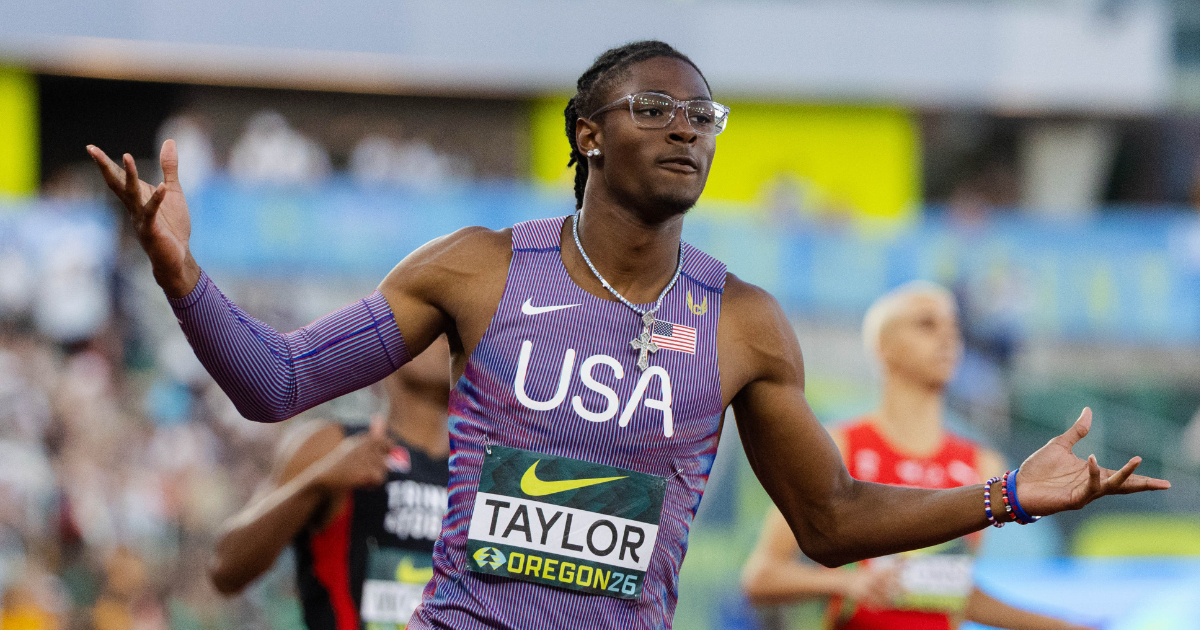
Literal summer break was good to some of the best sprinters in the U.S., namely Tate Taylor and Mia Maxwell, the double World U20 champs over 100m and 200m. Taylor, especially, has dropped times fast enough that he has to be considered a factor in any senior race, even if he was just recently only a high school senior. With bests of 9.94 and 19.75 set this summer, he’s the tenth fastest American over 100m and the second-fastest over 200m this year. Back in May, Taylor finished second behind U.S. champ Noah Lyles in a pro race in Japan—has the gap between the two closed since then?
Not so fast: Lyles himself had a productive July, winning the 100m at USAs in a personal best-equalling 9.79. He pulled up with a cramp in the 200m final, so we don’t know for sure what his current form over the longer sprint is right now, but the 29-year-old clearly hasn’t lost his fastball. Between Taylor and recent collegiate stars like Jelani Watkins of Arkansas and Garrett Kaalund of USC, the familiar faces of Lyles, Kenny Bednarek, Trayvon Bromell, and Christian Coleman may soon start to sweat as a new generation rises to crowd up the U.S. sprint scene.
Is Amy Hunt ready for prime time?
For an athlete that suddenly has four new European gold medals, Amy Hunt remains something of an athletic enigma. Her PBs in the 100m and 200m aren’t the flashiest—10.97 and 22.08—but she’s a compelling example of one of the sport’s most universal truths: races aren’t run on paper. Despite having turned in just the 49th and 37th fastest marks in the world this year in the 100m, and 200m, Hunt’s name carries the weight of athletes with sub-10.90 and sub-22 credentials because she tends to perform at major championships, having struck silver in the 200m at the most recent World Championships.
Now, coming off an all-time slate of races at Euros and surely buoyed by an appropriately elevated sense of confidence, Hunt still has a major point to prove: where does she stand when the Western Hemisphere gets added back into the mix? In Lausanne, she’s one of just three women in the field without a sub-22-second PB, yet in theory it shouldn’t be a shock to see her give Shericka Jackson—the fifth-fastest woman on the year—a legit fight to the line.
Hunt and Jackson will have their hands full, however, as Americans Brittany Brown, Anavia Battle, and Kayla White will all surely want to take down the Jamaican legend and Great Britain’s golden girl. Hunt’s results may take on greater significance as something of a referendum on the state of European sprints—which historically have not been the same quality of American and Caribbean fields. If she’s once again in the mix for the win (and potentially a big PB), that could be seen as something of a sea change in the event writ large.
Just how fast can the main sprint girlies go?
Just two days after Lausanne, the Diamond League circus will pop up its tent in Silesia, Poland, where the action is scheduled to reach a crescendo in the final event of the night: the women’s 100m. The field is, frankly, bonkers. Sha’Carri Richardson. Melissa Jefferson-Wooden. Julien Alfred. Just between those three, you’ve got the global champion in the event from the preceding three seasons. And that’s before even getting into the stellar crew of Jamaicans who would love nothing more than to play the part of spoiler: Shericka Jackson, along with Tia and Tina Clayton..
This ought to be the best women’s 100m race of the year thus far, and unless it’s run into a wind tunnel, the expectation will be that it’ll take a season’s best performance in order to break the tape. Times aside, the real intrigue here is that we get to see the top five finishers from Worlds last year race head-to-head. The winner here doesn’t just get confirmation that they’re wicked fast right now; they send a warning shot to their rivals that could sow a seed of doubt into their minds as they complete their end-of-season preparations.
Aside from Josh Kerr, WTF is going on with the male milers?
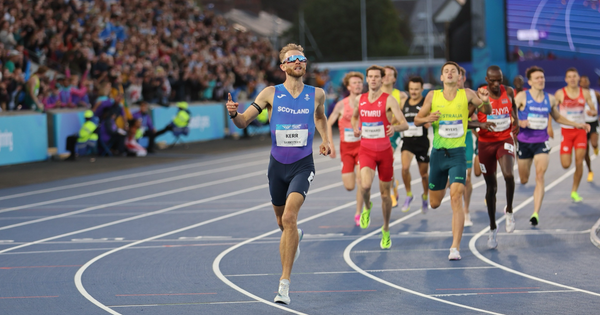
In addition to establishing a true pecking order among the fastest women in the world, Silesia also should help clear up the bizarrely murky state of the men’s 1500m. So far this year, we know what Josh Kerr is capable of, and that’s about it. Regrettably, we won’t see him in Poland, but an all-killer-no-filler 15ish-man field is currently slated to line up, and we will finally get data points from Jakob Ingebrigtsen and Cole Hocker, both of whom are making their debuts at their signature distance.
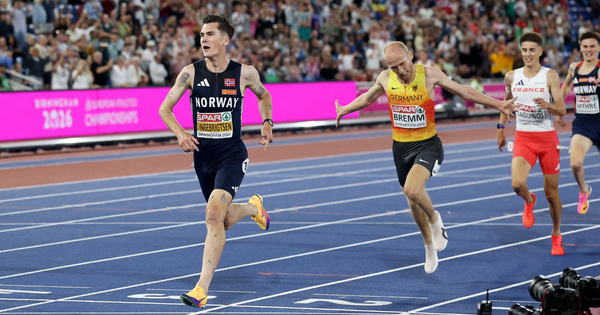
Ingebrigtsen looked strong in his season debut, a 5000m victory at Euros, and Hocker has raced sparingly outdoors—a sixth-place showing at the Bowerman Mile and low-stakes 3000m rust buster back in June. Despite being… well… Ingebrigtsen and Hocker, it’s hard to definitively call either the favorite as of right now.
The 1500m at Euros was, in a word, weird. The results almost look like you put every entrant’s name in a hat then began drawing them out at random. That’s not to say the winner, Stefan Nillessen, wasn’t deserving. It’s just that this was a deep field without a clear cut favorite, and as a result, the Dutchman was able to secure a statement victory. Reigning World champ Isaac Nader finished dead last, and the two fastest guys in the field by season’s best—Jake Wightman and Azeddine Habz—finished sixth and tenth, respectively.
Regardless of how this race actually plays out, it’s going to be the highest-quality field we’ve seen on the circuit this year. In addition to Hocker, Ingebrigtsen, Nillessen, and Nader, we’ve got Samuel Pihlström, Reynold Cheruiyot, Phanuel Koech, Jakes Wightman and Heyward, Nathan Green, Vince Ciattei, Hobbs Kessler, and Ethan Strand all in the mix, and all capable of leaving their mark on this race depending on how it shapes up. With Kerr not competing, the lack of a clear top dog and the plethora of guys who could be top dog at their best makes for an intriguing combo.
Does the men’s 800m get as crazy as the women’s?
This time last year, if you had to guess which 800m world record would fall, the smart money would’ve seemingly been on the men’s, with Emmanuel Wanyonyi coming within a quarter second of David Rudisha’s remarkable 1:40.91 in late 2024 and showing no signs of slowing down. Especially with Marco Arop around to keep things honest, finish times under 1:41 felt inevitable.
One year later, Arop and Wanyonyi are the first- and third-fastest men in the world, but the hype has cooled a little as Audrey Werro’s star has risen on the other side. Both athletes started their 2026 campaign by taking two Ls apiece, and in Oslo, both got embarrassed by 17-year-old Cooper Lutkenhaus. Lutkenhaus, in turn, had a clean racing card until he was outkicked by Brandon Miller at the Pre Classic. Miller then pulled out of USAs, citing injury concerns, but returned to form with a fast but lowkey 600m in Portland. There’s a huge amount of talent in the mix, but also some questions.
Arop and Wanyonyi are both trending in the right direction, with Arop clocking a 1:41.84 world lead in Paris and Wanyonyi breaking the 1000m world record. Lutkenhaus tore apart a Miller-less field in NYC, but he literally has to go back to school so the trip to Switzerland is not happening. Instead, Miller will face off with the two World champions, and if everyone shows up to the starting line 100%, we could find ourselves back in the low 1:41s in no time.
Not all of these questions will be definitively answered Friday… but fans won’t have to wait long for more. There are three Diamond Leagues coming up in the next week, and the two-day final in Brussels is not too far off, on September 4th and 5th. Vacation time is officially over.

Citius Mag Staff