By Citius Mag Staff
September 17, 2026
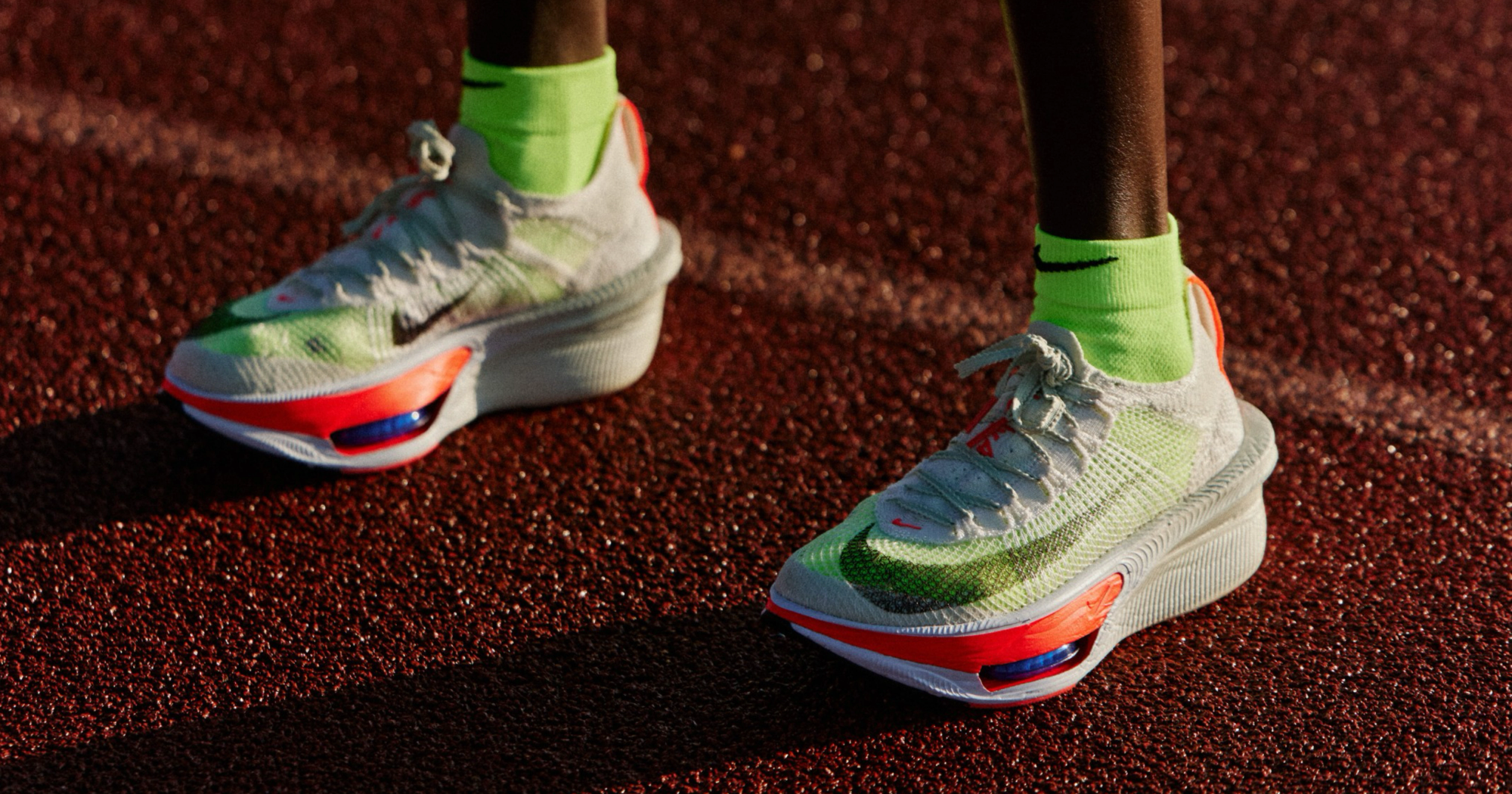
Nike has unveiled the Alphafly 4, the latest version of its flagship marathon racing shoe, ahead of some of its top athletes set to wear it at the upcoming World Road Running Championships in Copenhagen, Berlin Marathon and Chicago Marathon.
According to a release by Nike, here are some of the differences by the numbers:
- 10% more energy return than the Alphafly 3.
- 5% lighter in a men's size 8.5.
- New ZoomX LT foam is up to 17% lighter than standard ZoomX with 8% more energy returnThe upper is comprised of a seamless Atomknit build with zoned midfoot cables, integrated heel unit and molded sock liner. The midsole features ZoomX LT combined with standard ZoomX, layered above and below the plate. No changes were made to the carbon-fiber Flyplate, retaining the signature propulsive scoop.
A variation of the Alphafly 4 was worn by Conner Mantz in his 2:04:34 American record at the 2025 Chicago Marathon and by Jacob Kiplimo in his former half marathon world record of 57:20 at the Lisbon Half Marathon on March 8, 2026.
On release day, we spoke with Phil McCartney, the EVP, Chief Innovation, Design & Product Officer at Nike, about the innovation and changes that have gone into this edition of the AlphaFly:
CITIUS MAG: So we're at AlphaFly 4 now. Walk me through the evolution. What's the biggest difference between No. 3 and No. 4?
Nike's Phil McCartney: Right from the start, when I think back to Breaking2, what we were thinking about then was so different: the stack heights, the materials. It was the first time we used ZoomX foam. We didn't have the Air units yet, and we were very exploratory in terms of the carbon plate. The biggest thing we're trying to do here is more propulsion in a lighter-weight package. How do we constantly push propulsion, which we know is important for this shoe, but also, how much weight can we take out? You can see it in the Flyknit. This is pixel by pixel. We've engineered it so we can remove weight where you don't need it but still have support where you do need it. Thinking about this shoe in particular, the Alphafly 4 is: you can go the distance. It'll get you there. It's intended to give high levels of cushion, high levels of propulsion and an incredibly lightweight package. And we were just obsessing over small things like the fit and the collar, modifying every last stitch and every last detail, working with our athletes and working with our science team.
CITIUS MAG: How did the weight come in compared to the AlphaFly 3?
McCartney: About 15 grams lighter.
CITIUS MAG: When it comes to the foams, I feel like that's the next frontier, because everyone's now got the geometry of things figured out. What was the next step, or what were you looking for in foam innovation for this one?
McCartney: For us, we always think about it as a system. There are the supercritical foams, for sure, and as they improve, they're getting lighter but also a bit more structural, a bit more rigid in a good way. But for us, the system is the foam, and more importantly, the plates and the Zoom Air. It's the combination of the three things with Flyknit.
Zoom Air, obviously, is proprietary to Nike. It gives a lot of response, a lot of resilience, and working with the foam in the midsole in the tool allows us to really tune the system to get the optimal level of cushioning and propulsion.
Then we've got the Flyknit upper, which has a unique feel and a unique benefit: lightweight and supportive.
CITIUS MAG: I always think of the composition as a sandwich. You guys have kept the same order of the ingredients, pretty much, in the way you stack it?
McCartney: Yeah, it's really, really similar. It's funny, we talk a lot about the first point of contact. That matters. You're doing something really hard, touching a hard surface, so we think about how we soften those rubbers up and how we put traction on them. We obsess over the midsole, obviously, and that's the system of the plates, the supercritical ZoomX and the Zoom Air. And then the upper is more about how you remove distractions that would be a problem around fit. In particular, how do we build the right level of comfort in the right place and then strip everything else out?
CITIUS MAG: It's all ZoomX on this one? What was the biggest piece of feedback from the pros in testing from three to four?
McCartney: The pros have loved it straight away. First of all, it's not a huge departure, and I think that's important. If we've got something that works, it's more about refinement, so that was really good from their perspective. Then they commented on the fit and the feel of the upper and the propulsion. A couple picked up on the weight. It's a small difference, but at that level, people know.
CITIUS MAG: Assessing what's out there on the market right now, when we see the flashy world records and all that, those shoes are made for the 1%. If the three-hour or four-hour marathoner puts that on, they might not have the same big breakthrough or drop in time that they expect. How does the Alphafly 4 in particular fit into that assessment?
McCartney: It's a really good point. We've always thought about Alphafly as solving that problem for anyone who wants to go faster and longer. You see the Alphafly at the front of the pack, but you also see it as you watch people go through for the rest of the event. We really wanted a shoe that did that. So whether you're trying to break four hours or you're just trying to get a Boston qualifier, wherever it might be, we want to make sure we've got a shoe for you. We can modify and do one-offs, but we want to make sure we've got something everyone can access. I think that's important.
CITIUS MAG: I always like hearing the stories about when the innovation team meets and someone brings something from outside the sport or a different field. When you look at the final product, what's one area, whether it's the laces or the upper composition, where you say, that actually came from somewhere outside of running?
Nike's Phil McCartney: The obvious one is the plate. When we started, we used carbon in football, global football. A few of us had worked in football, and we thought that was a really good way to build strength and propulsion without weight. That's an obvious crossover of carbon into running. It started in track spikes, and we brought it here. But we're always looking. This heel counter came out of some work we were doing in sportswear: how do you bring comfort right where people need it? We're often looking across the platforms at how something works across them, and I think that's the benefit of having the portfolio. You can cherry-pick ideas, and lots of ideas from running have gone to other places as well, in particular when we're solving comfort problems for sportswear.
CITIUS MAG: We were talking about plate composition and structure. While others have tested with splits and rods, Nike’s has stayed consistent throughout?
McCartney: Yeah. A lot of that is because we found something that really aids transition. Carbon does an amazing job of giving you rigidity and propulsion, but you want to make sure you get that transition so it doesn't feel awkward. I think we perfected that in earlier versions of the Alphafly. All we're doing now is thinking about how we use the evolution in carbon to make the product slightly better. We feel really confident about the solution we've got in terms of the geometry of the plate.
CITIUS MAG: So who's worn this in some of the major performances?
McCartney: You'll see a lot of our athletes wearing Alphafly. If you look at the front end of all the spring marathons, the vast majority of our athletes were in Alphafly. Some of them were wearing prototypes of the AlphaFly 4, and some were wearing blacked-out versions of a future product. That's always the way. But we see this as the go-to shoe for not just our elite marathon runners, but a lot of marathon runners. You see it everywhere.
CITIUS MAG: In 5Ks and 10Ks and half marathons as well, right?
McCartney: Yeah, and you see people training in it, which is interesting. That was never our intention, but it makes sense. People are thinking about having a consistent experience.
CITIUS MAG: How does the durability of this one compare?
McCartney: We deliberately wanted to engineer in more durability. You'll see we're using some carbon rubber in the forefoot high-wear areas, and we've got rubber pods in the heel. We're not trying to make it a tank. It's not going to be bulletproof, but we do want it to go the distance for a few marathons and the training runs to get there.
CITIUS MAG: Quieter?
McCartney: So far. It might take a run or two, and that's the supercritical foam. But I ran a marathon a couple of years ago, and there's something unique about that sound as well.
CITIUS MAG: At this point, it's just part of it, right?
McCartney: Exactly. It's part of the experience. I think the danger would be trying to get rid of the sound and losing the benefit. We always want to start with an athlete benefit and then work back. So does it have a unique set of acoustics? Yeah.

Citius Mag Staff