By Paul Snyder
September 16, 2026
World Ultimates had a huge prize purse, with $150,000 for first on down to $2000 for 16th. Despite that, it was a little weird that there weren’t silver or bronze medals—or their equivalents in obelisk form—given to the runners-up and or third-place finishers at World Ultimates.
Perhaps that’s the innovation that saves track and field… the elimination of what one could technically argue are the world’s most prestigious “participation trophies.” For the sake of this section, let’s go ahead and give into that crankish notion. In our increasingly zero-sum world, it truly can feel like if you ain’t first, you’re last.
But we’re also living in an era of unquestioning celebration of getting one’s bag. And whoa buddy, you better believe we’re gonna gas up one athlete in particular who got paid in Budapest, despite not actually winning a race.
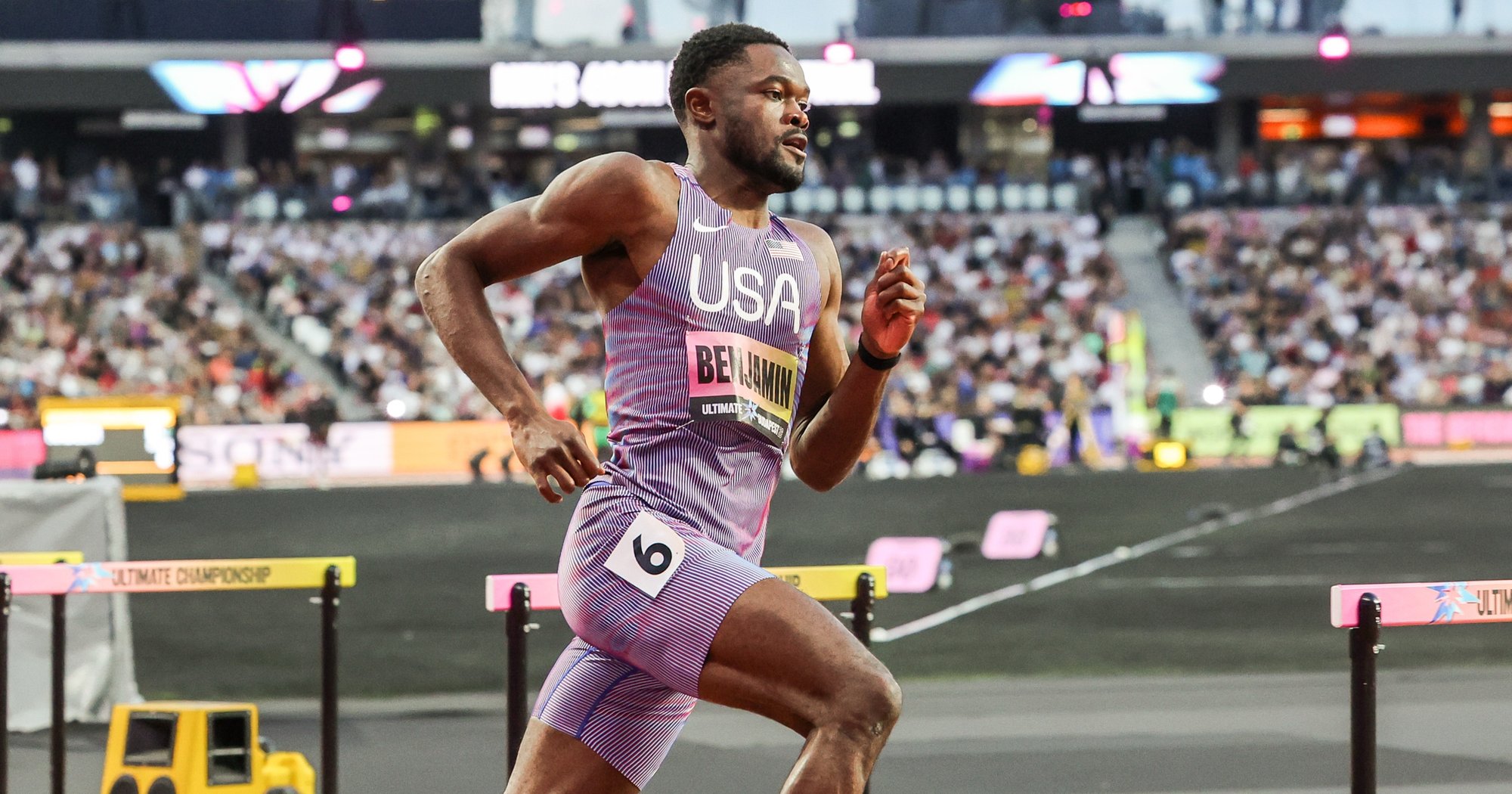
We’re talking, of course, about Rai Benjamin, who—as Noah Lyles pointed out—earned $150,000 the hard way.
On Friday at 7:19pm, local time, Benjamin clocked a comfortable 44.28 in the semis of the open 400m, placing third in his heat. His roughly 23 hours of rest would be the most he’d get all weekend. At 6:18pm the following day he went 44.15 in the final to finish second behind Collen Kebinatshipi, beating every 400m specialist at their own game except the Motswana who has been on a historically great tear this season. At 7:57pm Benjamin was then summoned back to the track for the semis of the 400m hurdles. He ran 47.49—light work for the American record holder, even with two 400m efforts already in his legs within the preceding 25 hours—for second in his heat behind Alison dos Santos. Then on WUC’s final day of action, at 6:36pm, Benjamin had to hurdle again. Given that he was facing another man on a historically great tear in dos Santos, even in posting a season’s best of 46.40, Benjamin finished second.
That’s 1,600 meters worth of racing in a span of just under 72 hours. Only athletes who contested the 5000m covered more ground, but certainly not at the tendon-shredding effort at which Benjamin did. In terms of damage self-inflicted to one’s body, his accumulation of effort takes the cake. And he was summarily rewarded for it! Ka-ching!
We’ll drop the facade here. The reason Benjamin’s busy weekend was so cool wasn’t that he walked away with $150,000. It was that the reigning Olympic and World 400m hurdles champ very publicly challenged himself and found a way to keep the sport fresh and interesting for himself.
Femke Broeders-Bol’s pivot to the 800m provides one archetype for athletes in this position: total reinvention in a different, also brutal event. But Benjamin’s approach might be even more dastardly: hamstringing yourself by running rounds and finals of every event you’re legitimately world class in at one, condensed competition.
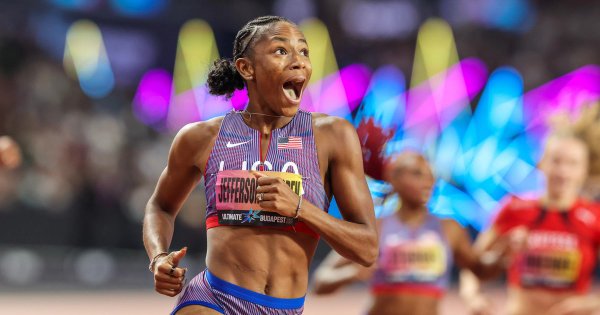
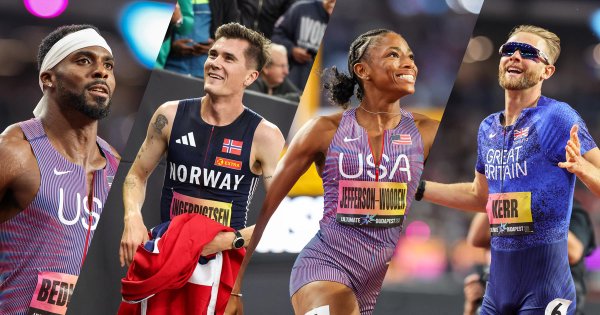
Benjamin wasn’t the only athlete who doubled in Budapest. Melissa Jefferson-Wooden and Kenny Bednarek doubled his payday through the more conventional 100m/200m doubles, and three distance runners (Cole Hocker, Jess Hull, and Freweyni Hailu) pulled off the 1500m/5000m combo. But Benjamin’s ambitious endeavor sent two clear messages with larger implications.
First, in the moment, the World/Olympic champion helped boost the credibility of the event itself. By putting his body on the line rather than taking the safe approach, Benjamin was implicitly saying that Budapest was worth more than just a standard appearance. In a year where plenty of folks took the entire season off, or skipped USAs, or danced back and forth between committing and withdrawing from various high-profile meets, he did more than show up; he showed out.
Second, Benjamin sent a broader message on behalf of hurdlers everywhere. While he claims that his season-long dalliance in the flat 400m was just for fun, it also helped push back on the false narrative that the 400m hurdles is a place where failed sprinters retreat. King Ben is choosing to hurdle when he clearly could be a world-class athlete in either, or this year, both events. And not only that, but he didn’t use his duels withKebinatshipias an excuse to dodge newly-minted world record holder dos Santos. The long-awaited reunion of the “Big Three” in Budapest for the first time since the 2025 World final was one of the highlights of the event, made possible by Benjamin’s commitment to facing his rivals head-on.
When the best in the world perform well in their signature event, it generally appears effortless. But with repeated exposure, we lose an appreciation of just how special that is. So credit to Benjamin for giving us something new to take in, while reminding us that to be at or near the top of your event, it takes a truly miserable amount of effort.

Paul Snyder
Paul Snyder is the 2009 UIL District 26-5A boys 1600m runner-up. You can follow him on Bluesky @snuder.bsky.social.