By David Melly
September 9, 2026
The de facto end to the 2026 season takes place this Friday with a huge European pro meet bringing the best athletes in the world together for a densely-packed schedule, generous prize money, and small fields that took all year to qualify for.
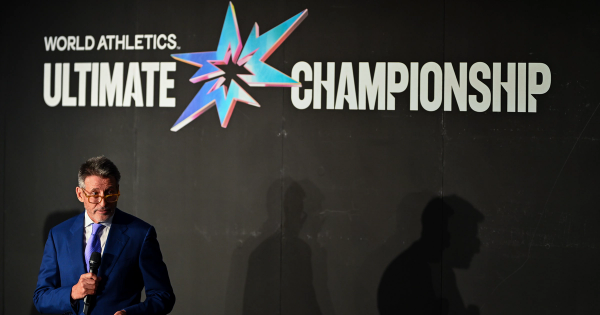
And if this all sounds like Groundhog Day to you… well… yeah. This is not a re-run of last week’s newsletter before the Diamond League final in Brussels. No, we’re turning our focus eastward to Hungary and the site of the 2023 World Championships for the inaugural World Ultimate Championships, a three-day invite-only affair designed to plug the hole in non-championship years (except in 2028, when it follows the biggest championships of all, the LA Olympics).
Now that you’ve successfully reoriented yourself in time of space, the obvious next question might be: Why? Why are these two different meets? Why not have Worlds every year? Why should we expect different results from pretty much the same fields as before?
You’re not alone in asking this. In a wide-ranging interview before last week’s Diamond League final, World Athletics president Sebastian Coe was candid, sometimes defensive, and occasionally a bit combative in response to reporters’ questions about the place, importance, and orientation of this new meet to the rest of the global track and field calendar. Clearly, WA believes there’s a need to have both events, and whether by choice or by necessity, they don’t see an insurmountable downside to holding both in such close proximity.
In that interview, Lord Coe uses the word “different” six times. It’s clear that the party line is that what makes WUC stand apart (and justifies its value) is that the new event is designed to not match either a standard World Championship or a Diamond League final. But what exactly is different about this weekend compared to last, and is it better, worse, or simply just… new?
The “Ultimate” is supposed to stand for “exciting.” Very consciously, the format of WUC has been structured to prioritize entertainment value. At surface level, that’s great! Track and field being less boring more entertaining can’t possibly be a bad thing, right? However, exactly how the meet purports to deliver a more high-energy product, especially on television, involves tradeoffs, some of which are less-than-universally adored.
The obvious place to start is with the three-day competition format, compared with nine for World Championships (or just two for the DL final). 18 of the 30 events scheduled to hit the track are finals, meaning a far larger chunk of what you’re watching has high stakes. The relays and the field events are all straight finals, and no event has more than two rounds of racing. Real sickos may miss the thrill of culling a 40-person 1500m field to 36 semifinalists, but that’s probably not a significant chunk of the viewership. Fewer races in more days than the DL final is great for athletes who may want to double, as combos like the 1500m/5000m and 400m/400H are fairly doable.
Of course, steeplechasers and shot putters may have a slightly different view of things. In crafting a three-day calendar, WA made the tough decision to cut out a number of distance and field events, with only 28 total events on offer compared with the 49 at normal World Championships. The Diamond League has, for years, not been accommodating to the 10,000m or the hammer throw, but this is a new—dare we say Michael-Johnsonian—level of cut. Further, the field events that are contested will cut down quickly over the course of just four rounds, meaning competition will be shorter, with fewer opportunities for athletes to shine. Clearly, many in positions of power believe that track and field has to shrink to grow, and the WUC is the latest embodiment of that ethos.
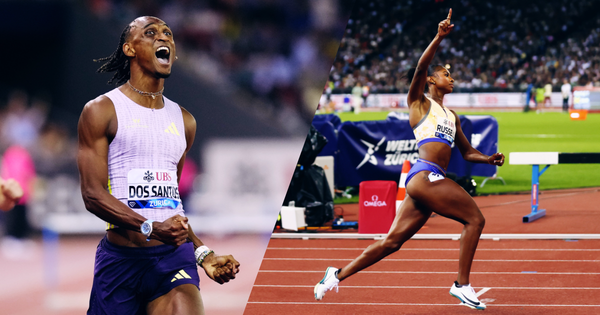
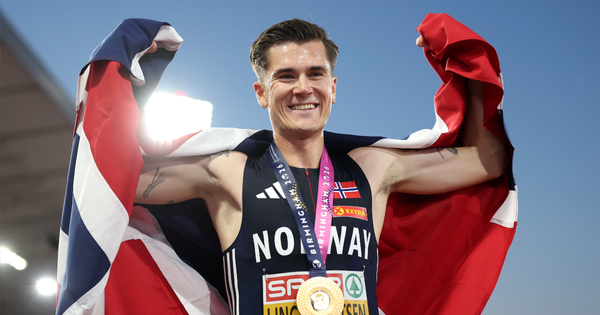
Same racers, no rabbits. The 800m, 1500m, and 5000m will feature many of the same names as last week. Five of the six Diamond League final winners will look to pull off the double in Budapest, with the lone exception being men’s 5000m champ Birhanu Balew. Before you kvetch that the quality of the field suffers, take another look at the entries: Olympic champ Jakob Ingebrigtsen is facing off with World champ Cole Hocker—potentially in both the 5000m and 1500m, but Norwegian media seems to think Jakob is only running the 5000m—so Balew’s absence will barely cause a blip on the radar. Throw in the return of Keely Hodgkinson to the 800m and Josh Kerr to the 1500m, and it’s clear that at least some of the top pros consider this a higher priority than the Diamond League final.
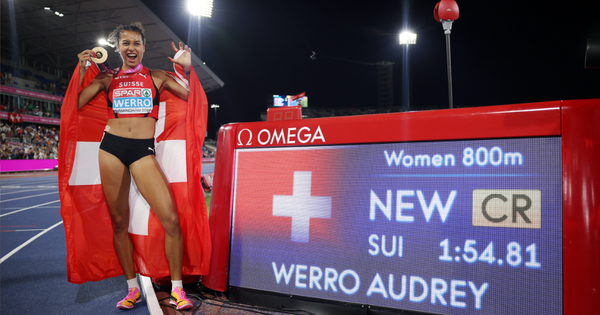
The twist comes from the “Championship” part of “World Ultimate Championships.” Like the Olympics and Worlds—but unlike the DL final, which we will grouse about more later—there will be no pacers for the distance events (more on that below). That change alone should sufficiently alter the race dynamics in the distance races enough from Brussels to hopefully result in different outcomes… although betting against Emmanuel Wanyonyi and Audrey Werro in any kind of race feels increasingly futile at this point.
World rankings matter—unless… With small fields selected almost entirely on world rankings, part of the sell of World Ultimates in a non-championship year is that it forces athletes to race their way into qualifying position for fields as small as eight (and no larger than 16). Of course, rules were meant to be broken, and broken again, as World Athletics gave itself a “wild card” out to add deserving but unqualified athletes into the mix. And then, they broke their own “one wild card per event” rule to engineer a stacked men’s 1500m featuring Ingebrigtsen (again, maybe?) and Kerr.
No one (aside from Vince Ciattei, the first guy out in the 1500m) is likely to complain or care about the logistical gymnastics required to put the last six global champions all in the same race. It’ll be interesting to look past Budapest, however, and see what downstream effects the full reliance on ranking has on future championship selection processes. The qualifying criteria for Worlds in 2027 has already been released, but if the “screw standards; race your way in” attitude persists into 2028 and beyond, the path to future global championships could look very, very different in years to come.
Relays are served neither shaken nor stirred. There are just two relays on the WUC calendar, compared to five at a standard World Championship. Instead of men’s and women’s races, WA is doubling down on relays of a mixed variety, introducing the highly-volatile mixed-gender 4x100m for the first time outside World Relays. This is inarguably bad for the B-tier 400m runners of Team USA, but great for smaller nations like the Netherlands or Canada, who now only need two men and two women to rise to world-class standards in order to contend for the medals.
Given how little of a focus relays have received in this championship, this is one of those changes that probably comes out in the wash. It’s a nice, moderately-sized payday for a handful of athletes that wouldn’t necessarily walk away from championships with a fat check otherwise, but the prestige and historical significance attached to a bronze medal in the World Ultimate mixed 4x400m is… dubious, to say the least.
Track on TV! Another (positive) way in which the 2026 World Ultimate Championship diverges from the Diamond League final is that, at least in the U.S., NBC Universal has the broadcast rights and the entire meet will be streamed on Peacock. Friday and Saturday are on NBCSN and SUnday is on regular ol’ rabbit-ears NBC, which still has a huge impact on overall viewership and new eyeballs. With all due respect to our friends at Flotrack, no bar in America is shelling out $29.99 to put Brussels on the big screen, and if the whole point of this new endeavor is to sell track and field to the wider sporting world, the wider sporting world needs to actually have the capacity to watch.
So while events like the men’s and women’s 400m, the men’s 100m, and the hurdles could start to feel a bit like déjà vu with Brussels swapped out for Budapest, the perceived success or failure of this new first-time meet format could have broader implications for the sport writ large. The differences between the Diamond League and WUC aren’t decorative; they’re directional. And Seb Coe’s latest grand experiment to bring track and field to the masses is betting big that doing things differently is a recipe for long-term success.

David Melly
Since David began contributing to CITIUS in 2018, he's done a little bit of everything, from podcast hosting to newsletter writing to race commentary. Currently, he coordinates the social media team and manages both the CITIUS MAG newsletter and The Lap Count, supplying hot takes and thoughtful analysis in both short- and long-form. Based on Boston, David breaks up his excessive screen time by training for marathons, crewing trail races, baking sweet desserts, and mixing strong cocktails.